Crime & Safety
Healthcare Worker Who Treated Ebola Patients, Had Fever After Newark Flight, Tests Negative
The patient continues to be quarantined and remains in isolation and under observation at University Hospital in Newark.


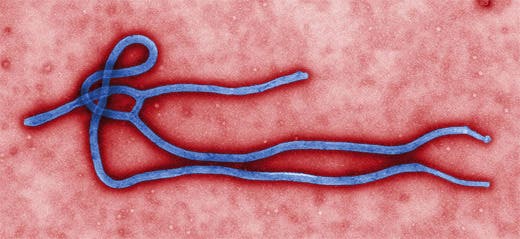
A healthcare worker with a recent history of treating Ebola patients in West Africa who was quarantined after arrival from Newark Liberty International Airport Friday has tested negative in a preliminary test for the disease, according to the state Department of Health.
The patient continues to be quarantined and remains in isolation and under observation at University Hospital in Newark.
Physicians at University Hospital continue to monitor the patient and consult with the Department of Health and the CDC on patient evaluation and any potential need for additional testing, according to a health department release.
The health care worker had no symptoms upon arrival at Newark Friday, but developed a fever while quarantined at the airport. The passenger was transferred from Newark Liberty International Airport’s Quarantine Station to University Hospital in Newark for evaluation and isolation.
The individual remains under mandatory quarantine for 21 days and will be closely monitored by public health officials, according to the health department. The department continues to work closely with CDC officials on this situation.
The Newark incident was the latest in a series of episodes involving cases where people were identified as having Ebola-like symptoms. In nearly all these cases, the test results have proven to be negative. There are only four confirmed U.S. cases: Thomas Eric Duncan, a Liberian man who died from the virus in a Dallas hospital; two nurses who treated him; and a doctor in New York City who recently treated patients in Africa.
Find out what's happening in Hobokenfor free with the latest updates from Patch.
Christie has signed Executive Order 164, creating the Ebola Virus Disease Joint Response Team, an order that will “direct and coordinate” the state’s public health response to the Ebola crisis, officials from the Governor’s office reported.
The Executive Order indicates that a multi-agency team, consisting of a variety of state agencies and departments, will work together to protect the health and safety of all New Jersey residents. according to the Christie administration. These agencies include the Department of Health, the State Police, Homeland Security, New Jersey Transit, and the Department of Children and Families.
Find out what's happening in Hobokenfor free with the latest updates from Patch.
The screening process includes: temperature checks, visual inspections for symptoms, and history of risk exposure, the Governor’s Office reported.
Health department doctors continue to work together with the CDC and area hospitals to mandate passenger screening and follow up. Symptomatic passengers are immediately transferred to University Hospital in Newark, Robert Wood Johnson University Hospital in New Brunswick, or Hackensack University Hospital in Hackensack.
If the CDC discovers a passenger who is not showing symptoms, but still has a high risk of exposure, the DOH will determine whether the passenger will be subject to a state quarantine. If such a passenger is detected, state agencies will serve the traveler with the quarantine order, officials say.
New Jersey hospital systems are well prepared to care for Ebola patients, officials say. Hospital systems have been coached on potential “false alarms” that commonly occur with those who display risk factors for the disease.
In addition, Rutgers University is training health educators about prevention tactics, and Commissioner Mary O’Dowd has held briefing calls for 738 hospital officials, county and local health department and EMS leaders.
Other education initiatives include state-sponsored webinars for nurses, and updates from the DOE for school administrators and superintendents. The DOE is also implementing emergency guidelines for schools who may need to close or quarantine groups of symptomatic students.
Support is also being offered to Liberian communities in New Jersey.
“The DOH has distributed information to help educate friends and families returning from West Africa and have attended community meetings with concerned community-based organizations throughout the state,” the Governor’s Office stated in a release.
To read more about Ebola preparation and case detection in New Jersey, click here.
Get more local news delivered straight to your inbox. Sign up for free Patch newsletters and alerts.