Schools
Hoboken Scholars, Athletes, And Parochial Schools: An Essay
Hoboken native and former school administrator Dennis Sevano writes about "academic and athletic gems" who headed to parochial schools.


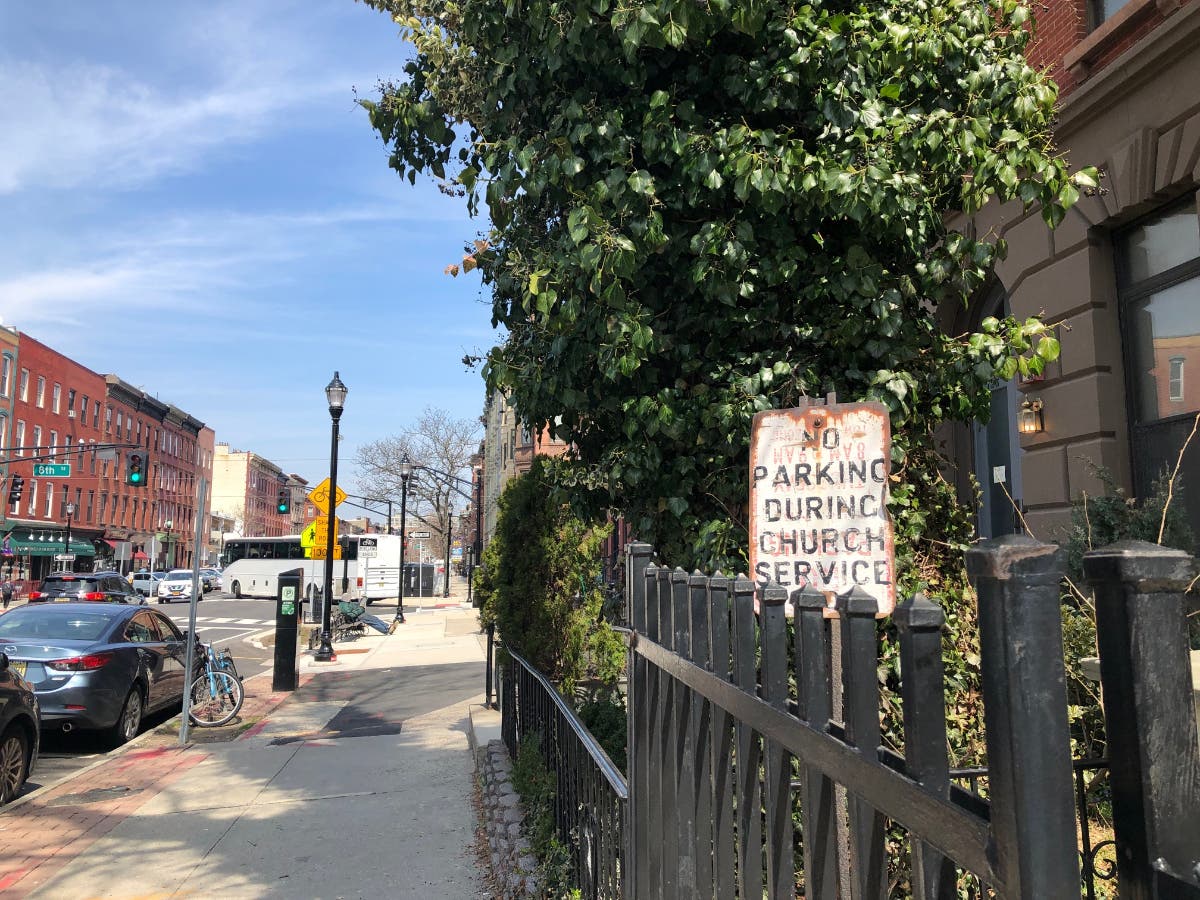
A Chance To Dream In Hoboken
By: Dennis Sevano
“Preserve your memories; they’re all that’s left you.” — “Bookends” by Simon and Garfunkel
Find out what's happening in Hobokenfor free with the latest updates from Patch.
In Hoboken, the public and the Catholic schools always had a friendly spirited competition, vying to enroll young learners in our boxed town of Hoboken.
Some families attended their local church and their school based on walking distance and their deep family tradition. There were more than a few households who sent their sons and daughters to the local church on a weekly basis for sacramental blessings of communion and confirmation.
Find out what's happening in Hobokenfor free with the latest updates from Patch.
The public schools were a reliable education option for some families, while still keeping the faith at church. But others sent their kids to parochial schools. Among them, two larger Catholic Churches stood out in terms of their surrounding space, attractive parks and other notable landmarks.
Tale Of Two Churches
Our Lady of Grace Church, with its iconic Gothic-Cathedral style, towered as a dominant force of religious order, with Church Square Park in the front, St. Mary’s Hospital (now Hoboken University Medical Center) to the south, the old Stevens Hoboken Academy on the northeast corner, Demarest School two blocks east of Willow Avenue, and the peaceful position of our local library on 500 Park Ave., with a few funeral homes to bookend the area.
Saints Peter and Paul Church was the only Catholic parish east of Willow Avenue, having the prestigious Stevens Institute of Technology to the east and north, and to the distant left, Stevens Park and the Little League field.
Standing below at the Hudson River were the historic Hoboken piers of “On The Waterfront,” movie fame, and along River Street, the “Barbary Coast," were the diverse ethnic bars on River Street, and the gorgeous brownstones sailing north on Hudson. No Catholic places of workshop were found going toward Hostess, Maxwell House, and Lipton Tea.
The rituals of Catholic Churches and eventually their companion parochial schools were commonplace for folks living in a one square mile box-like town of 55,000, all seeking hope and guidance through faith, hard work, and prayer.
The places of worship and schooling served the predominant German, Irish, and Italian residents from the '20s through the '70s, and beginning in the '50s, the Latinx communities from Puerto Rico, Cuba and the many Central and South American countries.
It was just by mere coincidence that the number of public schools through the '30s, '40s, and '50s, were equal to those of the Catholic sectors. By anecdotal observation, parents chose schools mostly based on one’s faith and upbringing, which would override the “secular” public education philosophy, although as years progressed a bit of dissatisfaction with the public sector entered into the decision-making of parents.
So, Our Lady of Grace, Saints Peter & Paul, and the Academy of the Sacred Heart Schools are voices and hymns from the past, with the Hoboken Catholic Academy (the former treasure of St. Ann’s School) the last parochial school standing — still capturing a sense of nostalgic belonging.
What If They'd Stayed?
Some Hoboken natives sought secondary education at St. Michael’s, St. Joe’s, Holy Family, St. Peter’s Prep, St. Anthony’s, St. Dominic’s, Sacred Heart, and Hudson Catholic. Others chose to trek to NYC to the revered Xavier and Regis, meccas of Catholic Schools. These students and athletes always seemed to be a source of vibrant conversation, the “What if” factor, by the “Old Guard” who imagined a different history had those gems stayed public in the Mile-Square City.
While Hoboken schools were able to hold on to a large number of future scholars and athletes, the old timers still to this day bemoan the loss of outstanding male ball players like Salinardi, Spano, Greely, Gorman, Greigo, Bazzi, Pilgrim, Miller, McCurdy,and Brennan. If only these players had stayed, the Group 4 Championships would have flourished.
Hoboken’s status was always elevated by being the home of Stevens Institute of Technology, and the relationship between Stevens and the Hoboken Public Schools is an enduring source of pride. Imagine if Stevens Institute of Technology offered more scholarships to Hoboken High students? Perhaps those who transferred to Catholic high schools would have remained in Hoboken, lured by that possibility. Imagine if Stevens Institute, an all-male university until 1971, offered scholarships to women? Hoboken’s gifted female scholars/athletes who went the parochial route, might have remained, leading Hoboken to be a Title IX exemplar!
The brain-drain from its home court and classroom, to outside secondary schools, for whatever reason — while a mere factor of nature much like any other community — seemed larger in Hoboken. The "What Ifs” gave permission to dream: if only the athletes and scholars would have stayed.
Finally, we allow an Act of Contrition especially from the secondary parochial institutions who borrowed our academic/athletic born and raised Hoboken natives, as we recite a Rosary of Forgiveness. Only kidding!
Dennis Sevano
Want to post your own essay, letter, photo, column, or event on Hoboken Patch? Here's how.
Get more local news delivered straight to your inbox. Sign up for free Patch newsletters and alerts.