Crime & Safety
Hudson County Issues Safety Advisory On Wildfire Smoke
The sky over Hudson County turned yellow Wednesday afternoon and Hoboken and Jersey City ranked 5 and 6 as most polluted in NJ.


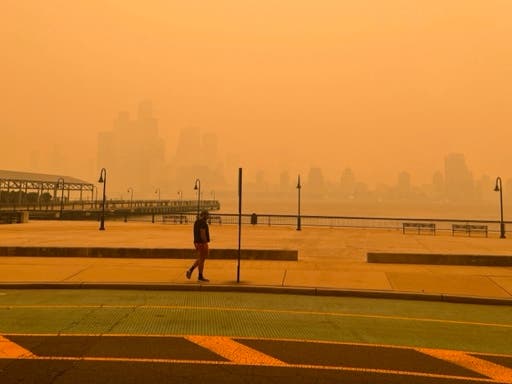
HUDSON COUNTY, NJ — Due to particulates in the air in New Jersey due to Canadian wildfires, the state Department of Environmental Protection extended its air quality alert through all day Thursday, and the county of Hudson issued an advisory on how to stay safe (below).
To see your town's current air quality, click here.
On Wednesday afternoon, Hoboken and Jersey City ranked as the fifth and sixth most polluted cities in the state.
Find out what's happening in Hobokenfor free with the latest updates from Patch.
(See your neighbors' photos of Wednesday's sepia haze here.)
Hudson County's Message:
Find out what's happening in Hobokenfor free with the latest updates from Patch.
When wildfres create smoky conditions, there are things you can do, indoors and out, to reduce your exposure to smoke. Reducing exposure is important for everyone’s health — especially children, older adults, and people with heart or lung disease.
Reduce smoke exposure indoors
• Stay inside with the doors and windows closed. Whether you have a central air conditioning system or a room unit, use high efficiency filters to capture fine particles from smoke. Ask an air conditioning professional what type of high efficiency filter your air conditioner can accept.
• Seek shelter elsewhere if you do not have an air conditioner and it is too warm to stay inside with the windows closed.
• Do not add to indoor air pollution. Do not burn candles or use gas, propane, wood burning stoves, fireplaces, or aerosol sprays. Do not fry or broil meat, smoke tobacco products, or vacuum. All of these can increase air pollution indoors.
• Use a portable air cleaner to reduce indoor air pollution. Make sure it is sized for the room and that it does not make ozone, which is a harmful air pollutant. Portable air cleaners can be used along with efficient central air systems with efficient filters to maximize the reduction of indoor particles.
• Create a “clean room” in your home. Choose a room with no fireplace and as few windows and doors as possible, such as a bedroom. Use a portable air cleaner in the room.
• Have a supply of N95 respirators and learn how to use them. They are sold at many home improvement stores and online.
• Long-term smoke events usually have periods when the air is better. When air quality improves, even temporarily, air out your home to reduce indoor air pollution.
Reduce smoke exposure outdoors
• Take it easier during smoky times to reduce how much smoke you inhale. If it looks or smells smoky outside, avoid strenuous activities such as mowing the lawn or going for a run.
• Know your air quality. Smoke levels can change a lot during the day, so wait until air quality is better before you are active outdoors. Check your state or local air quality agency’s website or airnow.gov for air quality forecasts and current air quality conditions. On AirNow, you can also sign up to get email notifcations, download an air quality app, or check current fre conditions. In addition, some communities have visual range programs where you can assess smoke conditions by how far you can see.
• Have enough food and medication on hand to last several days so you don’t have to go out for supplies. If you must go out, avoid the smokiest times of day.
• Reduce smoke in your vehicle by closing the windows and vents and running the air conditioner in recirculate mode. Slow down when you drive in smoky conditions.
• Do not rely on dust masks or bandanas for protection from smoke. If you must be out in smoky conditions, an N95 respirator can protect you, if it fts snugly to your face and is worn properly.
• Have a plan to evacuate. Know how you will get alerts and health warnings, including air quality reports and public service announcements (PSAs). Public advisories can provide important information such as changing smoke conditions and evacuation notices. Know your evacuation routes, organize your important items ahead of time, and know where to go in case you have to evacuate. Reduce your risk of health problems:
• Have enough medication and food (enough for more than 5 days) on hand.
• Follow your health care provider’s advice about what to do if you have heart or lung disease.
• If you have asthma, follow your asthma management plan.
• If you feel sick, reduce your exposure to smoke and contact your health care provider.
• Pay attention to public service announcements, health advisories, and air quality advisories
See this story for more details on the fires and how to stay safe in New Jersey.
Get more local news delivered straight to your inbox. Sign up for free Patch newsletters and alerts.