Traffic & Transit
Hudson River Tunnel Shutdown Would Hurt Families, Economy: Report
Report: Employees will miss work. Family dinners will be late. And property values will nosedive if the 110-year-old tunnel ever shuts down.


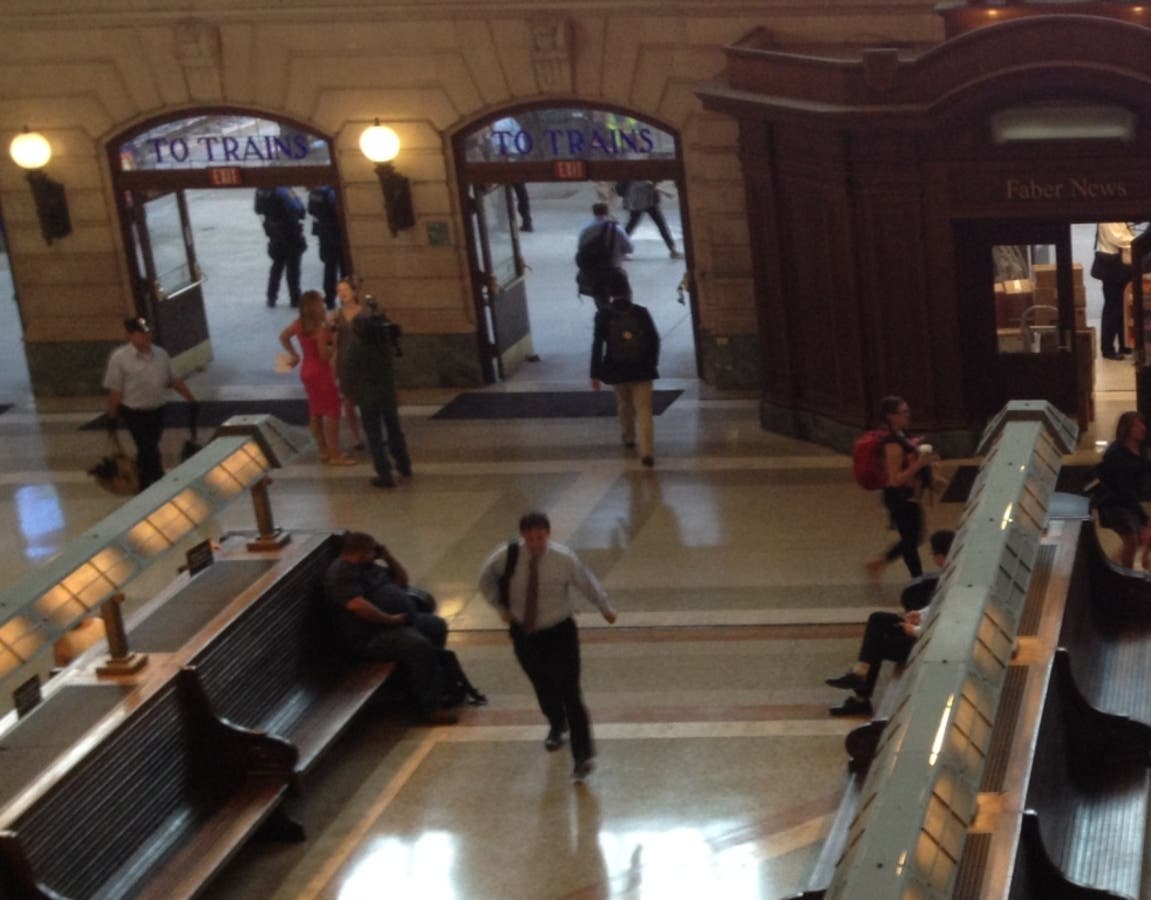
Employees will miss work. Family dinners will be late. And property values will take a nosedive.
That's just a taste of the catastrophic fallout that will ravage New Jersey and New York if an aging, 110-year-old railway tunnel under the Hudson River ever needs to be shut down, according to a recently released report from the nonprofit Regional Plan Association (RPA).
On Tuesday, a pair of Democratic lawmakers from New Jersey – U.S. Sen. Robert Menendez and U.S. Rep. Mikie Sherrill (District 11) – said they were dismayed by the RPA study, “A Preventable Crisis,” which attempts to predict the “economic and human costs” of a Hudson River Rail Tunnel Shutdown.”
Find out what's happening in Hobokenfor free with the latest updates from Patch.
According to the report, which can be seen in full here:
“Every day, 200,000 passengers ride an Amtrak or New Jersey Transit train through a 110-year old, two-track tunnel under the Hudson River that was badly damaged by Superstorm Sandy. The tunnel is the only passenger rail link that connects Manhattan, the nation’s largest job center, with its western suburbs. It is also a bottleneck for the Northeast Corridor running from Washington, D.C. to Boston, by far the most heavily used intercity rail line in the United States.”
Rep. Sherrill, who hails from Essex County, said that she was particularly concerned about the following “key findings” from the report, which predicted the following consequences if the tunnel ever had to shut down:
Find out what's happening in Hobokenfor free with the latest updates from Patch.
- $16 billion hit to the national economy over a 4-year period
- $22 billion dip in property values, including a disproportionate impact on homes in Essex County
- $630 million in trucking delays
- Nearly 500,000 workers with longer, less reliable commutes
Even people who drive to work wouldn’t be spared, the study claims.
“245,000 drivers, nearly half of whom drive to locations outside of Manhattan, would have longer commutes,” researchers wrote. “More than half of these would see their daily commutes increase by more than 30 minutes.”
Researchers added:
“Amtrak, which owns the existing tunnel, is maintaining the tunnel to ensure safe operations following the damage from Superstorm Sandy. But eventually, each tube of the tunnel will need to be taken out of service for an estimated two years at a time. In a best-case scenario, this can be deferred until new tunnels are built. However, there is a real possibility that the condition of the tubes will deteriorate to the point where they need to be closed before new service is on line, especially if funding and approvals are delayed or denied. In a worst-case scenario, an intense storm or other calamity would cause an emergency shutdown with little or no time to prepare. At a minimum, we are likely to see an ever-increasing number of unplanned outages such as the failure of power cables in the summer of 2015, triggering temporary but multiple impacts similar to those described in this report.”
Sen. Menendez said the report is clear and decisive.
“New Jersey is sitting on a transportation ticking time bomb,” the senator said. “The latest RPA study outlines in unambiguous terms the havoc a Hudson rail tunnel shutdown will wreak on our regional and national economies in lost jobs, lost production, diminished revenues, and plummeting home values, senselessly putting at risk the livelihoods and economic security of hardworking families and small business owners.”
I’ve said it before and I’ll say it again: We don’t need to build a wall along the Mexican border, we need to build a tunnel to Manhattan #BuildTheGateway
— Mikie Sherrill (@MikieSherrill) December 24, 2018
BUILDING THE GATEWAY
There may be a way to head off the transportation Armageddon of a tunnel shutdown before it happens, Menendez and Sherrill said: the Gateway Project.
The massive public works proposal would build a two-track Hudson River rail tunnel from New Jersey to Manhattan and replace the "functionally obsolete" Portal Bridge over the Hackensack River.
The projects would help alleviate chronic delays on the aging Northeast Corridor (NEC), one of the most heavily used passenger railroad lines in the nation. The affected segment of the NEC carries more than 200,000 daily Amtrak and NJ Transit riders on roughly 450 trains.
The combined cost of the projects has been estimated as high as $30 billion. Learn more about the Gateway Program here.
According to the RPA, here’s why the battle over funding is so important to nail down… and why you should care if you live in New Jersey:
“Because the damage from Sandy cannot be fully repaired without closing down each of the two tubes in the tunnel, the only way to avoid several years of sharply reduced service is to build a second tunnel that could keep full service running while the existing tunnel is repaired. But it will take several years to construct a new tunnel, and full construction cannot start until funding is secured. Each day that passes without agreement on funding for a new tunnel makes it more likely that a tunnel shutdown will happen first."
A tunnel shutdown would cause a domino effect on the already overburdened transportation network in the Northeast, from interstate highways to international airports, researchers said.
"Because passengers who would no longer be able to take a New Jersey Transit or Amtrak train would spill over into already crowded trains, buses, highways and planes, the entire transportation network would become more congested," the study claimed. "Employees would be late to work and more stressed when they arrive. Meetings would be missed. Family dinners would be late. Both residential and commercial property values would decline as prime locations served by rail become less desirable."
Despite a groundswell of local support for the idea of building a new tunnel across the Hudson River, there has reportedly been pushback against the project – and its immense price tag – from the Trump Administration.
In 2017, federal transportation officials sent a letter to New York Gov. Andrew Cuomo and former New Jersey Gov. Chris Christie, saying that a 2015 deal allegedly made in the Obama-era to split funding 50/50 between federal and state governments was off the table.
At the heart of the dispute was New Jersey and New York's plan to pay for half of the cost of the project, with the federal government matching the other half partly through loans under the Transportation Infrastructure Finance and Innovation Act (TIFIA) and Railroad Rehabilitation & Improvement Financing (RRIF).
- See related article: $13B Gateway Tunnel In Jeopardy; Feds Trash Obama-Era Deal
“The Hudson River Tunnel is a chokepoint for the financial center – and most productive region – of the United States,” Sherrill said. “It is the most heavily trafficked piece of rail in the entire country and even a partial closure will suffocate our nation’s economy.”
“It is astonishing in light of the urgent need for action, the Department of Transportation is choking off the funds already provided by Congress to start fixing this problem – $275 million from prior years and $650 million we just approved,” Sherrill stated.
“Failing to complete construction of a new Hudson River rail tunnel before the current dilapidated tunnels are forced to shut down would cripple our economy and create real hardships for the hundreds of thousands of commuters who depend each day on a safe and reliable transportation system,” Menendez said.
“We can get Gateway done faster and cheaper with the Trump Administration fully on board,” Menendez added. “Not only must we move forward on Gateway without further delay, but this report underscores why we cannot afford not to.”
- See related article: Rep. Mikie Sherrill Of NJ Joins Battle To Fund Gateway Tunnel
- See related article: NY, NJ, PA Residents Overwhelmingly Support Gateway Program, Poll Says
- See related article: $13B Gateway Tunnel In Jeopardy; Feds Trash Obama-Era Deal
Learn more about posting announcements or events to your local Patch site here. Send local news tips and correction requests to eric.kiefer@patch.com
Get more local news delivered straight to your inbox. Sign up for free Patch newsletters and alerts.