Politics & Government
NJ Gov. Phil Murphy Signs Paid-Sick Leave Bill Into Law
Gov. Phil Murphy signed legislation that would have a big impact on how you use your sick days at work.


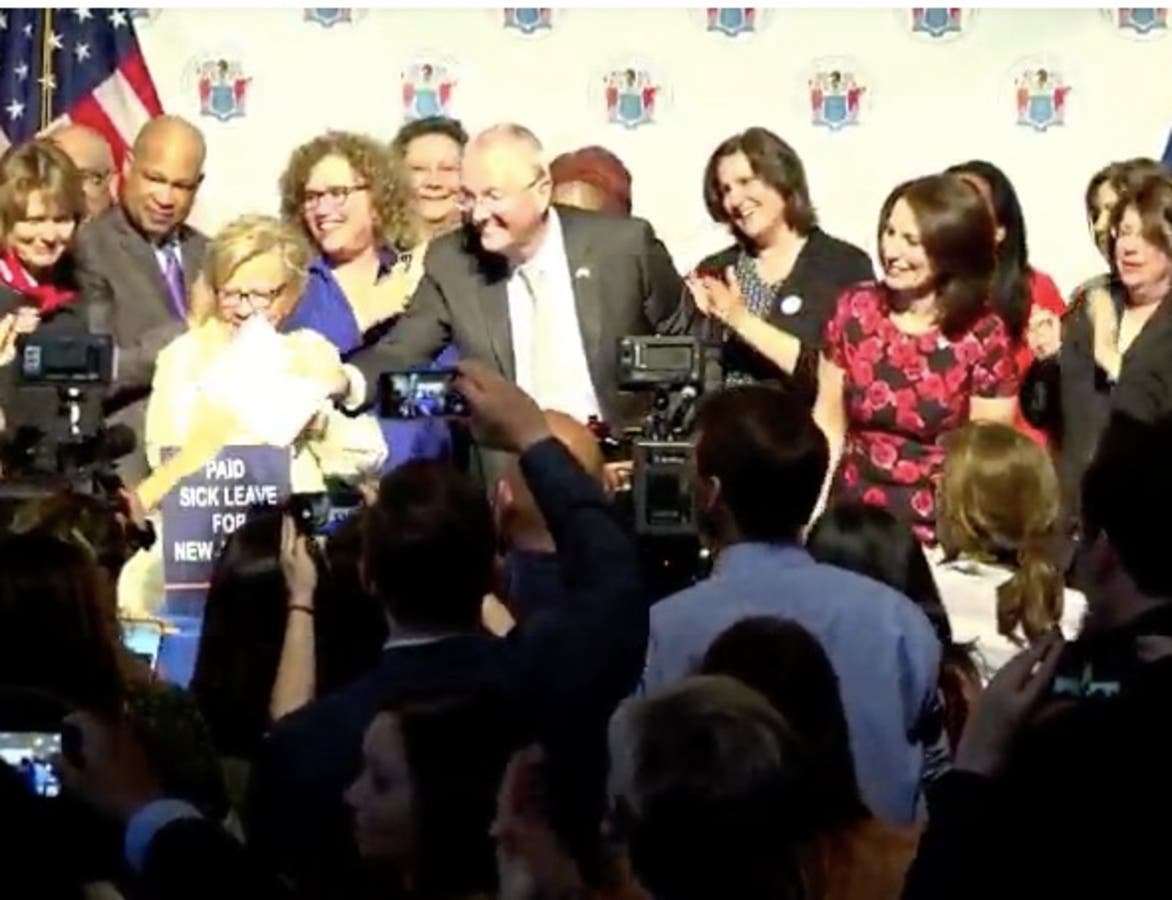
Gov. Phil Murphy signed a bill on Wednesday that may have a big impact on your life – and how you use your sick days at work.
Murphy signed a bill that requires employers to provide earned sick leave to workers in New Jersey, promising that the legislation will benefit workers and not hurt businesses.
In fact, Murphy said during a press conference, the legislation should boost morale and increase productivity.
Find out what's happening in Hobokenfor free with the latest updates from Patch.
"This is about doing the right thing for our economy and protecting more New Jerseyans' place in that economy," Murphy said.
The state Senate passed the bill by a vote of 24-12. The Assembly approved it by a 50-24 margin.
Find out what's happening in Hobokenfor free with the latest updates from Patch.
Sponsored by Democrats Pamela Lampitt, Raj Mukherji, Jerry Green, Shavonda Sumter and Benjie Wimberley, it would allow workers to accrue one hour of earned sick leave for every 30 hours worked. Loretta Weinberg sponsored the Senate version.
“Workers should not have to choose between caring for their health and keeping their paychecks or jobs,” said Lampitt, D-Camden/Burlington. “Guaranteeing workers the ability to earn paid sick days would help ensure workers do not have to choose between their health and their economic security. New Jersey should be a leader in the fight for this common sense, pro-worker policy.”
The bill would require each employer to provide earned sick leave to each person it employs in the state. The bill will cap annual yearly accrual, use and carryover of earned sick leave at 40 hours per week.
The employer is required to pay employees for earned sick leave at the same rate and with the same benefits as the employee normally earns.
Earned sick leave may be used for:
- Time needed for diagnosis, care, or treatment of, or recovery from, an employee’s mental or physical illness, injury or other adverse health condition, or for preventive medical care for the employee;
- Time needed for the employee to care for a family member during diagnosis, care, or treatment of, or recovery from, the family member’s mental or physical illness, injury or other adverse health condition, or preventive medical care for the family member;
- Absence needed due to circumstances resulting from the employee or a family member being a victim of domestic violence, if the leave is to obtain medical attention, counseling, relocation, legal or other services;
- Time during which the employee is not able to work because of a closure of the employee’s workplace, or the school or place of care of a child of the employee as a result of a determination that the presence in the community of the employee, or a member of the employee’s family in need of care by the employee, would jeopardize the health of others, or;
- Time needed by the employee in connection with a child of the employee to attend a school related conference, meeting, function or other event or required by a school professional staff member.
- The bill prohibits retaliatory personnel actions against an employee for the use or requested use of earned sick leave or for filing of a complaint for an employer violation.
New Jersey now joins several states – nine plus the District of Columbia – that have enacted paid sick leave to provide earned compensation for workers who miss work due to illness or needing to take care of a sick loved one.
“There is no reason anyone should have to choose between economic security and their health,” said Murphy. “After today, New Jerseyans will no longer have to face such a choice. I am proud to sign into law one of the strongest earned leave protections in the country for every hardworking employee who deserves the basic right of a paid sick day.”
Currently, 13 municipalities in New Jersey have enacted earned sick leave for private sector employees. Outside of these municipalities, private sector employees do not have any right to receive earned sick leave. Overall, an estimated 1.2 million workers in New Jersey do not have any access to paid sick leave.
Democrats promoted the "earned sick leave" bill, saying employers need to develop a sensible workplace policy "that is good for business and will prove crucial to New Jersey’s economic future, stability and strength,” said Mukherji, D-Hudson.
“Workers who can properly take care of themselves and their families will feel secure in their jobs and be better employees," he said. "In addition to improving morale and reducing the spread of illness in the workplace, this legislation will also help employers with compliance and predictability.”
An estimated 1.1 million New Jerseyans are unable to earn sick leave, and nearly one-quarter of American adults report that they have lost a job or had their job threatened for taking time off due to illness or to care for a sick child or relative, the sponsors noted.
The New Jersey Business and Industry Association said it pulled its long-standing opposition to a statewide paid sick leave mandate after lawmakers agreed to several amendments.
With these changes, businesses will fare better than they would have under the original bill, the NJBIA said. Among the changes:
- State law will pre-empt all local ordinances adopted over the last couple of years so businesses have to abide by only one uniform set of rules.
- Existing paid time off plans could satisfy requirements in the bill; businesses that provide paid sick time before the law is enacted may not have to change their programs.
- The mandate is reduced to 40 hours of paid sick leave a year from 72 hours.
- Employers could prohibit employees from using foreseeable earned sick leave on certain dates and require reasonable documentation if unforeseen sick leave is used during those dates.
- Language requiring employers to pay all out-of-pocket expenses for an employee to obtain reasonable documentation was removed.
- Per diem healthcare workers are exempt.
- Employees would not be eligible to use paid sick leave until 120 calendar days after the employee starts. Employers have the option to start eligibility earlier.
- Effective date of law is 180 days following enactment.
Gov. Murphy photo
Get more local news delivered straight to your inbox. Sign up for free Patch newsletters and alerts.