Community Corner
Makeshift Tribute Grows For New Jersey Homeless Man Who 'Looked Like Jesus'
"You look like Jesus and you are meant to be Jesus in people's lives," a local charity director had told Robert Helmeck of Hoboken, N.J.




HOBOKEN, NJ — When Robert Helmeck — a tall homeless man who wandered the streets of Hoboken for four decades — passed away six weeks ago, people instantly recognized the description of him in his obituary: "Homeless man who looked like Jesus has died."
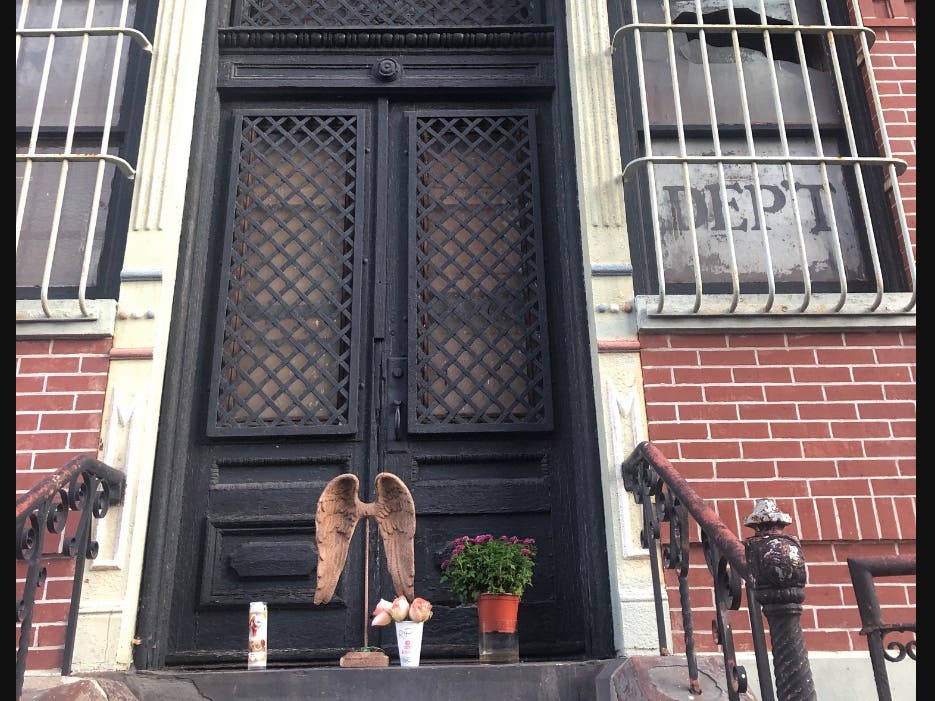
Since the death of Helmeck, whose long coat and beard added to his Jesus-like appearance, residents have been have been filling one of his favorite stoops with flowers and notes.
.JPG)
.JPG)
The informal tribute started a few days after Helmeck's funeral on Oct. 21, when someone left a metal sculpture of angel wings on the 10th Street stoop, a favorite resting place of Helmeck, around the corner from a century-old pharmacy.
Find out what's happening in Hobokenfor free with the latest updates from Patch.
Since then, people have added keepsakes, flowers, and notes with Bible references.
Under a Facebook post after Helmeck died, residents noted that he had wandered quietly and often kept to himself — but most didn't know his story.
Find out what's happening in Hobokenfor free with the latest updates from Patch.
April Harris, who founded a charity in Hoboken 35 years ago called In Jesus' Name, helped Helmeck for decades. She submitted a eulogy for Helmeck and recently spoke about him for Patch.
Harris said that Helmeck, 62, passed away from cancer, and was cared for in his final weeks.
"Everyone who had compassion on him did what they could," she said. "I am praying and musing on the extraordinary public expressions and wondering if it has traction for some kind of change. My thought was [that it might] inspire and train more companion advocates for [the] homeless."
She said there are others who could use help in her ministry, especially the elderly and those with mental health challenges. "[They] need to feel they have a friend helping them navigating the systems, especially across the digital divide," she said.
She said that when she helps someone long-term, she often partners with a volunteer. A woman named Martha Cabrera, who had since moved to Florida, "did a great deal" to help with Helmeck over the years, Harris said.
Reached in Florida, Cabrera said she helped Hemleck since around 1981.
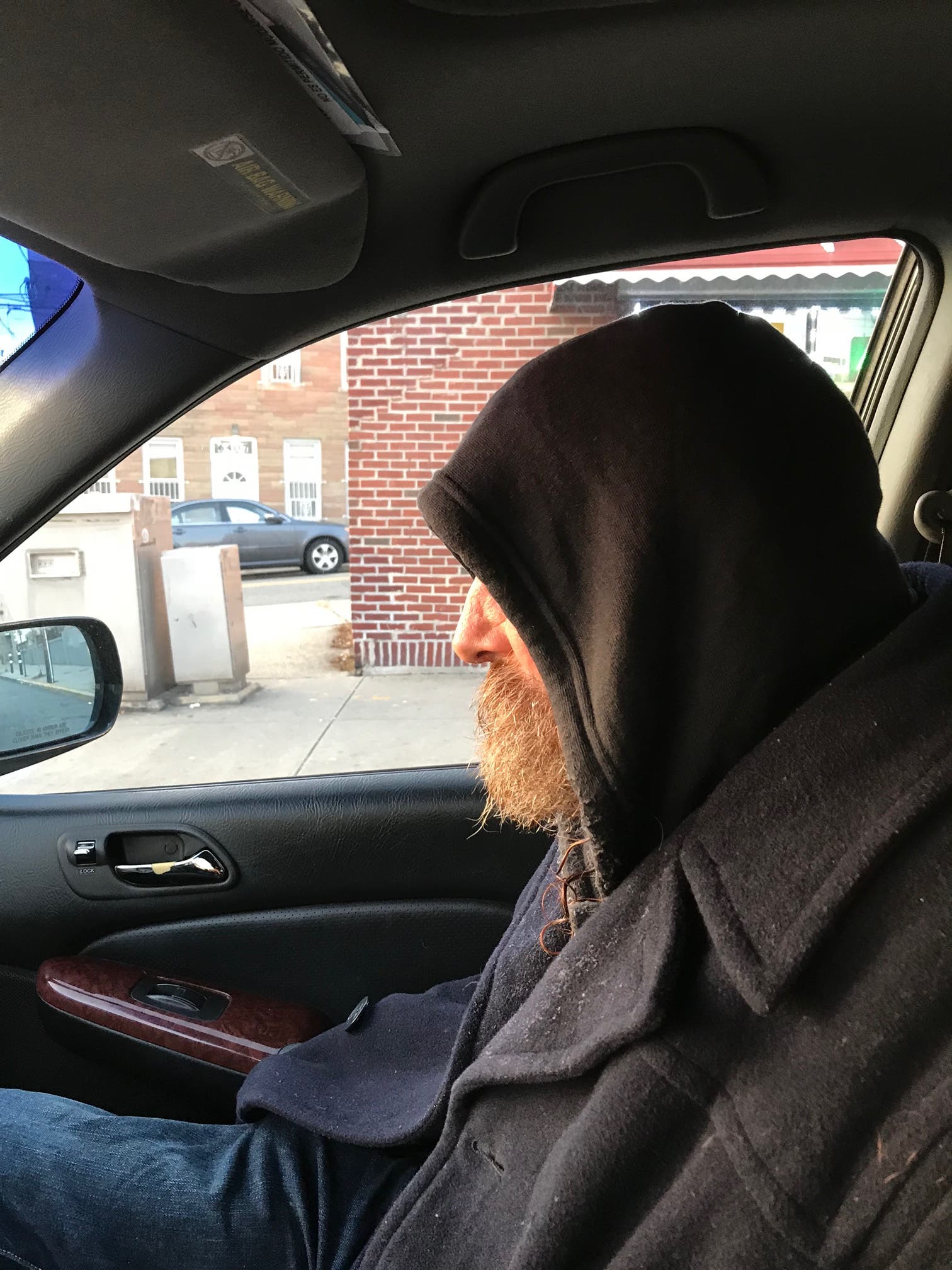
Cabrera said that Monsignor Eid from Our Lady of Grace church used to drive around searching for Helmeck, to bring him to church for new clothes and a bath.
"When he used to get a bath he would go out so fresh and so happy," Cabrera said. "My husband was his friend also. We lived in Hoboken 50 years. When my husband passed away, Bobby saw me in the street and he hugged me."
She noted, "He reminded people about Jesus."
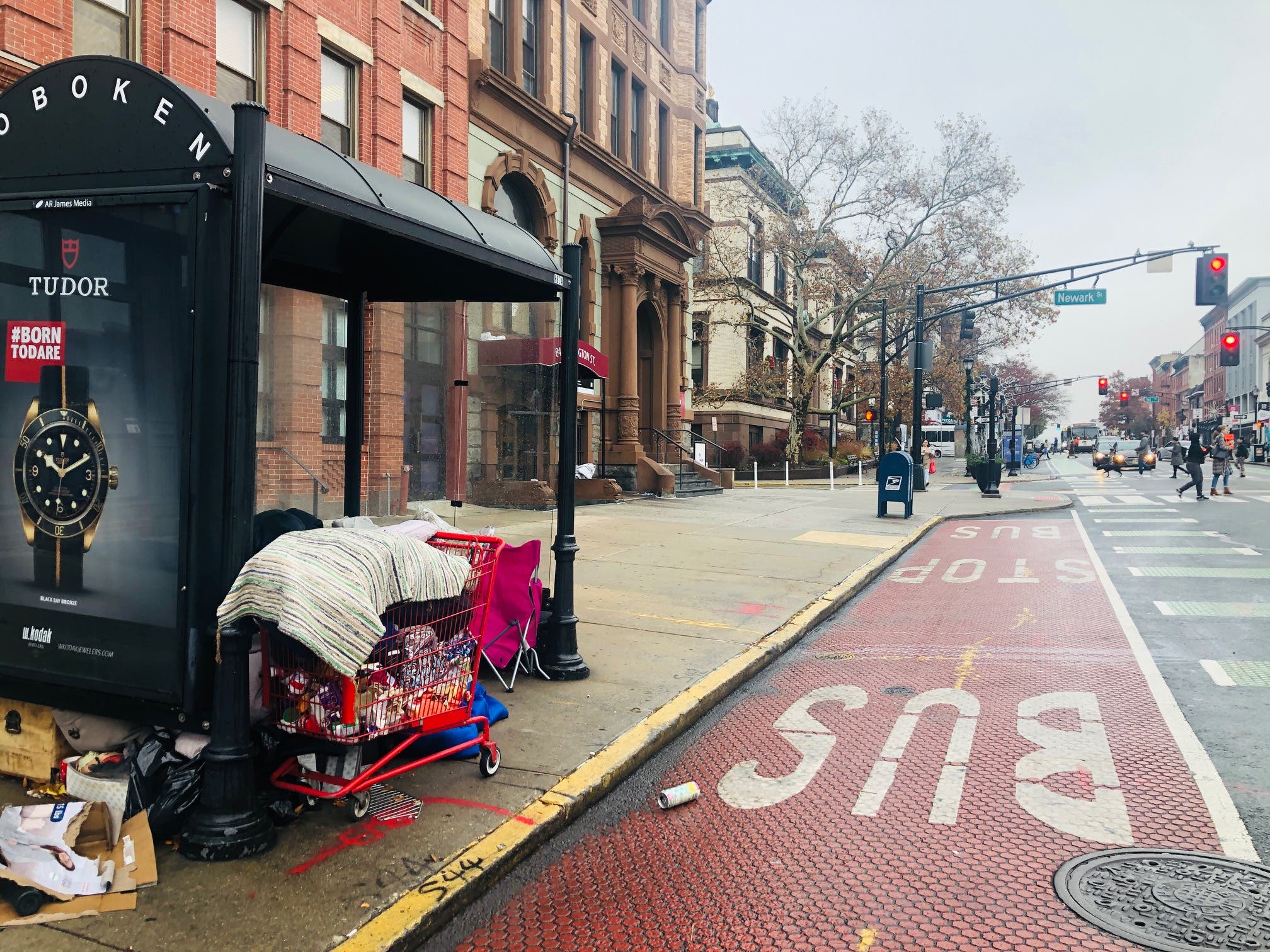
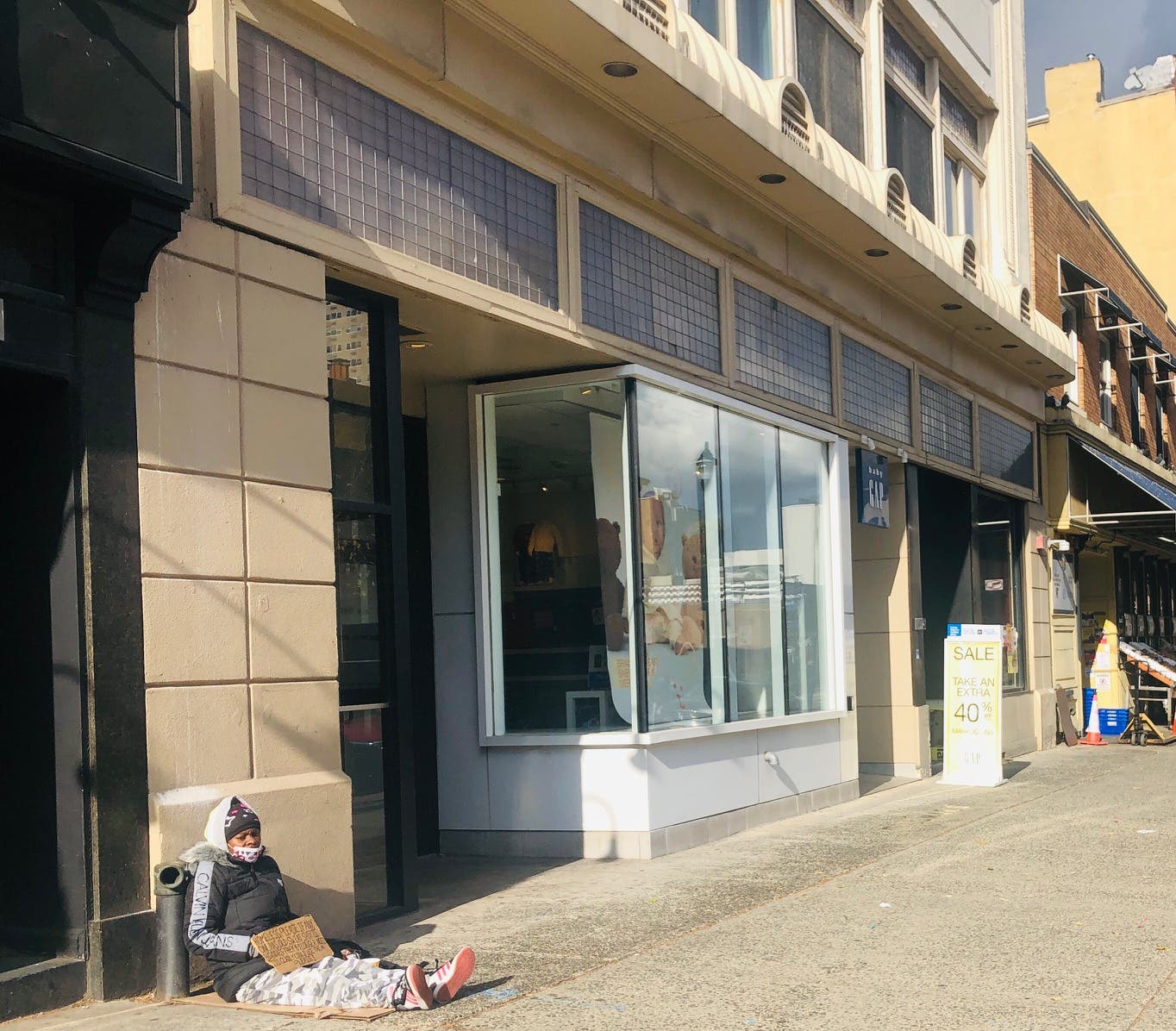
Harris' eulogy for Helmeck — in which she describes why he could never stay in a home, and how he benefited from small acts of kindness — is pasted below. Meanwhile, the difficult problem of homelessness can be seen daily in Hoboken's streets and in doorways, even as temperatures dip into the 30s.
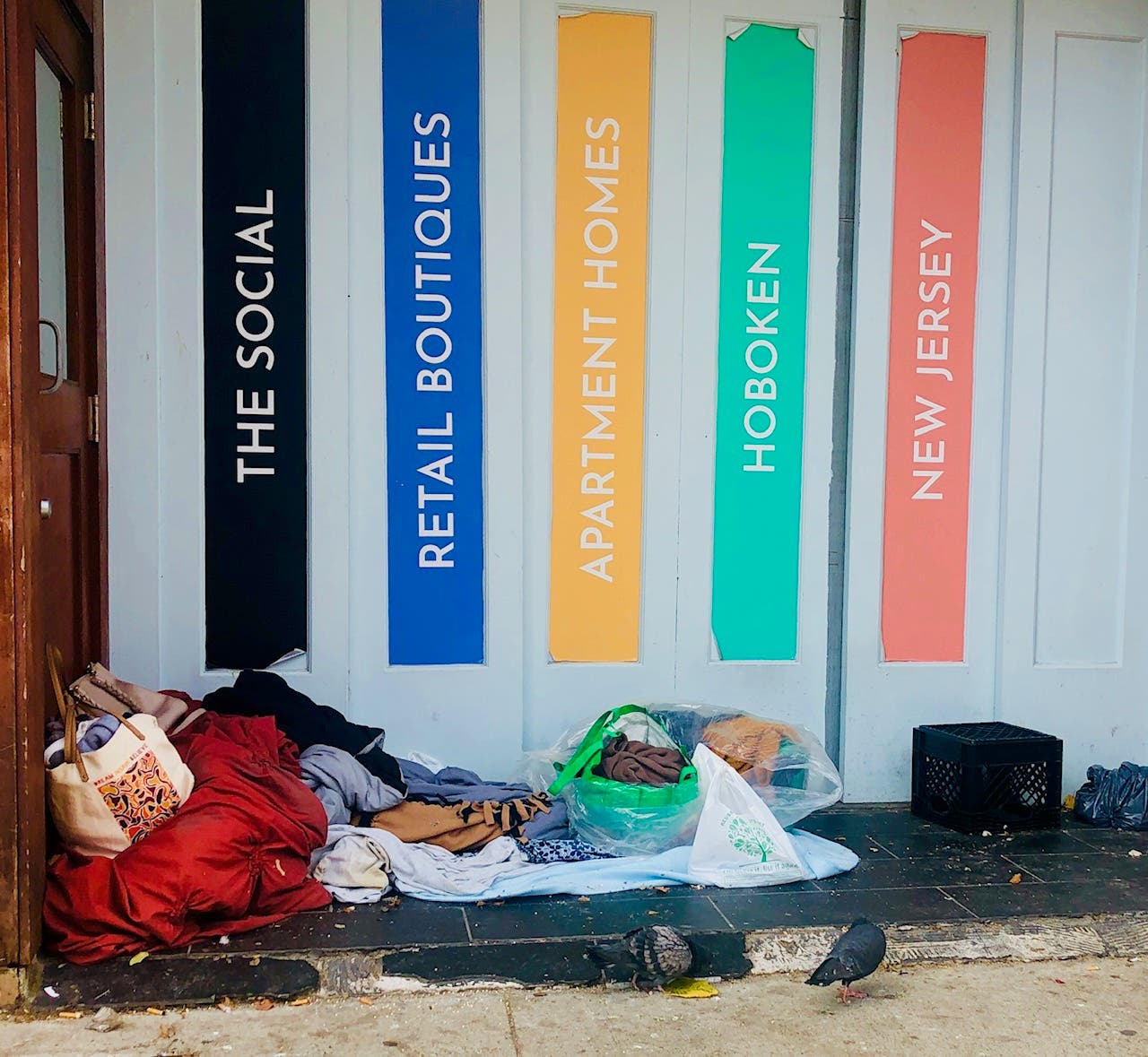
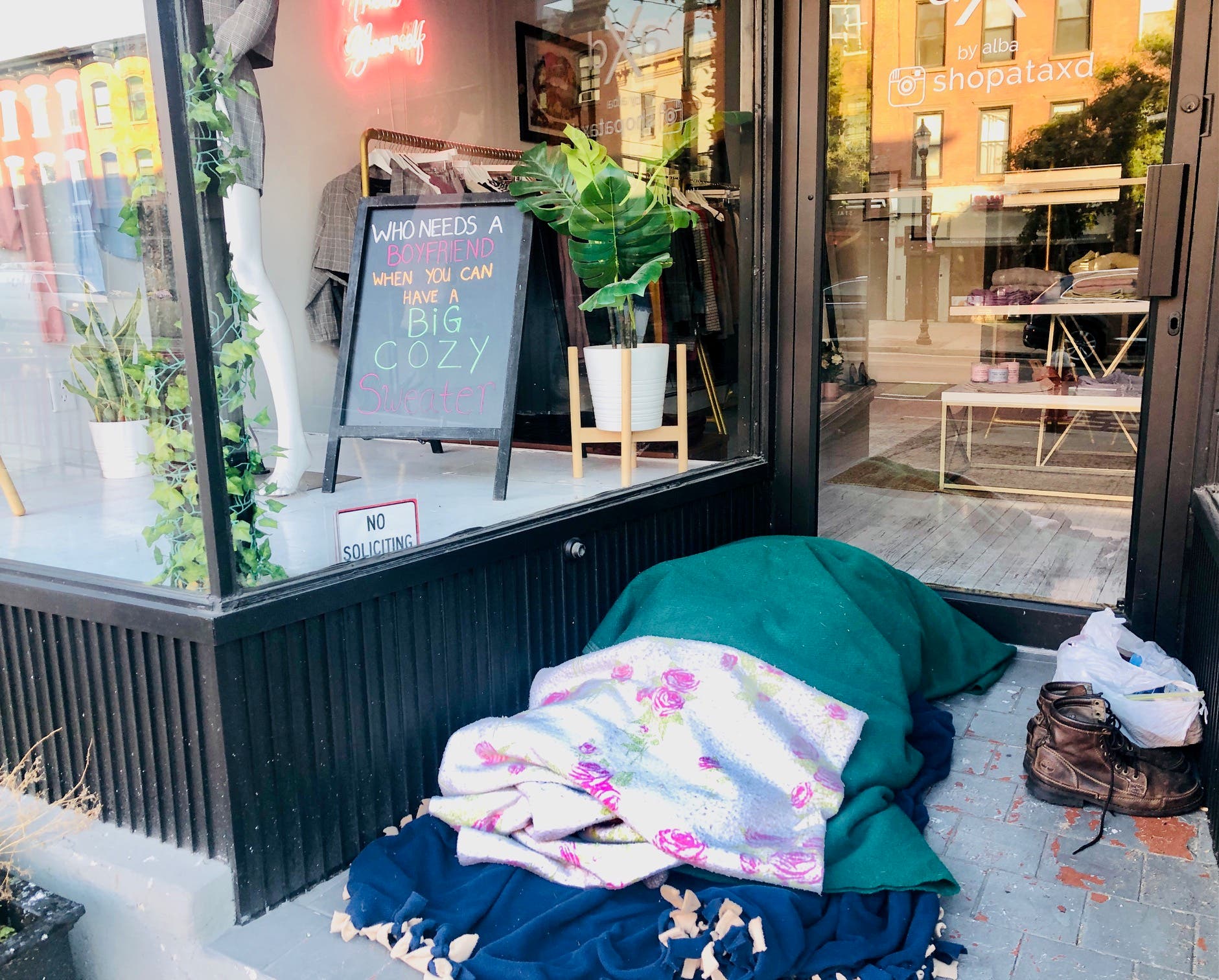
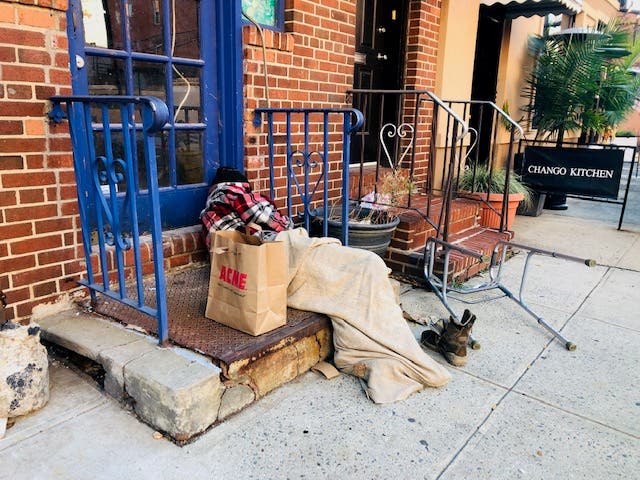
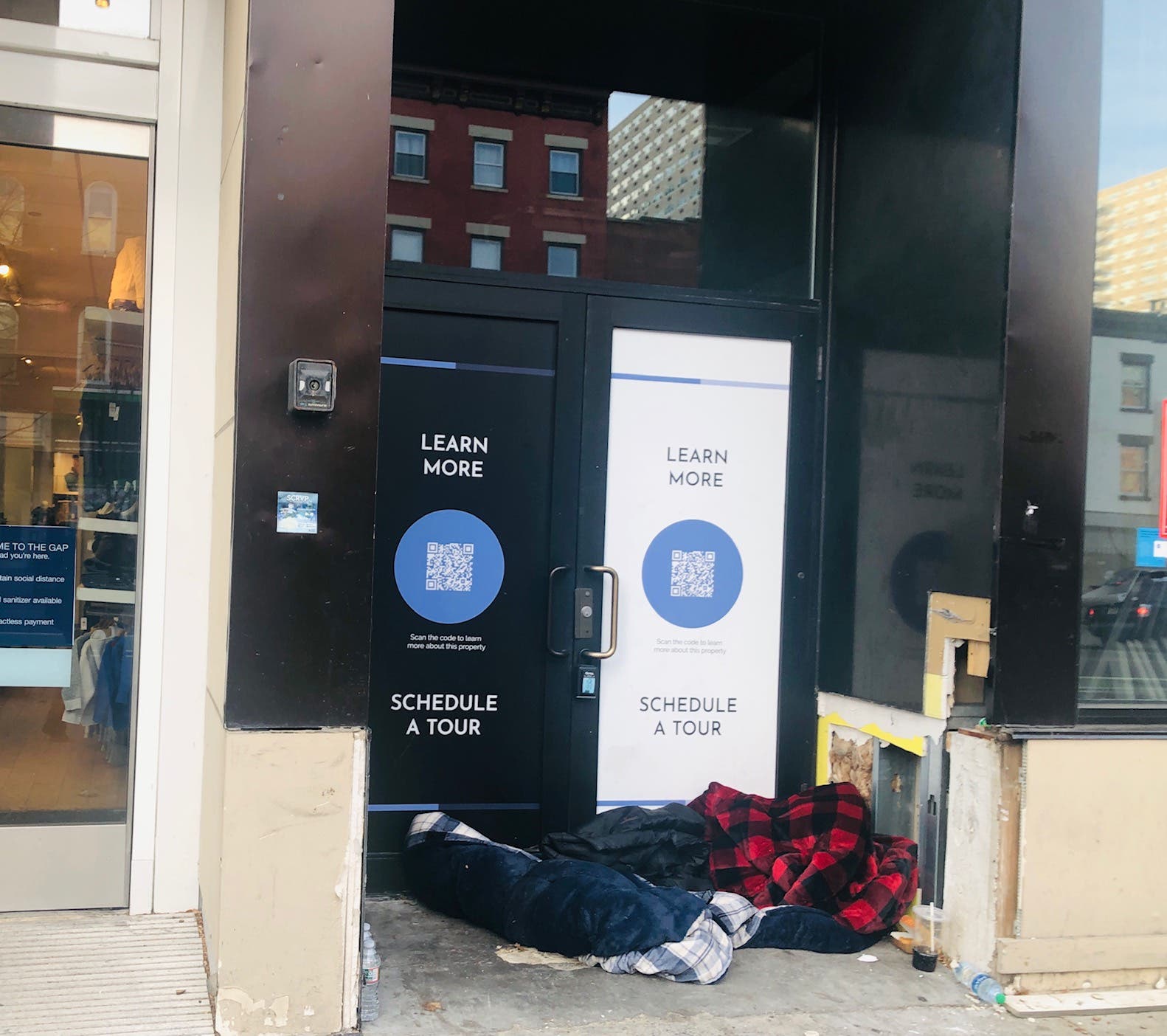
If you want to help out or reach April Harris, she's at injesusnamecharities.org or injesusnamecharities@gmail.com
The eulogy for Helmeck is here:
April Harris' Eulogy For Robert "Bobby" Helmeck
Who was the man who looked like Jesus who walked among us for so many years? He prompted untold kindnesses from hundreds in our city of Hoboken. Most did not even know his name.
His name was Robert Helmeck. He would say his name was “Bobby” if asked. He rarely spoke and when he did it was very softly.
He was gentle and patiently endured the many humiliations he experienced and just quietly walked away when he realized he was not wanted, or his presence made people uncomfortable.
He was solitary, always alone, in a city of 50,000 ... yet noticed.
He grew up here in Hoboken and suffered from schizophrenia. There are people who remember him before its onset. He was estranged from [relatives] by his illness. They passed away unable to help him become stable.
You might have seen him walking holding a container of coffee or sitting somewhere drinking beer. He slept in any crevice, hallway, alley, the side of the steps of Public Storage, behind CVS on Ninth Street and, lastly, at the rear of Trader Joe’s behind a wall where he was seen yelling at the garbage, ”Come on. Come on. Come on.”
He had a persistent hallucination of a group of people who tried to control him and told him he couldn’t go here or there. You might see him gesticulating and talking to himself. He was relating to this unruly group who did not allow him to cross the border out of Hoboken or go to the shelter.
You also may have seen him walking in the middle of the street oblivious to cars swerving around him.
You might have wondered how could he be helped? Could nothing be done? I think everyone in Hoboken has memories of an encounter with him and decisions made to respond to his immediate need: giving him something to eat, a few dollars, an article of clothing. These caring moments were the only love he received.
Still, he suffered greatly: subzero winters, drenching rains, unbearable heat waves wearing a winter coat. No one would voluntarily endure this.
He remained so incapacitated, unable to navigate social work and mental health systems without help, unable to arrange or be accepted by rooming houses or hotels for a night. He needed someone to accompany him and advocate. That was my role in his life for the past 37 years. I took him to appointments, got him in and out of hospitals for mental health, helped him get SSI, his ID, rented him room after room where he was eventually asked to leave.
The combination of his mental state, smoking and drinking made him a hazard. The last room I helped him get was at the YMCA five years ago. It lasted seven months.
When all else failed he would come to Our Lady of Grace Church where I worked directing In Jesus’ Name Charities. There, he could wash up and change his clothes.
The pandemic was brutal on him. He became more disheveled and filthy — with no options left.
I learned after 40 years of helping people not to be angry at institutions, organizations and agencies — systems filled with good people just trying to do their jobs with limitations, guidelines and funding designations.
There simply was nothing for someone in Bobby’s circumstances, and he was ineligible for institutionalization.
With his terminal diagnosis of advanced cancer, he finally qualified for a comfortable bed, pillow and medication to alleviate his pain.
He did not die forgotten on the street — he died in hospice service in our Hoboken hospital and I was grateful to be allowed to visit him for a half hour every day.
Who was this man walking among us whose resemblance to Jesus and suffering prompted all of the deeds?
Reflecting obedience to Jesus own words in Matthew: 25 — "When you’ve done it to the least of these, you have done it unto me. When I was hungry you fed me, when I was thirsty you gave me to drink, when I was naked you clothed me, when I was homeless you tried to shelter me.”
Many gave him a touch of love. It was the only love he had.
I ended up one day sitting with him on the steps of Brandt School, telling him he had a very important purpose in life.
"You look like Jesus and you are meant to be Jesus in people’s lives,” I told him. He laughed as if it was the most absurd thing he’d ever heard. It was wonderful to hear him laugh...
I am truly thankful that in spite of our helplessness and his, this outpouring truly shows that his life and even his death had meaning for all of us.
We bid farewell to Bobby, who was a part of so many lives. He has passed from our streets to the welcoming presence of the Lord.
- Read more about Robert Helmeck in his obituary here.
- Related: Helmeck got one write-in vote in the Hoboken mayoral election last month. Read more here.
You can sign up to get breaking news alerts in Hoboken or your town and a free daily newsletter each morning at 6 a.m. with local news. Sign up with your zip code here and you'll get an email asking for your preferences.
Get more local news delivered straight to your inbox. Sign up for free Patch newsletters and alerts.