Business & Tech
VIDEO: PSEG Teams With Google For Methane Mapping Project In Hudson County
What happens when New Jersey's largest utility provider teams up with Google Maps and the Environmental Defense Fund?


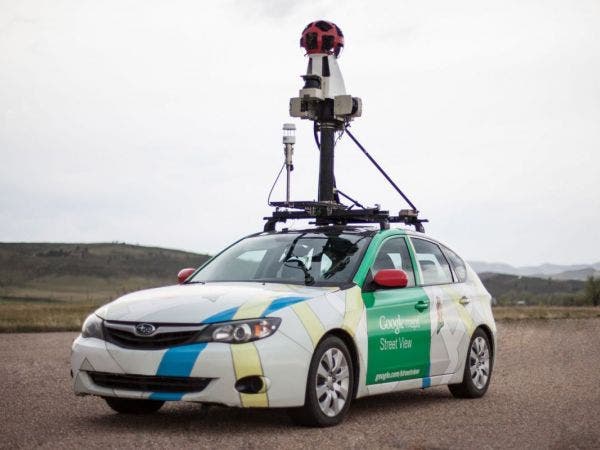
What happens when New Jersey’s largest utility provider teams up with Google Maps and the Environmental Defense Fund? Methane gets mapped.
PSE&G recently announced that new technology developed by EDF, Google and Colorado State University will help it prioritize which aging pipes are replaced first during its three-year, $905 million gas infrastructure replacement program.
“The key breakthrough is measuring the volume of gas escaping, and not just the number of leaks,” PSE&G officials stated in a news release earlier this month.
Find out what's happening in Hobokenfor free with the latest updates from Patch.
The collaborative effort began in 2014 and included mapping hundreds of miles of roadway in some of the most densely populated areas in New Jersey, including parts of Bergen, Essex, Hudson and Passaic counties.
Here’s how the team-up worked, according to PSE&G:
Find out what's happening in Hobokenfor free with the latest updates from Patch.
“PSE&G gave EDF information on the location and type of gas lines in target areas. A Google Street View car spent six months gathering millions of readings over hundreds of miles of roadway in some of the most densely populated areas in New Jersey, including parts of Bergen, Essex, Hudson and Passaic counties. The team used algorithms refined over several years to assess the vast data stream. PSE&G replaced sections with the highest company rankings first, and used EDF’s ranking to prioritize the rest, locking in methane reductions quickly while keeping safety the top consideration.”
Using data gathered by the Google Street View mapping car, PSE&G was able to reduce methane emissions from targeted areas by 83 percent and replace 35 percent fewer miles of pipe, the company stated.
According to PSE&G, leaks like those targeted by the project don’t usually pose an immediate safety threat. But leaking natural gas – which is mostly methane – has a powerful effect on the climate. That’s because methane has more than 80 times the warming power of carbon dioxide over a 20-year timeframe.
These leaks are a persistent challenge for utilities, particularly in the Northeast, where natural gas infrastructure is older, PSE&G stated.
Maps of the project areas and more data on the results are available online here.
“We are excited that new technology powered by Google can play an important role here, to advance the measurement, analysis, and communication of environmental information,” said Karin Tuxen-Bettman, program manager for Google Earth Outreach. “Making this information more accessible can make a meaningful difference in people’s lives.”
Photo courtesy of PSE&G
Get more local news delivered straight to your inbox. Sign up for free Patch newsletters and alerts.