Politics & Government
After a Rough Weather Year, New Technology Helps Roads Run Smoothly
Engineering and DPW work together on projects


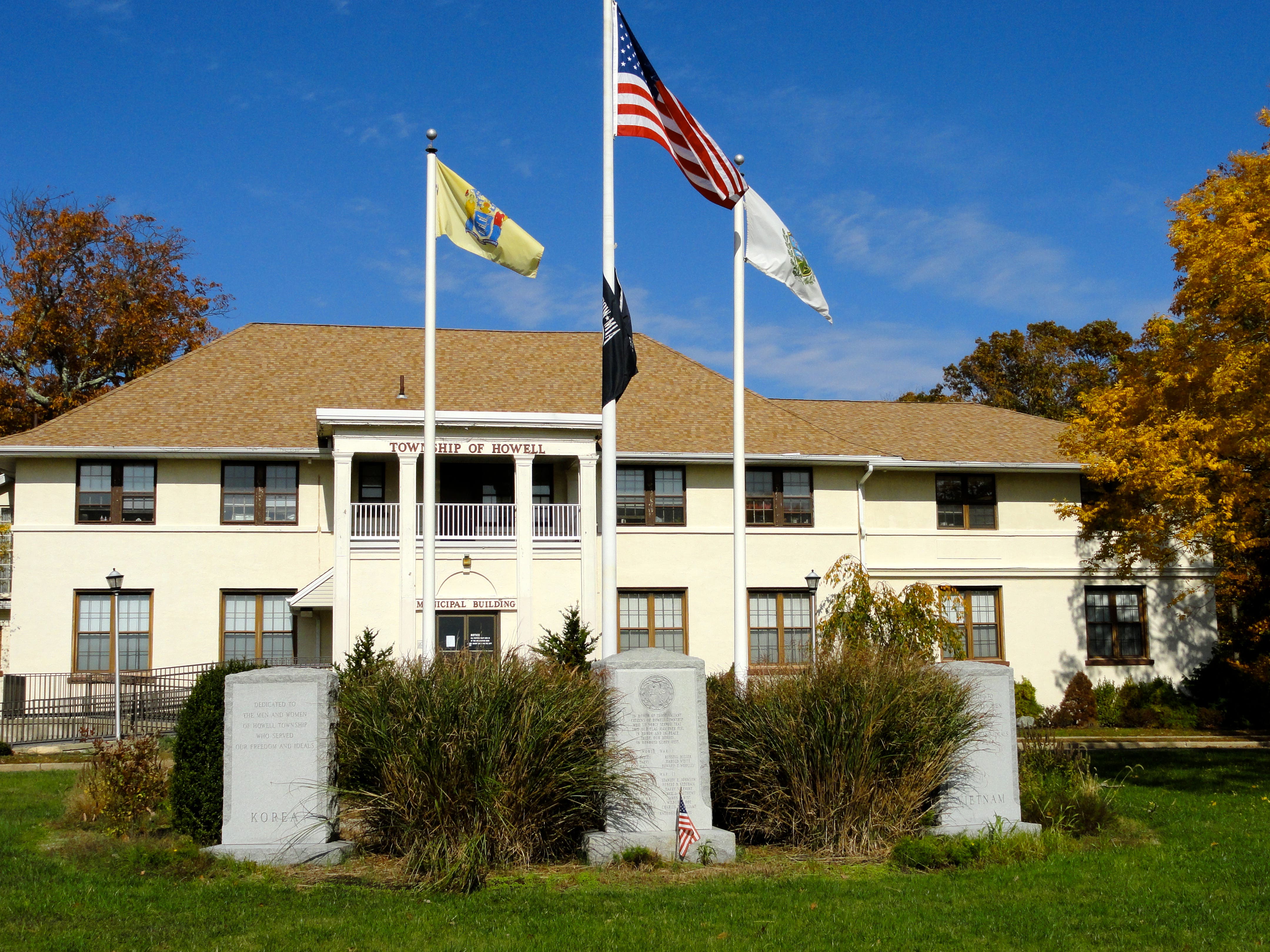
Over the course of the past year the roads in town have weathered blizzards, floods, near tornados and even a minor earthquake.
Taking all Mother Nature could throw at them, Township Engineer William Nunziato said thanks to improvements in technology and a combined effort with the Department of Public Works the damage has been contained through constant work on the roads.
The weather he said, is one of the biggest challenges faced by the roads and the road crews in addition to the use of the roads. "One is just the routine maintenence which is our in house stuff," he said. "You still need the trucks, you still need the equipment, you still need the manpower. We can deal with the potholes, we can deal with the smaller jobs but then the larger jobs you have to go out to bid."
Find out what's happening in Howellfor free with the latest updates from Patch.
And while the regular maintenance can be predicted in some instances, there are others where it is done on a case-by-case basis. "The challenge is really knowing you have a limited budget and trying to predict and forecast where am I going to get the most bang for my buck," Nunziato said. "Generally we need to keep up with Mother Nature on a limited budget."
Part of the reason for the success with the roads has been a collaborative effort with the Center for Advanced Infrastructure and Transportation (CAIT) at Rutgers University. With their help more than 480 lane miles of township roads have been assessed and put into a database to determine which need the most work and which can wait.
Find out what's happening in Howellfor free with the latest updates from Patch.
That 480 miles Nunziato said, does not include the county and state roads that also run through the township but is enough to keep his department busy. "There's a tremendous amount of roads," he said. And with all those roads, Nunziato said there have always been questions about how to decide which roads to work on. Thanks to the CAIT program he said they have their answer.
The CAIT program breaks the roads into three ranges. Those that are really bad, those that are in the middle and those that are in good shape. And with those three ranges come three different prices for their repair work. Nunziato said rather than only putting money into the really bad roads, they can now split the money to help more roads. "If you take the traditional approach of worst is first you're always spending your money on fixing the really really bad ones, but the ones that are new deteriorate over time," he said. "Now we're maintaining the newer ones, taking care of the mid range ones and also fixing some of the really bad ones."
Another reason for looking at the new technologies, he said, is that as with everything else in life, the materials they use are more expensive than they were in the past. "Knowing that there's newer technologies out there that were not out there before we try to economize," he said. One of those new technologies is called Full Depth Reclamation where the DPW can put down a layer of concrete under the pavement to help with the roads overall stability.
Nunziato said that while this method has been used in other areas, it is a new technique for the Garden State. "Out west where you have miles and miles of road they routinely just grind all that up and redo it," he said. "In a town like this it has its uses and its benefits. You're not going to do it on Route 9 on Aldrich Rd. or a road that's got thousands and thousands of cars. If you have a rural road in an area where there's not a lot of traffic and you've got this much black top and then just some sandy material beneath it I can't mill two inches." He said the FDR is a cheaper process that should help the township's efforts in the long run.
Even with all the roads the township has Nunziato said over the past 15 years a lot of work has been done to keep them as clean and passable as possible for drivers. Since 1995 Nunziato said 196 roads have been repaired at a total cost of approximately $14.8 million.
The engineer said that while the new technology has helped them to decide how to spend the money they have on road improvement projects, it also helps make the human element of the job easier. "We can justify saying to somebody your road was here and now it's here," he said. "It's difficult because some of the roads are in worse condition, but when you look at it from a traffic standpoint is it economical for me to spend $100 thousand for a road that has six cars versus a road that's in better shape that has 60 thousand cars.
For those residents with questions about the roadways in town Nunziato said the best way to handle them is to file a Q Alert with the township.
Get more local news delivered straight to your inbox. Sign up for free Patch newsletters and alerts.