Community Corner
Howell Girls Give Gift Of Community To Kids Fighting HARD Against Rare Diseases
Sisters take their battles against their diseases and channel it to helping others so no one feels alone.


HOWELL, NJ — "I forgot to turn off the pump."
Jonna Crocker laughs as she tells the story, recounting the day at school where her secret was nearly revealed to some of her classmates.
The 12-year-old Howell Middle School North seventh-grader had been out on the soccer field preparing for her team's soccer game when she discovered she'd forgotten something. As she walked back in the lockerroom, she was greeted with a familiar scent.
Find out what's happening in Howellfor free with the latest updates from Patch.
"And then I found my backpack was all wet," Jonna said. This was no ordinary backpack; it carried the pump that fed a nutritional liquid into her stomach and small intestine. And now that liquid had soaked the backpack. She shut off the pump and went back out to the field to play. Afterward. she said, "people were asking 'What's that smell,' and I just said, 'I dunno,' " shrugging her shoulders and giggling at the memory. She didn't tell them because she didn't want her teammates feeling sorry for her, Jonna said.
"We don't do the 'woe is me' in this house,' Jonna's mother, Tara, said. "We just try to make the best of every moment."
Find out what's happening in Howellfor free with the latest updates from Patch.
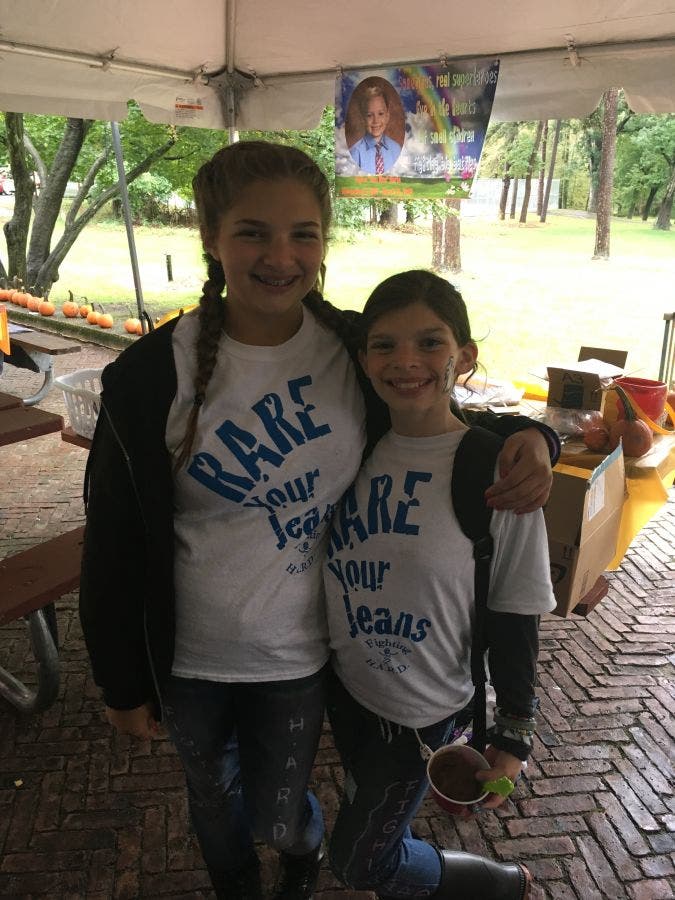
For the Crockers, making the best of every moment is defined a little differently, however. The family — Jonna, her sister Alexandra, 14, Tara and husband Jon — started a foundation, the Fighting H.A.R.D. Foundation, to help other families and children faced with challenges similar to theirs. In addition to Jonna's disease, in which her stomach doesn't work properly, Allie is fighting Crohn's disease and juvenile rheumatoid arthritis, Tara said.
"For years we didn't tell anyone about Allie's illness because we didn't want her to be seen as 'that girl,' " Tara said.
It's a dilemma faced by many who are battling rare illnesses. Who do you tell? How much do you tell them?
"We didn't want her (Allie) defined by it," Tara said. And the same goes for Jonna.
The family would rather be seen as Fighting H.A.R.D.
Jonna's story
If you just glanced at Jonna Crocker, you probably wouldn't realize she's battling a chronic illness. She smiles easily, laughs often and talks excitedly about Fighting H.A.R.D., the foundation the Crockers started to help other families with children coping with rare illnesses. This month, the foundation donated $10,000 to Jersey Shore University Medical Center's K. Hovnanian Children's Hospital for its Pediatric Pallative Care Unit, to help families whose childen are hospitalized for lengthy stays. The foundation also organized a pajamas and blankets drive that gathered more than 800 donations for the unit, Jonna and Tara said.
"It's a great feeling to give to others," Jonna said. She and Allie are very actively involved in the foundation, coming up with ideas for fundraisers and deciding how to help families. Currently, there are 15 families receiving help in various forms, both financial and emotional. "It just lightens your day to help someone."
It also helps Jonna keep busy as she battles a combination of gastroparesis and superior mesenteric artery syndrome. Gastroparesis is a disorder that slows or stops the movement of food from the stomach to the small intestine. It can cause a number of issues, with the main result being the person does not get nutrition from the food they eat. Superior mesenteric artery syndrome, also known as SMAS, happens when the first part of the small intestine, called the duodenum, gets compressed between two arteries, one of which is the superior mesenteric artery, according to the National Institutes of Health website on rare diseases. The compression causes partial or complete blockage of the duodenum, the website said.
There are only 400 people in the world who have SMAS, Tara said.
As a result, Jonna cannot eat food like most kids. No cheeseburgers. No random raiding of the pantry for snacks. No munching on Christmas cookies or candy canes, because her gastrointestinal tract simply cannot handle it.
"I used to eat anything and everything," Jonna said Thursday during an interview at Jersey Shore University Medical Center, where she has been treated since early 2015, when she first became ill.
"I'm an awesome cook," Jonna said, her mother nodding in agreement. Spending a Sunday making sauce, meatballs and homemade pasta is one of her favorite things to do, but for the time being she has had to stop doing it, because it's hard to cook food when you can't eat it.
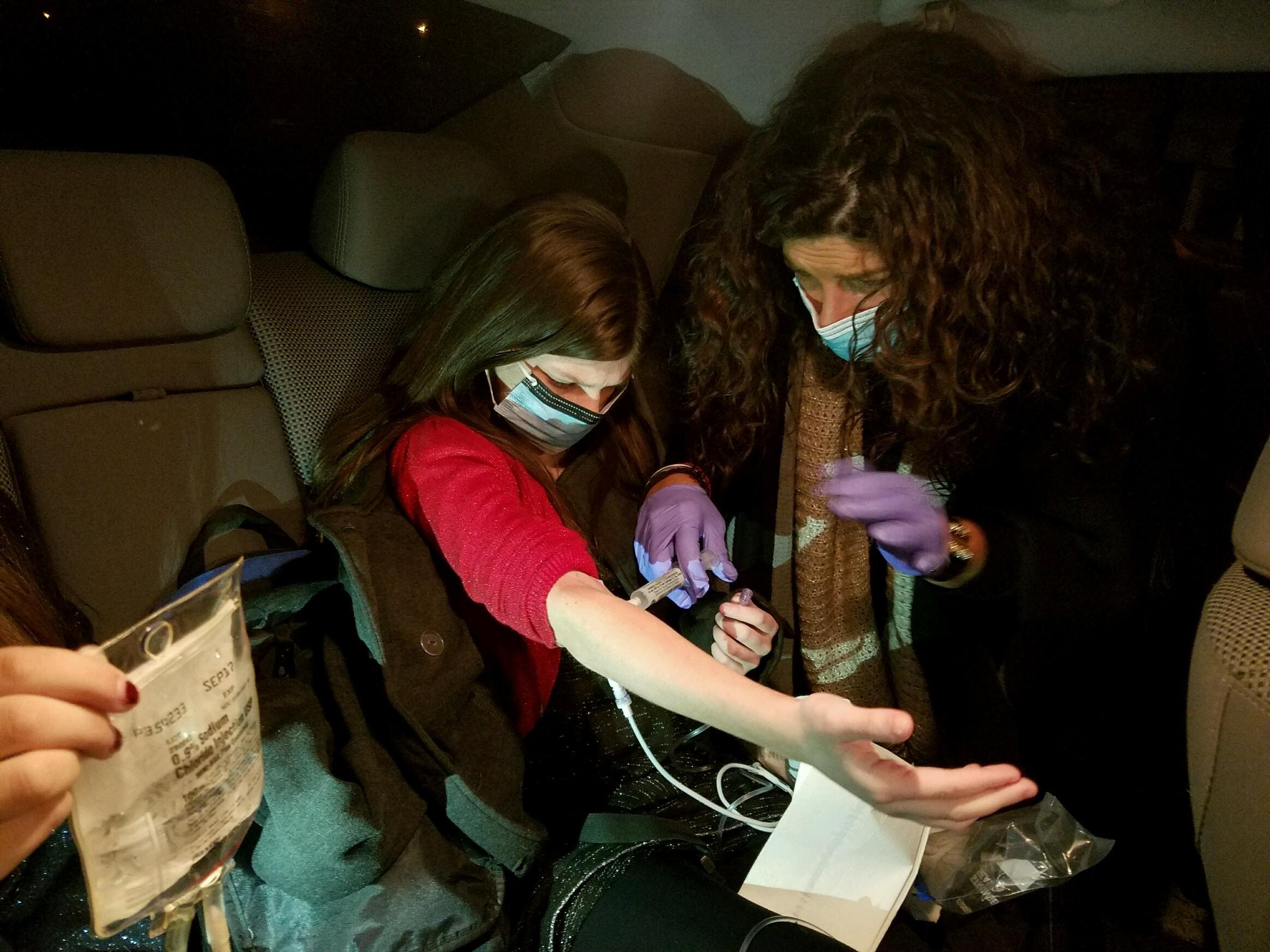
Jonna currently receives all of her nutrition intravenously through a tube called a PICC line, which is is a catheter in a vein in her arm. Called total parenteral nutrition, or TPN, the nutrients go right into her bloodstream. The aim is to not only deliver nutrition but enough calories to gain weight so she can become eligible for a procedure to address the gastroparesis.
Though Jonna said one of the side effects of the TPN is that she's not hungry, "we don't eat in front of her," Tara said, because they feel it's not fair to Jonna to do so.
It has been a nearly two-year battle that began when Jonna lost 20 pounds in just five weeks. It has resulted in multiple hospital stays, extensive testing and a variety of approaches to feed her, from a naso-gastric tube (a feeding tube through the nose into her stomach), to a gastric tube that pumped a formula similar to baby formula into her stomach, to her current PICC line that delivers nutrients directly to her bloodstream. Each had its challenges, but the PICC line is particularly difficult in that it exposes her to a higher risk of infection, which can be dangerous.
The weight loss, frequent hospital stays, challenges and uncertainty surrounding Jonna's illness have taken a toll on friendships and relationships, Tara and Jonna said. It can be very isolating at times, they said.
"Not everyone understands when we say we can't come to Christmas dinner because we don't want Jonna having to watch everyone else eat," Tara said. Some don't understand why they won't allow people to come visit when they are sick because of the risk of infection.
The PICC line is a more recent development; for a while Jonna had been able to eat light snacks like crackers, but the SMAS has forced her to stop. The hope the intravenous nutrition will help, Jonna put on enough weight to be able to eat small bits of food again, part of an effort to train her stomach to work properly. The other hope is weight gain will help her become eligible for a gastric pacemaker, which operates similarly to a heart pacemaker in that it electrically stimulates it to work the way it should naturally.
Just 70 people have received gastric pacemakers, and Jonna had just gotten on the elibility list when the SMAS was diagnosed, Tara said. That diagnosis removed her from being eligible, Tara said.
Then there's the issue of people asking how she's feeling, Jonna said. She doesn't feel well a lot of the time; it's hard to feel well when you can't eat normally. But when someone asks, her usual response is to say she's OK just because it's hard for others to understand, she said.
Fighting H.A.R.D. — H.A.R.D. stands for Having A Rare Disease — was already in the process of being created when Jonna became ill.
Jonna said she and her sister had been looking online for support groups and information for Allie, because "when you're sick with sometbing people can't see, you feel like you're all alone."
What they found were lots of groups for children with cancer, children with juvenile diabetes and other illnesses, but nothing for those with more rare illnesses. That's when the family, at the girls' suggestion, started the foundation, "because we didn't want people to feel alone."
"While our kids are fighting different things, there are some experiences that we all understand," Tara said of the other families in the foundation, such insurance frustrations. "Because these diseases are so rare, everything done to treat them is considered experimental," meaning endless battles over rejected claims. The Crockers' insurance, for example, has refused to pay for both a gastric tube and the TPN at the same time even though the goal is to try to retrain her stomach while at the same time making sure she is getting nutrition, so that ideally she can someday go back to eating normally.
"The treatment was prescribed by the top doctor at National Children's Hospital" in Ohio, Tara said. "But the insurance company rejected it. This is a doctor prescribing this. I don't understand it."
"The formula costs $50 a day," Tara said. Getting Jonna qualified for a gastric pacemaker and ensuring its $300,000 cost is covered by insurance meant putting her through three other surgeries first, all of them paid for out of pocket, Tara said. "It's frustrating."
For the kids, Jonna said, especially ones closer in age to her and Allie, the support is more personal: dealing with the naso-gastric tube, for example, can cause people to stare, making kids self-conscious.
"I created Feeding Friends," Jonna said, stickers that went over the medical tape used to keep the gastric tube in place. The stickers made Jonna feel less self-conscious when she went out in public with the feeding tube in her nose, she said. When she encountered another girl through the foundation who was upset about having to wear the feeding tube, she sent her Feeding Friends to make her feel better.
"I told her, 'think about it, you can eat while you sleep, which nobody else can do,' " Jonna said. The other girl wrote her back and told her that Jonna's words and the Feeding Friends had helped her feel better about going out with the feeding tube.
"It felt really good to help her," Jonna said.
Fighting H.A.R.D. to help others
Fighting H.A.R.D. has been helping 15 families in the Monmouth and Ocean county area in a variety of ways, including financial challenges brought on because of the rarity of the diseases.
"We give them money so they can do something as simple as going to the movies," Tara said, as well as assisting with the financial pressures brought on by medical bills and things insurance won't cover.
"We bought a wig for a girl who lost her hair" due to the girl's rare illness, Jonna said. Because the girl's illness isn't well-documented, the insurance company refused to cover the cost of a wig. "Actually, we bought two wigs," Tara said, "so she can feel beautiful" at a variety of occasions.
It's those kinds of things that help kids cope when they are battling a rare, chronic illness, Tara said.
The funding comes from corporate sponsors and from various fundraisers, Tara said; the Crockers do not benefit financially in any way from the foundation, which is an IRS-approved 501(c)(3) charity.
"We received our 501(c)(3) status in November 2015," Tara said, "and when we received it, the effective date was the same date we received Jonna's diagnosis."
The family's decision in December to make a $10,000 donation to Jersey Shore's K. Hovnanian Children's Hospital was a direct result of their own experience this fall, when Jonna spent a total of five weeks at the hospital. She had gone into the hospital to have her gastric feeding tube replaced with one that fed not only into her stomach but into her small intestine. The placement didn't go smoothly, however; "The tube kept curling up," Jonna said. After three weeks she was able to go home for a short time, but the problems continued and Jonna had to go back, which is when the TPN was put in. Tara said the hope is to switch from a PICC line to a port sometime early in 2017, which will reduce the infection risk.
Jonna's stay, however, meant lots of meals consumed in the hospital cafeteria or at local restaurants.
"The costs add up," Tara said, though she said the nearness of the hospital to home helps. "I was able to see my husband and my other daughter because we were close to home." That's something the Crockers want other people to be able to experience through the foundation's efforts.
The donation to the Pediatric Pallative Care Unit is part of that. The funds can be disbursed by child life specialists at the unit, who work one-on-one with families to ensure a child's emotional needs are addressed as well as their health needs.
"With this money, they can give the parents a gift card to go out to dinner, to just get a break," Tara said.
The foundation also led a pajama and blanket drive.
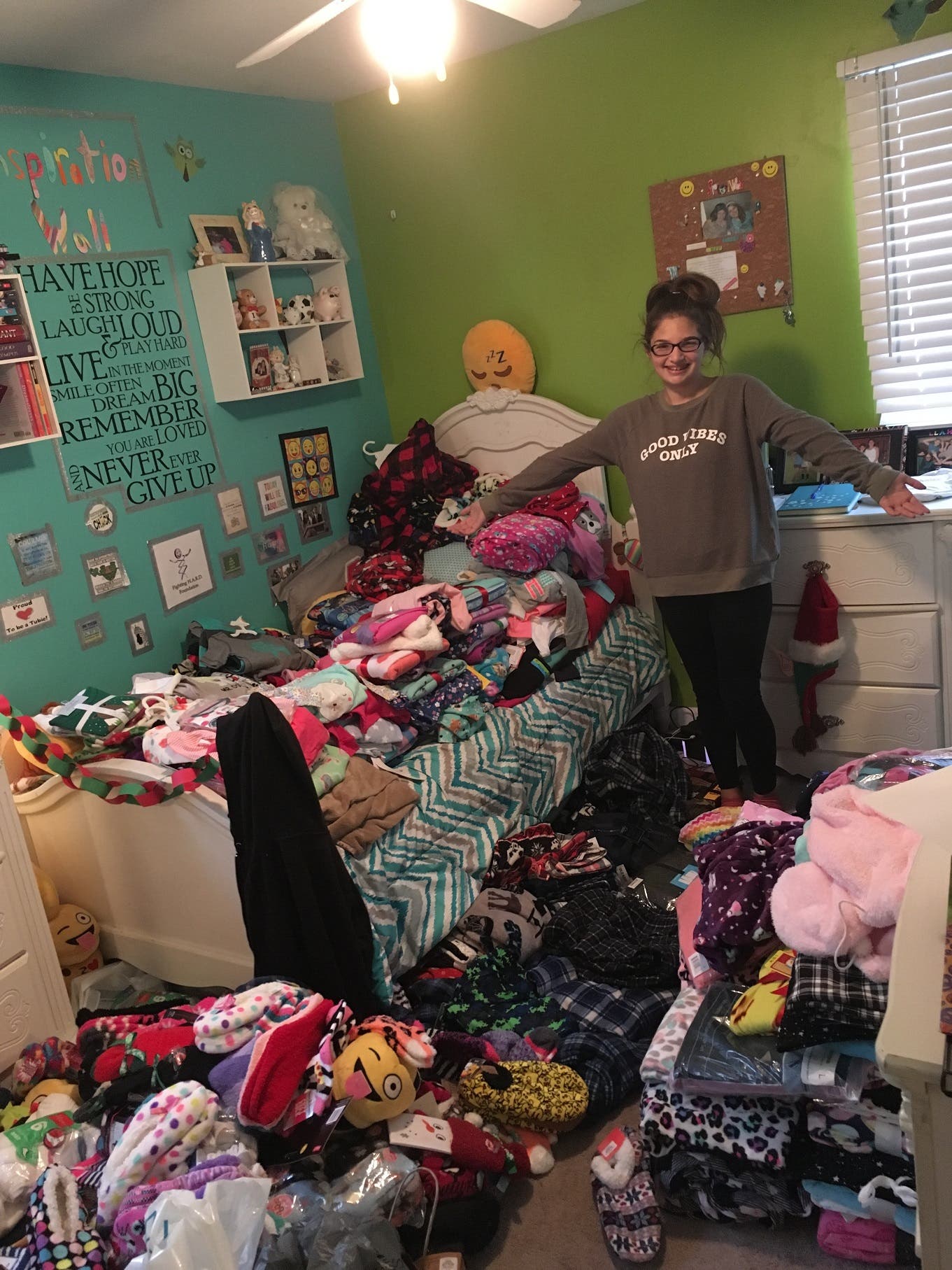
"One of the girls we help went to her school and said, 'This foundation helps me,' and collected more than 200 pajamas and blankets," Jonna said.
Tara said Investors Bank and the Colonial Coffee Shoppe, both in Howell have been staunch supporters of the foundation's efforts. The assistance from Investors Bank has been invaluable, Tara said.
"The manager at the Howell branch was Jonna's soccer coach," Tara said, and Steven Marcinkiewicz, who coached Jonna on the Howell United Heat, provided not only financial help but in help navigating the process of becoming a 501(c)(3).
The girls chose the Pediatric Pallative Care Unit for the funding because of the family's personal experiences with the staff.
"They are family," Tara said, noting the staff not only provides loving care during hospital stays but outside of their stays as well. Jonna is on a first-name basis with most of the staff, a fact born out by the staff who stop in to say hello and give her a hug.
"It's good to see you in street clothes," says one staff member, who has been walking the floor with a therapy dog on this particular day. It's a golden retriever, like Jonna's golden retriever, Murray, at home. The Crockers also have Domino, a Labrador retriever/wired hair terrier mix they got for Allie.
"Allie is doing much better," Tara said of her older daughter, who receives shots twice a week to combat the effects of the juvenile rheumatoid arthritis. She loves to draw and puts her artistic skills to work on the foundation's website, Tara said. Allie also is actively learning American Sign Language, prompted by becoming friends with a classmate who is deaf.
"She's really good at it,"Jonna said, noting that Allie can sign a number of popular songs because she's learned so many words.
Being a 'normal' kid
Jonna's illness forced her to quit playing travel soccer, because her family couldn't justify the expense while she was sidelined. That's why she tried out for the middle school team, she said.
"I love playing soccer," Jonna said. Having to give up the travel team was difficult, so Jonna made a bargain with her mother: she would give it up on the condition that she be allowed to try out for the middle school team.
"The school district has been awesome," Tara said, with the administration and teachers helping to ensure Jonna doesn't fall behind despite her hospitalizations. But while some knew of the severity of Jonna's illness and the complexity of her treatment, not everyone did.
Jonna said she tried out for the middle school team without telling the coach about her gastric tube.
"I would just disconnect it myself, and wrap my stomach," Jonna said. "I didn't want her to keep me off the team because of it, but I didn't want her to put me on the team because she felt sorry for me."
Once Jonna made the cut, she and Tara sat down with the coach and explained what was involved. Jonna, a forward, played the middle school season and while she didn't play extensive time, "I made a lot of assists," she said.
"I play hard," Jonna said, grinning. "I got hit in the stomach with the ball once," Jonna said. "I figured as long as my tube didn't come out I was OK, and I had it pretty well wrapped."
"It was very stressful," Tara admitted. But she understood why it was important to Jonna, to be able to do something like a normal kid.
"It just made me super happy to be able to do it," Jonna said.
Jonna said her teammates didn't know — despite the leaking pump episode.
"Only my best friend who's on the team knew, though I guess everyone will know now," Jonna said, and grinned.
That knowledge may mean a lot of questions about what she faces — something she has become accustomed to navigating. "There's a balance between what you tell and when the questions are too much," she said. But Jonna realizes that getting the message out about what kids with rare diseases face can help the foundation do more to help others.
"People often don't know how to help, but if you tell them, they jump right in," Tara said.
"We want to make sure kids fighting rare diseases know they're not alone," Jonna said, something the families in the foundation do for each other all the time, bringing dinners, or just being a listening ear.
The biggest thing they have learned, Tara and Jonna said, is the ability to appreciate the littlest of things.
"My husband said it means the world to him to see my car in the driveway when he comes home from work," Tara said. Jon works as a firefighter in Monroe Township, and when Tara's car is in the driveway, he knows everyone is home and no one is in the hospital.
"It's something you wouldn't think of unless you've been through it," Tara said.
"The minute we're all doing well enough to just hang out, you really appreciate it," Jonna said.
It's something they keep fighting H.A.R.D. to achieve — not only for themselves, but for every family fighting a rare disease.
If you would like to know more about the Fighting H.A.R.D. Foundation or how you can help, click this link.
Photos courtesy of Tara Crocker
Get more local news delivered straight to your inbox. Sign up for free Patch newsletters and alerts.