Schools
Architects Detail School Energy Projects Following Questions From Residents
Architects break down the estimate, bond, bid, and cost of the school district's solar panel project

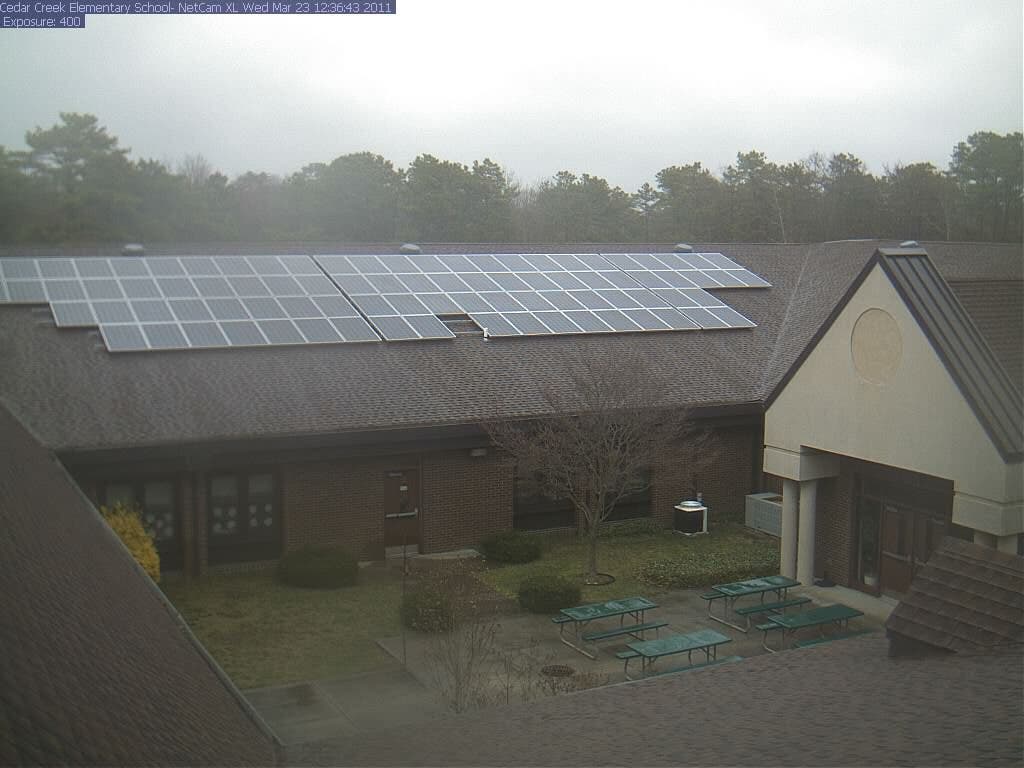
Lacey Township School District’s solar panel project has been under scrutiny by the public for bonding $19,806,000 for an $11,540,000 project.
“I just have a really hard time being off 40 percent for whatever the reasons,” Lacey resident Tim O’Connor said.
But the district credits the project to saving approximately 35 percent in electricity costs and generating $1.1 million in Solar Renewable Energy Credits (SRECS), accomplishments that helped lead to a zero percent tax increase in the proposed budget.
Find out what's happening in Laceyfor free with the latest updates from Patch.
Because residents questioned the estimate, O’Connor wondered why the district did not go out to bid for an architect.
“Public sectors don’t go out to bid for certain professional positions because you have to interview for capability,” Superintendent Richard Starodub said. “I don’t know of any other school districts and other projects that has ever put an architects contract out to bid.”
Find out what's happening in Laceyfor free with the latest updates from Patch.
Architects submit proposals and then they are interviewed, Starodub said.
The school district also trusted architect Di Cara and Rubino’s work as they have used them for over 20 years. Di Cara did the new middle school, five additions on the high school, the original Cedar Creek Elementary School building, an addition to Mill Pond Elementary School, and the administrative building, Business Administrator James Savage said.
There had also been questions as to the architect’s paycheck.
The architects, Di Cara and Rubino, made $1,485,000 for their contract.
Resident Richard Bidnick questioned what that figure was based on. Bidnick thought their payment was based on the construction costs. If that was the case, and their estimate had been accurate according to the bid, the architects would have been paid for $877,000.
Di Cara and Rubino’s bill was a fixed fee based on the budget they prepared, over $16 million. Their fee, although unrelated, was approximately 7.5 percent of the construction costs.
The architect, Joe DiCara, made a presentation at the school board meeting explaining the major gaps between the estimate, bid, bond, and actual costs of the project.
The Project
There were four projects related to energy efficiency and green attributes including roofing, windows, boilers and solar panels, Di Cara said.
“As you can see from your energy consumption, collectively, with the renewable energy you’re creating and the conservativeness of all the other aspects have overall reduced the energy consumption in this district tremendously,” Di Cara said.
The Lanoka Harbor and Cedar Creek Elementary Schools had roofing work done. Insulation was added, roofing conditions were improved, and electrical switchgears were modified.
The school district’s roofs were approximately 10 years old with 20-year warranties. The replaced roofs were valued at $3.5 million, which the district received at no cost, Di Cara said.
The boiler system in Forked River Schools was replaced. This project included two new boilers.
The windows at Forked River and Lanoka Harbor Elementary Schools were replaced as well. Large drafts used to creep through the old windows, Starodub said.
And then, of course, solar panels were put on each of the six schools.
Project
Company
Cost
Solar Panels
Angelini
7,639,560
Roofing
Strober Roofing
756,456
Boilers
Mechanical Preservation
467,885
Windows
Architectural Window
829,475
The Estimate
The estimate was dictated by the Office of Clean Energy based on a system called PB Watts, which is a calculator used to determine how many kilowatts an hour the system will produce, Di Cara said.
Di Cara started the project in January 2008 by developing a team with a mechanical engineer, structural engineer, electrical engineer, prime consultant, and an energy consultant, he said.
The estimate was not submitted to the state until October 2008. The estimate was based on kilowatt per hour and cost per square foot.
Di Cara’s team provided various ranges for cost per watt ranging from $8 to $11 per watt. It was a wide range but it was based on many aspects, he said.
The average cost per watt was between $8 and $9.
The cost per square foot was $98. Di Cara developed this number by looking at a typical array of solar panels. This estimate came to $8.80 a watt.
The team then developed a layout of panels to come up with a total. They figured a total of 1,500 kilowatts, Di Cara said.
Other factors such as structural work will increase the cost range, Di Cara said.
Their total estimate including construction, fees, and other costs was $19,806,000. Their estimate on construction was approximately $16 million.
The Bond
The school district bonded for over $19 million due to the estimate. This number was approved by the state Office of Facilities, Savage said.
The accepted bid was around $12 million so that left the school district with more then $7 million remaining.
“When the number was developed we hadn’t hit that recession as bad as it had become. Contractors are hungry as heck out there and they were sharpening their pencils a little better,” Savage said.
The remaining money has to be returned to the taxpayers, according to law, Savage said.
The school district is paying three percent interest on the bond and the debt service aid pays 40 percent of the bill every year, Vice President of the School Board Jack Martenak said.
This bond cannot be paid back early and has limits according to certain years, Martenak said. The bond will be callable (the school district could pay back early) in 10 years. The principal cannot be paid down until 10 years as well, Martenak said.
The school district returned $2,230,000 during the 2010 to 2011 school year and will return $3,280,000 next year. The district might split the remaining money up over the following two years, Savage said.
The Bid
From the time Di Cara made the estimates to the time they took bids was almost a year.
Di Cara took bids in May 2009. Seven contractors bid on the project ranging from $7.7 million to $14.1 million. The average bid was over $9.2 million.
“The bids came in extremely well,” Di Cara said. “The district truly benefited from the market condition that existed at the time of the bid.”
Several reasons accounted for the low bids, Di Cara said.
Construction costs went down, Di Cara said.
At the time of the estimate, contractors reported a tightening in solar panels. They were difficult to obtain, Di Cara said. When the bid came in lower than they anticipated, contractors reported that solar panels were unusually available.
“There were market changes in Germany because it’s a worldwide market and there was a tremendous supply of panels on the market,” Di Cara said.
Competition increased as well, Di Cara said. About three years ago there were 60 qualified solar installers. Today there are 600.
The economic conditions also favored the school district, Di Cara said.
“The economy just fell off the cliff. Construction as we’ve seen it in other aspects of projects virtually round to a halt. When contractors look at this, they give huge discounts in the bid,” Di Cara said.
Since the Lacey Township solar project, projects are coming in at $4 a watt, Di Cara said.
“Panels are very susceptible to what happens to the economy and the world,” Di Cara said. “We’re seeing a whole new world out there in terms of bidding. You’re seeing a huge level of competition and material price is varying all over the place. It’s an interesting time.”
The Results
The money generated from SRECs and saved through electric bills is the result of various factors, Di Cara said.
The project is producing 11 percent more clean renewable energy then anticipated by the design criteria, accounting for two bad months for snow and rain this year.
“Every step in the process you have energy conservation which saves you money, you’re generating clean renewable energy that you’re selling, you have not had to pay your local utility because you produced 1,400 SRECs, and you also won’t pay electric charges for the energy you’re producing,” Di Cara said.
The district reduced CO2 by over three million pounds of green house gases in the atmosphere and the project is the equivalent to running over 200 homes for a full year of their energy costs.
The district is expected to generate $3.2 million from SRECs, which are certificates traded in the online market. They are projected to generate $1 million every year for three years.
So far, the district has generated approximately $840,000 in SRECs. The district may surpass the projected $1 million for this year, Savage said.
Di Cara and Rubino work with many schools across the state on projects. School district’s always mention Lacey Township’s solar panel project.
“They’ve heard about your success and you have raised the bar in terms of performance that every other district is looking at. You are envious for many, many districts in the state of New Jersey,” Di Cara said. “We are proud to be a part of this.”
Get more local news delivered straight to your inbox. Sign up for free Patch newsletters and alerts.