Community Corner
Health Department Warns of Whooping Cough Outbreak In Ocean County
Adults should be vaccinated against the bacterial disease, which can be especially severe in children, say health officials

The Ocean County Health Department is warning residents of a local outbreak of pertussis, or whooping cough, and is urging people to make sure their vaccine records are up to date.
Pertussis is a bacterial infection of the lungs that starts like the common cold but later causes severe, violent and rapid coughing with a characteristic “whooping” sound, according to health officials.
It’s not unusual to see a few cases of the potentially deadly disease each year, said health department spokeswoman Leslie Terjesen, but since the end of 2011 there’s been a spike in the number of occurrences in Ocean, especially in the northern part of the county.
Find out what's happening in Laceyfor free with the latest updates from Patch.
“Toward the end of December we started seeing more cases,” she said. At this point, she said, state health officials have determined the cases are linked and the number of infections is significant enough to label it an outbreak.
The disease can be life threatening, especially for babies, Terjesen said. “Infants don’t have as wide a windpipe as children, so they’re more likely to die from pertussis,” she said.
Find out what's happening in Laceyfor free with the latest updates from Patch.
According to the CDC, about half of infants under the age of 1 year who get pertussis end up being hospitalized. Of those, one in five get pneumonia and one in 100 die.
Vaccination among children and adults is key to preventing the disease, said Terjesen.
“We’re asking people to please check their vaccine records and make sure they and their children are up to date,” she said. Because infants can’t start the vaccine regimen until they’re 2 months old, “most babies catch pertussis from a teenager or an adult living in the same house,” said Terjesen.
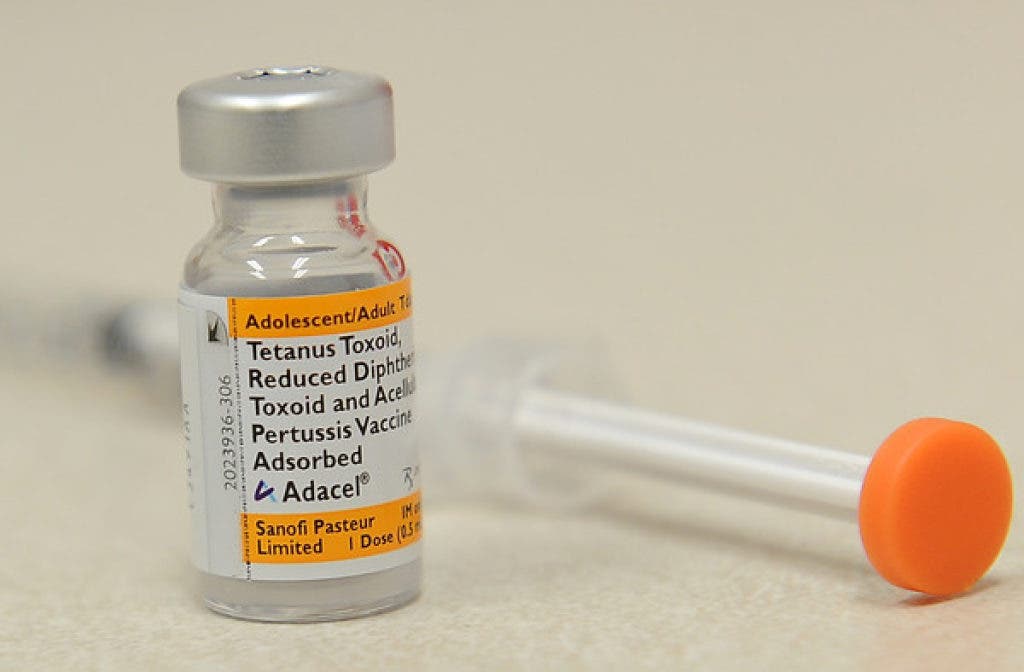
The adult and adolescent booster vaccine is called Tdap, she said, and covers tetanus, too. But no matter when adults last had a tetanus booster, they can still get the Tdap shot. The vaccine may prevent the disease 100 percent of the time, she said, but the more people get the vaccine, the better the whole population will be protected.
In addition, said Terjesen, people should follow other common-sense approaches to avoiding exposure, including frequent handwashing and covering coughs and sneezes. And if you’re sick, she said, stay home.
“People need to protect themselves,” she said.
The health deparmtnet said the Advisory Committee on Immunization Practices (ACIP) recommends a four-dose primary series of DTaP at 2, 4, 6 and 15-18 months of age, followed by a fifth booster dose given at 4 to 6 years.
ACIP also makes the following recommendations for the administration of the Tdap booster:
- Adolescents 11-18 years, preferably at the 11-12 year old check up.
- All healthcare personnel who have not yet received a dose of Tdap, regardless of age.
- All adults, including those over the age of 65, should receive Tdap for their next booster dose of tetanus containing vaccine, if they have not previously received it.
- All adults, including those over the age of 65, who have or who anticipate having close contact with an infant less than 12 months of age and who have not received Tdap, should receive a single dose to protect against pertussis and reduce the likelihood of transmission.
- All adult who wants to be protected from pertussis should receive this booster.
- New mothers who have never received Tdap should get a dose as soon as possible afterdelivery.
Get more local news delivered straight to your inbox. Sign up for free Patch newsletters and alerts.