Business & Tech
Lacey Mechanic Revives Vintage Typewriters From His Home
Ian McAndrew restores vintage typewriters from his home in Lacey and sells them to people around the world.


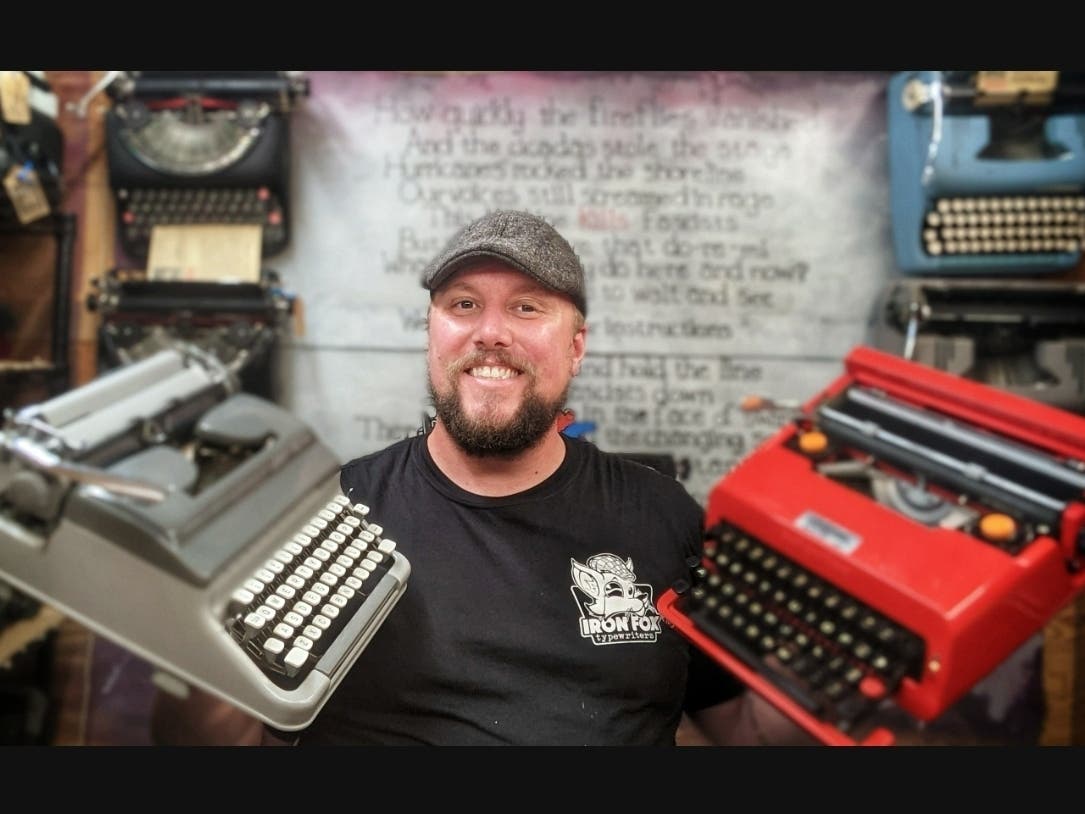
LACEY, NJ — Anyone in the market for a vintage typewriter can easily find thousands for sale online that appear to have all the keys and gears. But whether they actually work is another story. A Lacey man is on a mission to ensure that these antique machines can be used for more than just decor.
Ian McAndrew, a 39-year-old artist and mechanic, began restoring and selling vintage typewriters for fun a few years ago. Now his passion has evolved into an online store and Etsy shop.
Iron Fox Typewriters is a one-man operation run out of McAndrew’s home workshop in Lacey. He has shipped typewriters and merchandise to people around the world, serving customers from the United States, South America, Europe and Australia.
Find out what's happening in Laceyfor free with the latest updates from Patch.
“I want to be able to spread that same passion that I felt with my very first typewriter, and that I feel every time I write a letter or I journal or I create art with a typewriter,” McAndrew said.
Love At First Type
Find out what's happening in Laceyfor free with the latest updates from Patch.
The first commercial typewriters were invented in 1874 and became a standard fixture in most offices up until the 1980s. Some of the typewriters that McAndrew has repaired pre-date World War II. Though he’s enchanted by the storied history of each machine, McAndrew explained over a Zoom call that he’s not stuck in the 19th century.
But when he sat down at a typewriter for the first time — something clicked. He bought his first typewriter, a 1969 Smith Corona Corsair Deluxe, in October 2018.
“I got that first typewriter and absolutely fell in love with typing,” McAndrew said. “There’s a certain amount of romanticism to it. Sitting down in front of a typewriter with no phones, no smart watches, no digital distractions on a long enough timeline is the path to finding your true creative self.”
McAndrew’s budding passion led him to purchase a second one and a third for himself until he had five typewriters in his house. With every machine he took in, McAndrew studied how they worked and learned the unique quirks that came with every make, model and production year.
By January of 2019 he had steeped himself in everything he could pull from internet sources about how to maintain and repair typewriters. He also began repainting some, experimenting with his own custom designs on machines manufactured after 1950 that were not considered rare.
“These things are brilliant and they’re beautiful, but a lot of them are ugly. The paint they use is bland and boring and depressing,” McAndrew said. “They were certainly painted for the times, so I just started experimenting with how to strip paint off and apply new paint.”
The result was typewriters that shimmer in bright bursts of color — baby blue, neon green, hot pink.
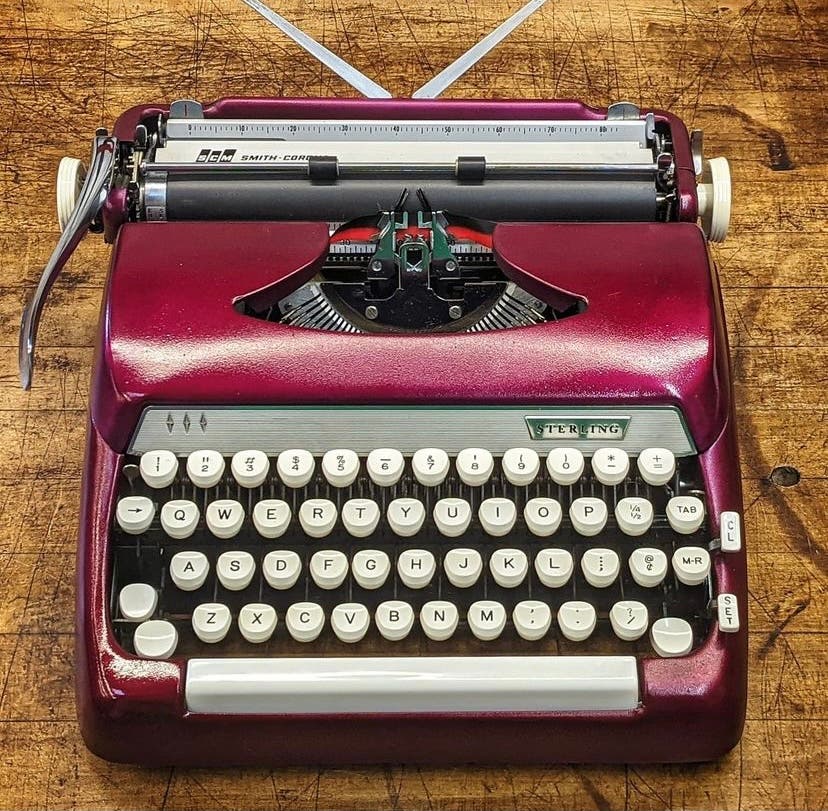
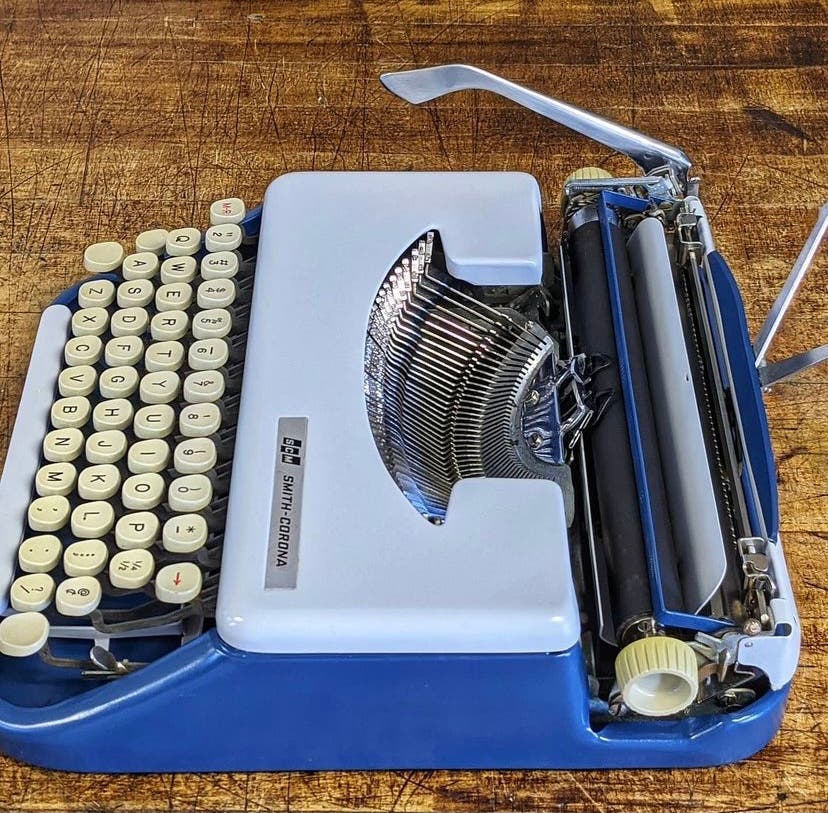
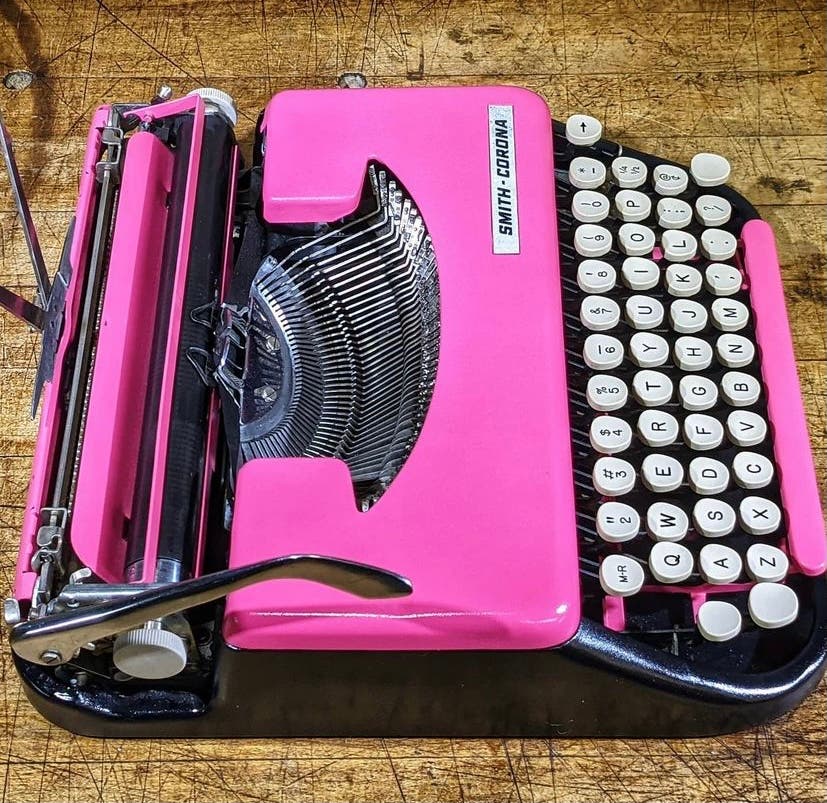
McAndrew started buying cheap ones, fixing them up and giving them to family and friends who he thought would appreciate them, which turned out to be a smaller circle than he expected.
“I’m like ‘Well giving them as gifts is falling flatter than I hoped. Maybe someone online is willing to pay for them’ and it turns out there was,” he said.
Until the coronavirus pandemic took hold, McAndrew and his wife had been running a restaurant. Under new circumstances, McAndrew transformed his side hustle of restoring typewriters into a full-time gig.
In two and a half years, McAndrew has serviced as many as 200 machines and attracted business from people around the world through Iron Fox Typewriters' online presence.
‘Make Sure Each Key Fires’
Sourcing typewriters was easier pre-pandemic, McAndrew said. He used to search for them at flea markets, garage sales and estate sales. But now those auctions have shifted to an online space where McAndrew must determine the condition of an antique machine just based on photos.
Once the typewriters are delivered to him, McAndrew examines them closely to see if any parts need replacing or adjustments. McAndrew first performs a type test on each machine to “make sure that each key fires.”
If they don’t, he checks behind the keys to examine the type bars and type slug, which must be “painstakingly aligned” to produce a clean typeface. Using old hand tools, he adjusts the array of thin metal type bars one-by-one until they are all aligned and none are left sticking up.
Each machine will usually require a fresh ribbon spool that are still produced and easy to come by on Amazon, McAndrew said. Ribbons traditionally contain black ink, but now manufacturers also make dual-colored ribbons. For example, his daughter has a teal Smith Corona Super-G typewriter with a teal ribbon to match it.
McAndrew is also tasked with fixing machines that were once sprayed with WD-40 in an attempt to lubricate the keys. According to McAndrew, it’s a common misconception that typewriters require lubrication.
Instead, WD-40 will harden overtime and strain the keys. To remedy these machines, he must polish each key with lacquer thinner to loosen them up.
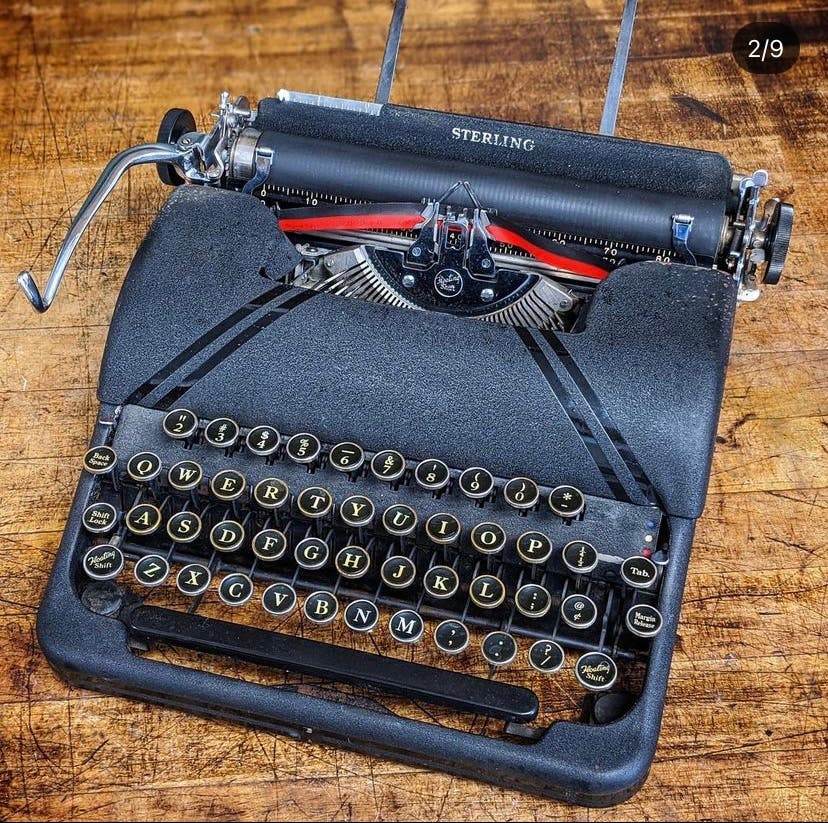
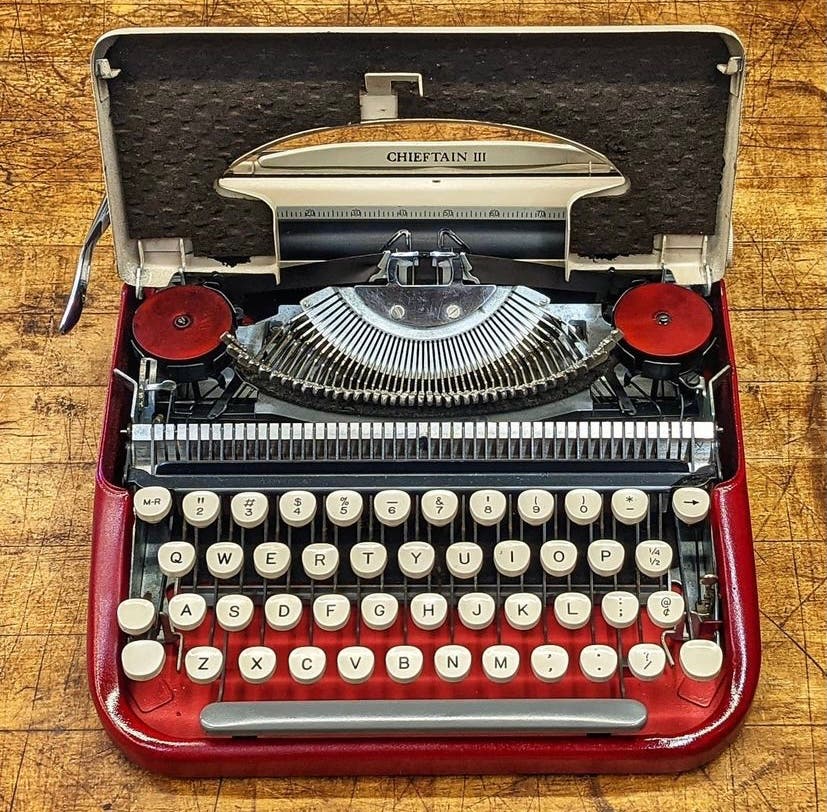
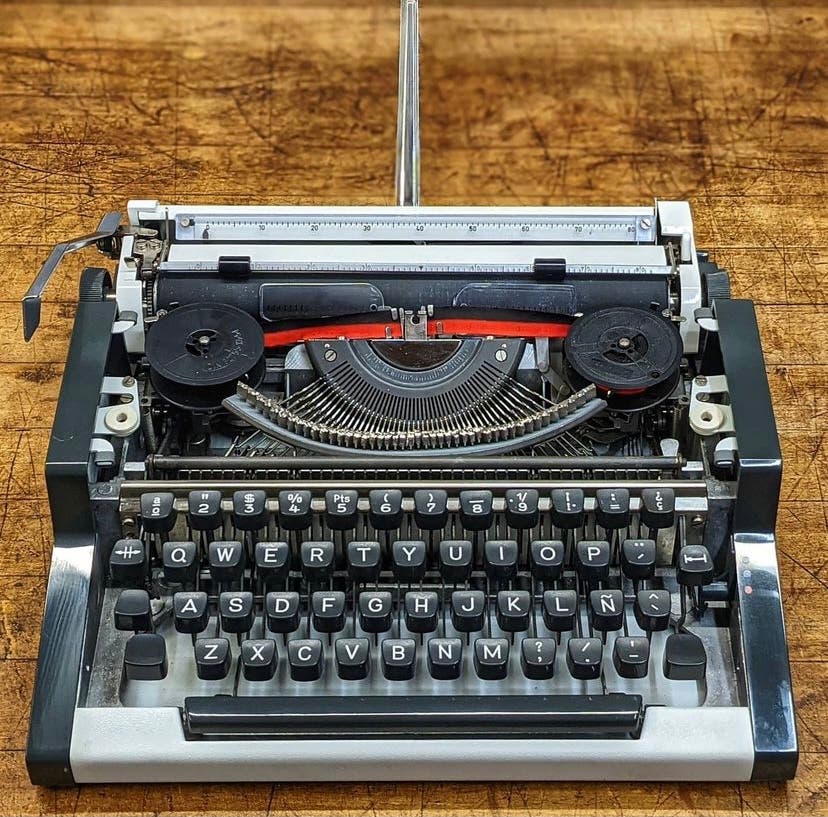
The work can be tedious and time consuming. A restoration could span days or weeks depending on the age, condition and how rare a machine is.
McAndrew remembers restoration feeling like a trial and error process when he first started repairing typewriters. To navigate any challenges that arise, he forged an online collective with fellow mechanics who fix typewriters in other countries.
“We helped raise one another up,” he said. “If someone’s stumped on something they’ve never worked on, there’s a community there.”
With connections in other countries, the collective is also able to source parts they need for their repairs. His colleague in the Netherlands is able to ship parts from European typewriters that are harder to come by in the United States.
“The rest of us — the American half of the mechanics are sitting here drooling looking at some of these pre-World War I and into World War II and more of the modern age machines that come from Europe that would cost us loads and loads of money to source,” he said. “On the flipside, he’s looking at us with that same sort of lust because we’re getting those early era Remingtons and Royals and Smith Coronas — all these American made ones that he can’t source over there.”
‘It’s Functioning History’
McAndrew is also dedicated to making the niche technology accessible to younger generations, who may have only read about the machines in history textbooks
Before the pandemic, McAndrew would organize “Type-In" events at indoor venues where people could try their hand at typing on a vintage typewriter.
In July, he rebranded the event as a “Type-Out” outside of Paranormal Books and Curiosities in Asbury Park.
About 20 different typewriters supplied with paper were displayed on tables and participants were encouraged to write anything they wanted with the option to either take their musings with them or leave them behind to be shared on Iron Fox Typewriters’ social media pages.
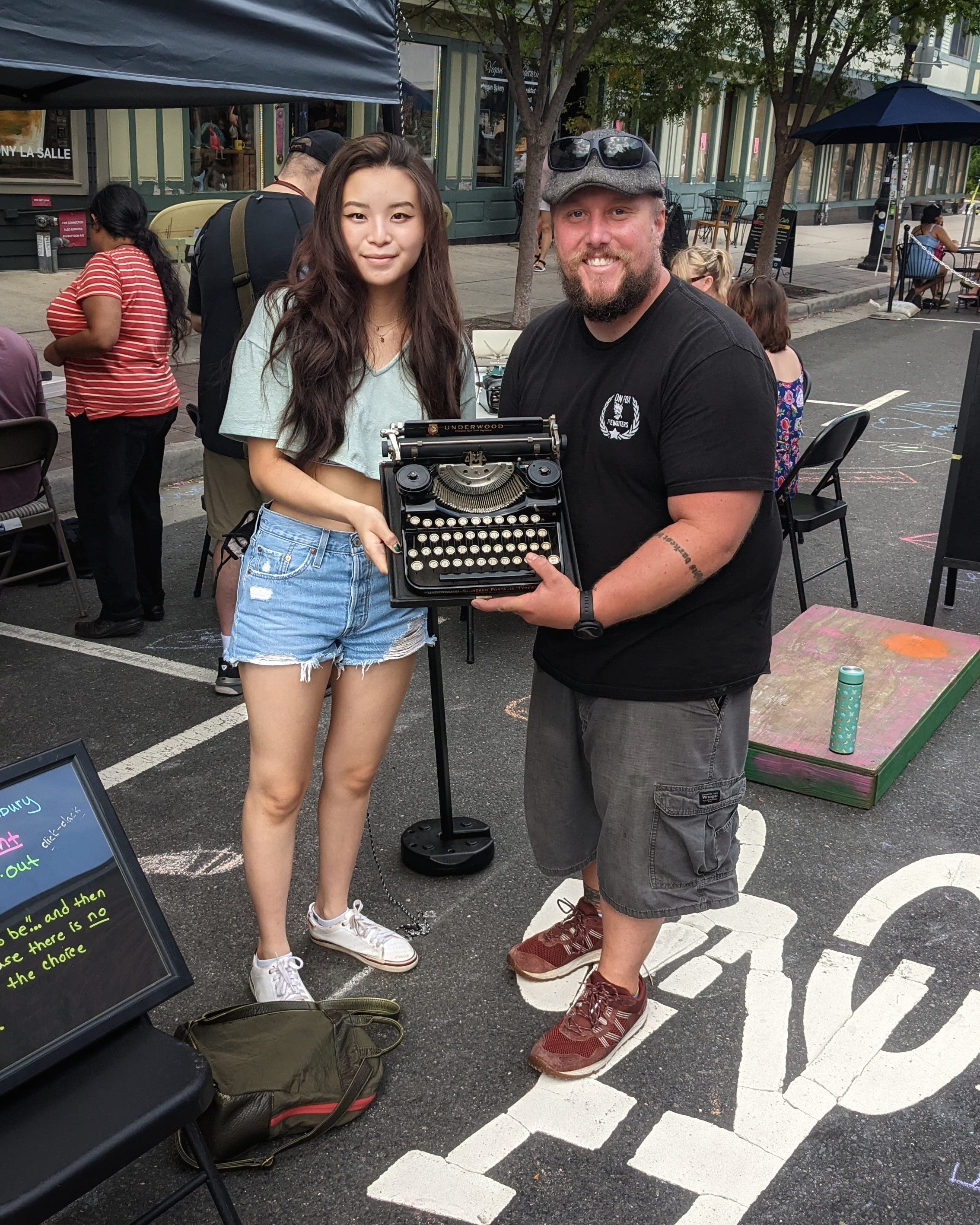
McAndrew stands by to offer instructions if needed and encourages any timid typists to “just whack it,” explaining that forceful typing is what marks a clean impression on the page.
The event draws a mix of age groups, from teenagers that belong to Generation Z to baby boomers who have memories of working on these machines.
Most people sat at their favorite typewriter for a while and silently took their paper along with them, but a man in his 60s approached McAndrew during the event and personally thanked him.
“He says, ‘I can’t believe I’m sitting in front of one of these again. I was a journalist and used one of these day in and day out. Now I work in a restaurant. Thanks for giving me an opportunity to get back in the writer’s chair again and live that golden era of my youth,’” McAndrew said. “It was like somebody put an air compressor to my heart. He didn't have to share that. A lot of people usually just ask questions. They’ll type for an hour and take their paper, fold it up and walk away.”
In an age of planned obsolescence where devices like cell phones and computers are routinely replaced after a few years of use, McAndrew considers the typewriter a technological wonder.
When comparing the typewriter to innovations of today, McAndrew wonders whether the first iPhone will still work in 100 years, let alone whether people would even seek it out.
“How amazing is it that people are still looking for that tactile connection between themselves and a functioning antique that the general public would write-off as irrelevant,” he said. “It’s functioning history when you think about it. That’s the amazing part.”
Keep up to date with what's happening in your community by subscribing to your local Patch newsletter here.
Get more local news delivered straight to your inbox. Sign up for free Patch newsletters and alerts.