Politics & Government
Lacey Officials Want Compensation For Spent Fuel Road Storage At Oyster Creek
There is no current repository for spent nuclear fuel anywhere in the United States.

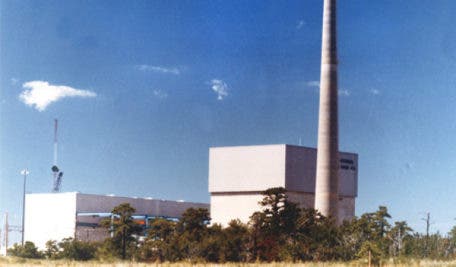
by Patricia A. Miller
If Lacey Township is going to be home to spent fuel roads from the Oyster Creek Nuclear Generating Station for decades, Lacey deserves financial compensation from the federal government, Mayor Gary Quinn said.
“It’s not going anywhere,” Quinn said of the spent fuel rods.
Find out what's happening in Laceyfor free with the latest updates from Patch.
He’s right.
“There is no U.S. repository for spent nuclear fuel at this point and our country does not allow reprocessing of the fuel,” federal Nuclear Regulatory Commission spokesman Neil Sheehan said. ”Therefore, all of the fuel used during plant’s life remains on-site, either in the circulating-water spent fuel pool or in dry cask storage.”
Find out what's happening in Laceyfor free with the latest updates from Patch.
Quinn and other members of the Township Committee spent time at the May 14 meeting discussing the oldest nuclear plant in the United States. Oyster Creek is set to close in 2019, but decommissioning the plant will take years.
“The federal government is responsible to compensate municipalities as far as we are concerned,” Quinn said after the meeting. “It was planned all along for all spent fuel from around the country’s nuclear facilities at the Yucca Mountain facility which the federal government spent billions of taxpayer dollars to build in Nevada.”
Nuclear plants around the United States have two options to store spent fuel when it is removed from the reactor core - spent fuel pools or dry cask storage. Oyster Creek - the oldest nuclear plant in the country - uses dry cask storage since there is no more room for spent fuel storage pools.
Dry cask storage involves using steel cylinders that are later encased in additional steel or concrete, according to the NRC website.
“We’re not worried about any safety issues,” Quinn said at the meeting.
The NRC’s “waste confidence decision” means the NRC has confidence that the fuel can be stored safely in either pool or cask for at least 60 years beyond the licensed life of any reactor, without significant environmental effects.
“At current licensing terms (40 years of initial reactor operation plus 20 of extended operation), that would amount to at least 120 years of safe storage,” according to the website.
Township officials are also concerned about the loss of jobs and revenue when Oyster Creek shuts down. They have had discussions with other interested companies about the use of the site.
Lacey officials said at the Feb. 25 Township Committee meeting that they have already had discussions with Maxim Power Corporation about the company’s proposed expansion of its existing plant and construction of another facility on the Oyster Creek site.
The Forked River power plant is an 87.2 MW combustion turbine power plant, according to Maxim’s website. The plant is a natural gas-fired, dual fuel capable, simple cycle facility with two GE Frame 6B gas turbines.
But it will take more than that to replace jobs, revenue and the electricity generated by Oyster Creek, Quinn said.
“The jobs are going to be a problem, no doubt about it,” he said.
Get more local news delivered straight to your inbox. Sign up for free Patch newsletters and alerts.