Health & Fitness
New Orleans Still Rebuilding After Hurricane Katrina
A Patch kid tells us about her work as a People to People volunteer.
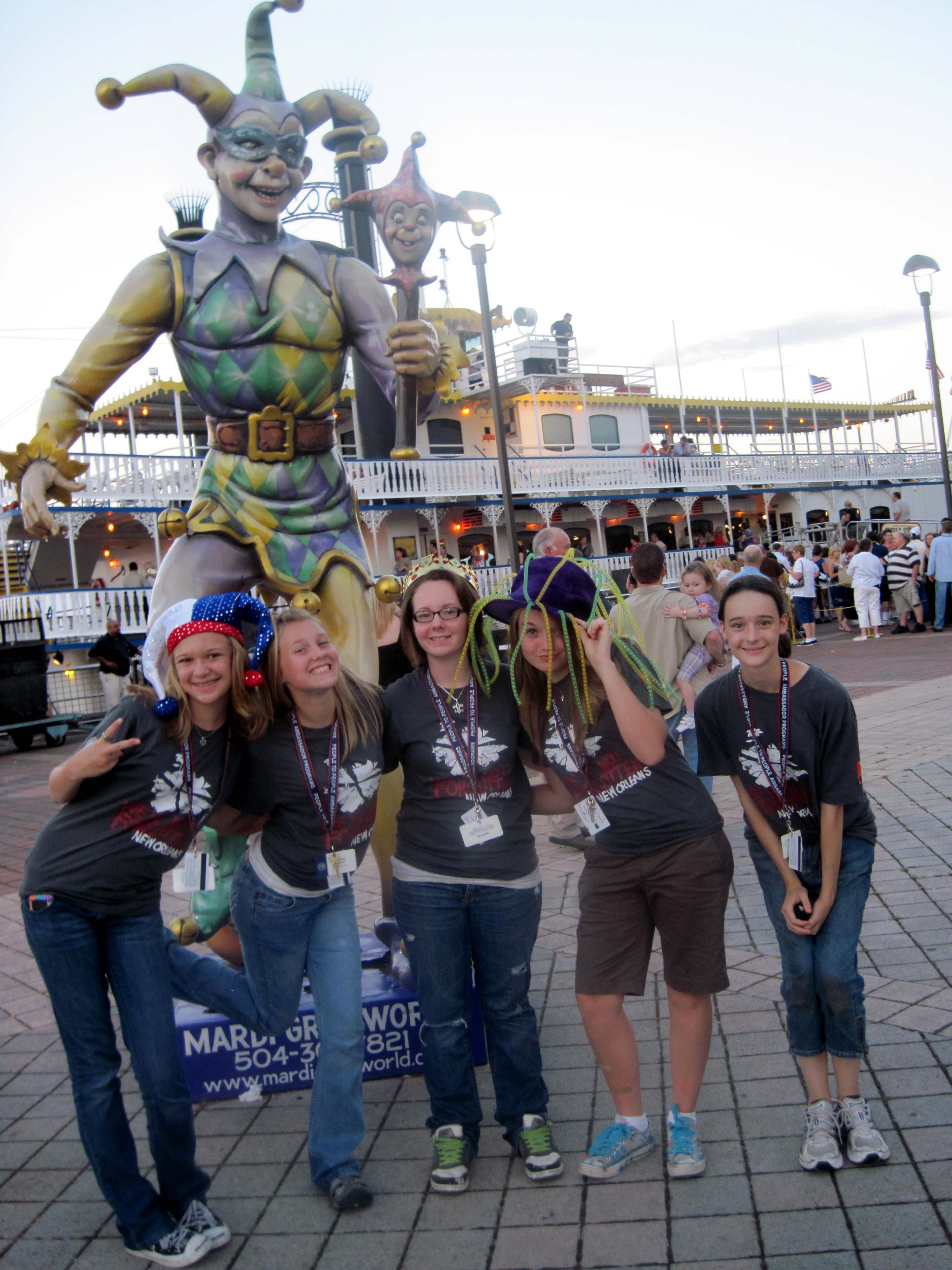


Five years after Hurricane Katrina, I went to New Orleans to help with the continuing cleanup. When I saw the roofs of houses caving in and the yards crowded by weeds, I could only feel comforted by the fact that the students involved in this summer's People to People program, "Remembering Hurricane Katrina," were going to volunteer their time to improve the land.
My dad was among the journalists who went to New Orleans soon after the hurricane hit and the levees failed on August 29, 2005. More than 1,800 people died. My dad remembers that walking around the French Quarter was similar in stench and sadness as New York City after 9/11.
The devastation, recalled film director Spike Lee (one of our featured speakers), "looked like the end of the world."
Find out what's happening in Livingstonfor free with the latest updates from Patch.
I was part of a delegation of students in the summer of 2010 helping the community and learning how to become better leaders. The work was tough. And so was the weather. The heat soaked through my skin and it rained – hard. But the experience was life changing: So much still needed to be done five years after the storm.
We stayed at Tulane University and ventured into the different neighborhoods that make up New Orleans. I saw kids sitting on a watermelon truck, followed by elaborate mansions. Most trees we passed were strung with beads from Mardi Gras. The levees (new and improved) were simple concrete walls over a body of water. When we went by the areas damaged by the flood, you could see yellow lines on street signs that marked how high the water rose.
Find out what's happening in Livingstonfor free with the latest updates from Patch.
This was what filmmaker extraordinaire Spike Lee focused his cameras on in his awesome documentary, "When the Levees Broke: A Requiem in Four Acts." That same week he showed a new documentary, "If God is Willing and Da Creek Don't Rise" on HBO, which included scenes from the Gulf oil spill.
My group was helping in the rebuilding of several neighborhoods devastated by the hurricane. Our service projects included renovating a school and clearing several neighborhoods
It was challenging work. One day, a tidal wave of rain had come down for an hour straight. People tried to keep dry by covering themselves with black garbage bags. We only had a few hours to do the work. Luckily the ground was wet, so it was easier to pull weeds and dead grass from the ground. Everyone was helping someone. Some held garbage bags open, while others used rakes or their hands to collect all the weeds.
I worked on a small patch of land, ripping up dead grass and raking away weeds and roots in a small yard in front of a windowless brick house. But after awhile, I was thoroughly soaked from the rain that fell like stones at random times. I went underneath a tree and wrapped myself in a garbage bag.
My job at the elementary school project was painting the door frame to the library. I also helped new friends paint a classroom blue. We turned on the radio to the classic rock station (which put some fun into the work).
Our time in New Orleans included fireworks on the Fourth of July over the Mississippi River. Early one morning, I was standing in front of a 200-year-old house. French nobles and rich industrialists had owned it, and hundreds of slaves had worked its plantations. My group got a short tour through the rooms and histories. We saw the old kitchen and dining room, along with some historical documents, including a slip of paper signed by Thomas Jefferson.
After the tour, I wandered the grounds, seeing parts of the plantation. There was the original kitchen slaves cooked in, and I tried out a machine that stripped corn of their kernels for corn meal. I also saw some instruments used for carpentry, a place where beads and cloth were dyed indigo, a short talk about the old-time clothing, a really cool display of wood carvings, and a powerful art exhibit about the 1811 slave revolt.
We also headed to the bayou, where all everyone could see were giant grasshoppers, dozens of cats laying around, and (once we were on the boat) alligators, one of which I got to feed. They were given meat and marshmallows. I thought I'd be scared, but it was actually fun.
Being in New Orleans made me realize that, as much suffering there is in this world, there are just as many people trying overcome it. People are always going to help others, despite the evil, suffering, and/or death that could come. The time I spent in New Orleans was one of the times that I really saw people helping others.
Holly Lehren is a freshman at Columbia High School.