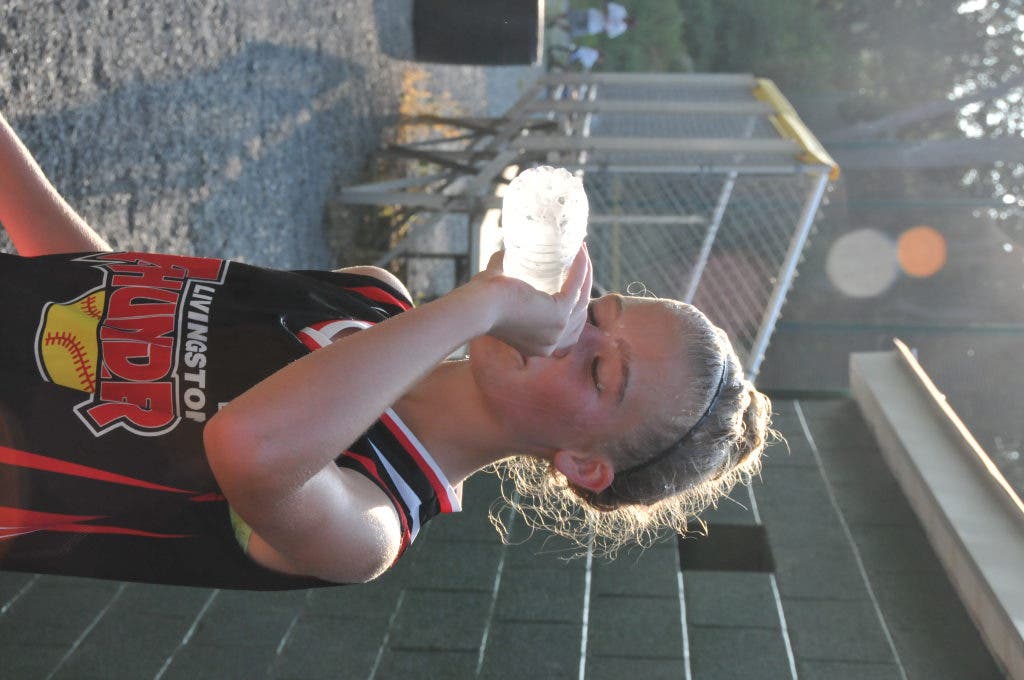


The 14-U Livingston Thunder Softball Team took to the field Thursday to play the Andover Swirls in the first round of the Denville Summer League fastpitch softball playoffs at DaLonzo Field in Livingston.
But there was a third opponent each team had to compete against this night -- the heat. As the girls began the game, the temperature was 115 degrees on the field. Both coaches and parents had to keep a watchful eye on the players for signs of heat-related illnesses and take steps to prevent them.
The human body generates about 100 watts from internal metabolic processes, but this number can escalate to 1,000 watts during heavy exercise. A watt, if you can remember from your high school physics class, is the unit of power or energy expenditure per second.
Find out what's happening in Livingstonfor free with the latest updates from Patch.
Keeping a constant temperature of around 95 degrees F is vital. To lose heat and maintain core temperature, blood vessels in the skin expand and bring body heat to the skin surface. Perspiration floods out of sweat glands and evaporates from the skin to cool the body.
Heat stress occurs when sweat can't evaporate fast enough to keep the body sufficiently cool. Many of the symptoms occur as a result of excessive loss of body salts and water.
Find out what's happening in Livingstonfor free with the latest updates from Patch.
At rest and in comfortable temperatures, a person sweats about half a gallon of fluid every 24 hours. During hot weather like we are experiencing now, this fluid loss can leap to around two and a half gallons over the same time period. Playing sports in hot weather accelerates fluid loss even more.
Symptoms of heat stress include:
- Deterioration in performance
- Muscle cramps
- Headache
- Dizziness
- Nausea
- Vomiting
If these symptoms are ignored and left untreated, it can lead to a life-threatening complication know as heat stroke.
Suggestions to prevent heat stress during sporting comptitions include:
- Avoid the hottest part of the day: Starting games before 9 a.m. or after 6 p.m. during summer, and avoid sports or excercise between 11 a.m. and 3 p.m.
- Clothing: Wear loose, light colored and comfortable clothes. Wear a visor or hat.
- Fluids. Drink at least 16 fluid ounces in the two hours before the game. During the game, aim to drink about 6 to 8 oz every 20 minutes or so. Choose a specialty formulated sports drink if the game goes for more than an hour. After the game, drink about half a quart of water.
During the game tonight, the incentive for the Livingston team was to get their opponent out quickly and get off the field to the shade of the dugout and some cold water. The team did just that, Livingston defeated Andover by the score of 14-3 and will advance to the quarter final round against the Montville Lady Mustangs tomorrow night in Montville.