Community Corner
Essex County Goes Cuckoo for Chickens
13 of 22 towns allow residents to raise chickens for eggs in their backyards — and soon that number may be 14.

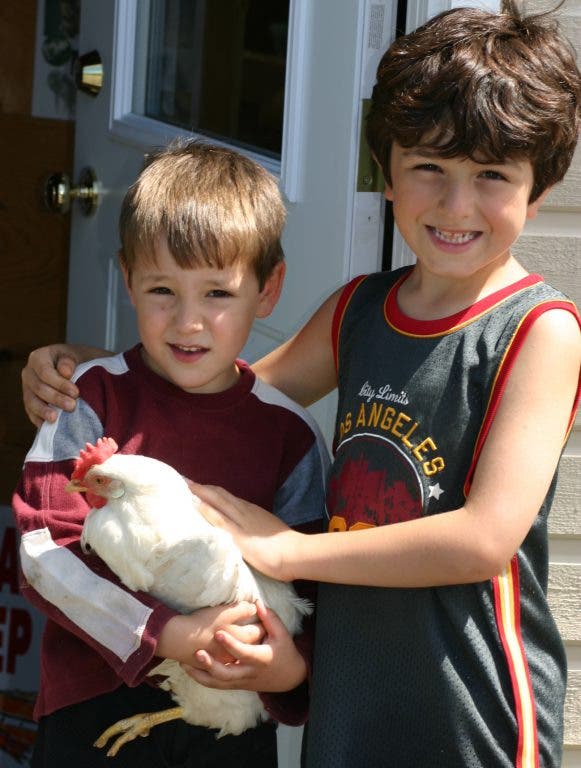


It's not just for Brooklynites on the pecking edge of locavore trends.
Raising your own backyard chickens has come to Essex County, N.J. and in a big way. Thirteen of 22 towns — including Newark — allow for raising chickens for eggs for personal consumption (not sale) on residential property. .
Montclair's "chicken whisperer" in Mapelwood last fall. And Maplewood Green Team member Reesa Salomon followed up with a report to the Maplewood Township Committee in July, stating that "in recent years, many of us have started to realize that maintaining a close
connection to our food is a positive, not a negative, and is a part of living a more
sustainable lifestyle. Farmers markets are experiencing a revival, people are
gardening more, and communities around the nation are changing decades‐old laws
forbidding the keeping of chickens."
Salomon is right about chickens being part of the hot new locavore — eating locally sourced and grown food — movement, but for some in Essex County chickens are already part of the landscape. Currently, these towns allow chickens:
Find out what's happening in Livingstonfor free with the latest updates from Patch.
- Belleville – permits chickens; the coop must not be less than 30 feet from a human occupied building and the chickens can not run at large
- Cedar Grove – permits chickens; has no specific ordinance.
- Essex Fells – permits chickens; no specific ordinance.
- Glen Ridge – permits chickens; has no specific ordinance.
- Livingston – permits chickens; no specific ordinance, other than the chickens can not run at large
- Millburn – permits chickens – has no specific ordinance other than the chickens can not run at large
- Montclair – permits chickens – license is issued by the Health Department for $5; no structure is permitted within 50 feet of doors or windows. Plans for coops must be sent to Building Department; coops must be kept sanitary; chickens are not permitted to fly; no more than 25 fowl
- Newark – permits chickens – permit issued by health department for $10; may not keep in multi-family housing or in any dwelling house or part thereof; coops or houses are required; no running at large; must be floored w/cement or other watertight flooring; coop must be thoroughly clean at all times, no part of coop may be less than 20 ft. from doors or windows of any human occupancy; roosters not permitted.
- Nutley – permits chickens; no specific ordinance.
- Roseland – permits chickens; permit is $100; no more than 3 animals within 100 feet of residential building or closer than 50 feet from property line without permit from Board of Health; no roosters permitted where houses are closer than 200 feet apart
- Verona – permits chickens; the coop must not be less than 30 feet from doors and windows and the chickens can not run at large
- West Caldwell – permits chickens; if there are more than 4 chickens, $10 permit is required; less than 4 chickens, no permit is required; maximum of 6 chickens; no animals in the house; must be kept in an enclosure, no closer than 50 feet from a door or window and 10 feet from property line.
- West Orange – permits chickens; must be no closer than 50 feet from building and property lines, must be kept sanitary, and no more than 3 fowl per acre.
Last night, Maplewood moved closer to be the 14th Essex County town to host backyard chickens when Township Committee members asked Town Counsel Roger Desiderio to draft an ordinance that would allow for 15 households to pilot a one-year program. The ordinance will be introduced on September 6.
Township Committee members decided on a $25 fee for the program (which is detailed ). The Committee was also assured that the coops were not considered accessory structures and would not require a zoning code variance.
Find out what's happening in Livingstonfor free with the latest updates from Patch.
Also, the Committee members added language to the proposal that would allow for residents to seek wavers from neighbors when their lots are not large enough to meet setback and distance requirements for the coops. Health Officer Robert Roe told the Committee that he was very excited about the program and would perform initial inspections as well as between 2 to 4 follow-up inspections of coops throughout the pilot year.
Back in July, Salomon had assured town leaders that "chickens, like dogs and cats, have lived alongside people in backyards large and small in cities and small towns. Unlike a half‐ton bull or 400‐pound hog, a six‐pound hen is not inherently a farm animal."
She added that "chickens are friendly, social, intelligent, affectionate, entertaining, low‐maintenance, small, quiet, and inexpensive to keep." (Roosters — the ones who make all the noise but are not necessary for hens to lay — will not be allowed in Maplewood as is the case in most other towns.)
Salomon went on to assure the Township Committee that coops could easily be kept attractive and clean, that "chickens are not smelly" ("5 hens generate less manure than one medium‐sized dog"). And that chickens do not pose a health risk — she explained that the type of avian influenza that is contagious to humans has not been found in
North America and is spread by contact with the contaminated feces of wild
migratory waterfowl.
Finally, said Salomon, chickens are educational:
"Chicken keeping offers suburban children the opportunity to learn where their food really comes from and about healthy, sustainable, nutritious food. They will see first hand how kitchen scraps become garden fertilizer which in turn produces beautiful vegetables. Instead of simply hearing, 'Reduce, Reuse, Recycle,' they will actually experience it."
Get more local news delivered straight to your inbox. Sign up for free Patch newsletters and alerts.