Community Corner
Livingston’s Wastewater Crew Is Tiny – But Shoulders A Heavy Burden
A crew of just 11 people run a facility that has the capacity to fill six Olympic-size swimming pools with wastewater every day.


LIVINGSTON, NJ — A crew of just 11 people are responsible for operating a facility that can processes more than 4.5 million gallons of sewage and wastewater per day. Sound like a tall order? That’s the heavy responsibility that rests on the shoulders of the folks who run the Livingston Water Pollution Control Facility (WPCF) at 81 Naylon Avenue.
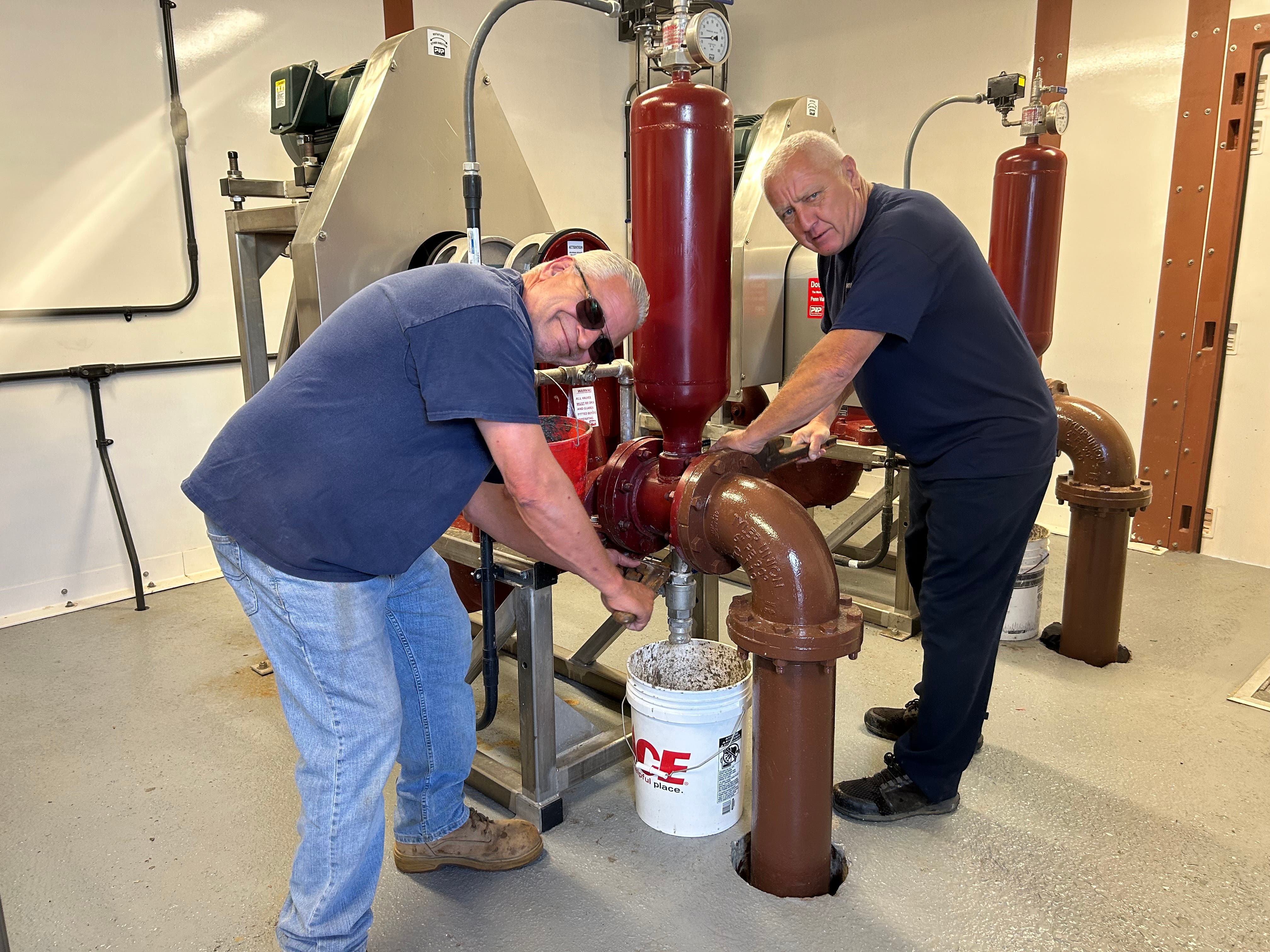
It’s a job that few people tend to think about on a daily basis. But according to WPCF Assistant Superintendent Kevin Lynn, there’s a lot of elbow grease and know-how that goes into running such an important operation.
“Our dedicated team of employees are not only responsible for the facility seven days a week, 365 days a year – they’re always on call to respond in person to after-hours emergencies whenever they’re needed,” Lynn said.
Find out what's happening in Livingstonfor free with the latest updates from Patch.
According to Lynn, the town’s WPCF can process up to 4.62 million gallons of water per day. The massive system includes more than 140 miles of pipeline, nearly 4,000 manholes and seven lift stations. It serves the entire 13.9 square miles of the township, with the exception of three small areas that are served by other facilities.
This equipment is used to treat the town’s wastewater before releasing it back into the Passaic River – a task that the facility does well, Lynn said.
Find out what's happening in Livingstonfor free with the latest updates from Patch.
“Once the water has been treated, it’s actually cleaner than the river water it’s being released into,” Lynn attested.
Since 2018, the town has been making investments into the facility. They include:
- Installing 20 new motors throughout the plant. These motors cost approximately $10,000 each and are critical for powering the equipment in every building and pump station.
- Installing a new seal water system to improve the reliability of pumping operations.
- Installing one new primary pump station at the plant. This included replacing sludge pumps, installing new control panels, and constructing a new building to house the pump station, and cost approximately $750,000.
- Installing two new polymer tanks to store water. These tanks allow the polymer to mix with the water in order to help remove additional water from the sludge to create larger solids. This work was completed internally, including the tank, mixers and plumbing.
- Rehabilitating two of the town’s seven pump stations (also called lift stations), with improvements to one more scheduled later this year. These stations are located outside the WPCF facility and are used “lift” or pump wastewater when it can’t be moved using basic gravity sewers. This work includes what is essentially a complete overhaul of existing equipment and replacing pumps, check valves, gaskets, fencing, and grinders. Some of the work has been done in house and some by outside contractors.
- Replacing 22 pumps throughout the plant. Pumps are critical for moving wastewater from tank to tank and are used at various different stages of treatment.
- Replacing 55 of the old valves controlling the flow of water inside pipes throughout the WPCF. As valves age they can become corroded and brittle, making it impossible to turn them in order to complete necessary tasks. These were replaced at a cost of $200,000.
- Replacing one of the facility’s three disc filters, with the other two scheduled and funded for replacement later this year. Disc filters help filter contaminants from water and are used in one of the final stages of water treatment to “polish” the effluent and remove any remaining particles. The screens being replaced were part of the 1993 plant upgrades, which had become obsolete, and difficult and expensive to repair some time ago.
- Rehabilitating WPCF buildings and equipment
- Replacing 11 building roofs, with one more scheduled for later this year. Since all had originally been installed at similar times, they all were in need of replacement due to extensive wear and leaks.
- Replacing 13 of 16 exhaust fans. Exhaust fans are crucial in expelling any sewage odors or other byproducts emitted from the WPCF. Several were replaced when the building roofs were replaced.
- Painting four building interiors.
EXPANSIONS, UPGRADES
Since its creation in 1938, the WPCF has been expanded and upgraded multiple time, ultimately increasing size to its current 12 buildings, and increasing its capacity from three million gallons per day (MGD) to 4.2 MGD.
That amount of wastewater could fill six Olympic-size swimming pools, officials noted.
Milestones in modernization at the facility were reached in the 1970s and 1990s, according to town officials:
1987 – New tanks for settling and aeration were added in order to increase the WPCF capacity. These tanks help remove solids and add oxygen to the wastewater to promote the growth of beneficial biological microorganisms. Additional screening was put in place at the start of the treatment plant to remove larger materials and protect the downstream equipment. The existing sludge digestion facilities were overhauled to allow additional storage, dewatering, and stabilization before final offsite disposal. All of these improvements combined allowed the Township to increase filtration and treatment of water.
1993 – Significant plant upgrades were made at a construction cost of approximately $17,300,000. Upgrades were primarily provided for the following processes:
- Nitrification: removes ammonia, which is toxic to many fish, from the water
- Effluent polishing: improves the quality of effluent – the cleaned water being discharged into a river or sea – by using filters to remove any solids left in the water
- Sludge thickening: increases the solids concentration of wastewater and decreases the amount of free water, which helps to reduce the amount of water being wasted in the overall cleaning process; the leftover sludge (called biosolids) is disposed of by landfilling, incineration, or recycling to the soil as fertilizer
- Dechlorination: Removes any remaining chlorine from disinfected wastewater before the water is returned to the environment
Send local news tips and correction requests to eric.kiefer@patch.com. Learn more about advertising on Patch here. Find out how to post announcements or events to your local Patch site. Don’t forget to visit the Patch Livingston Facebook page.
Get more local news delivered straight to your inbox. Sign up for free Patch newsletters and alerts.