Politics & Government
NJ Gov. Phil Murphy Signs Strongest Equal Pay Bill In US Into Law
NJ Gov. Phil Murphy signed what's considered to the strongest equal pay bill in America into law on Tuesday.


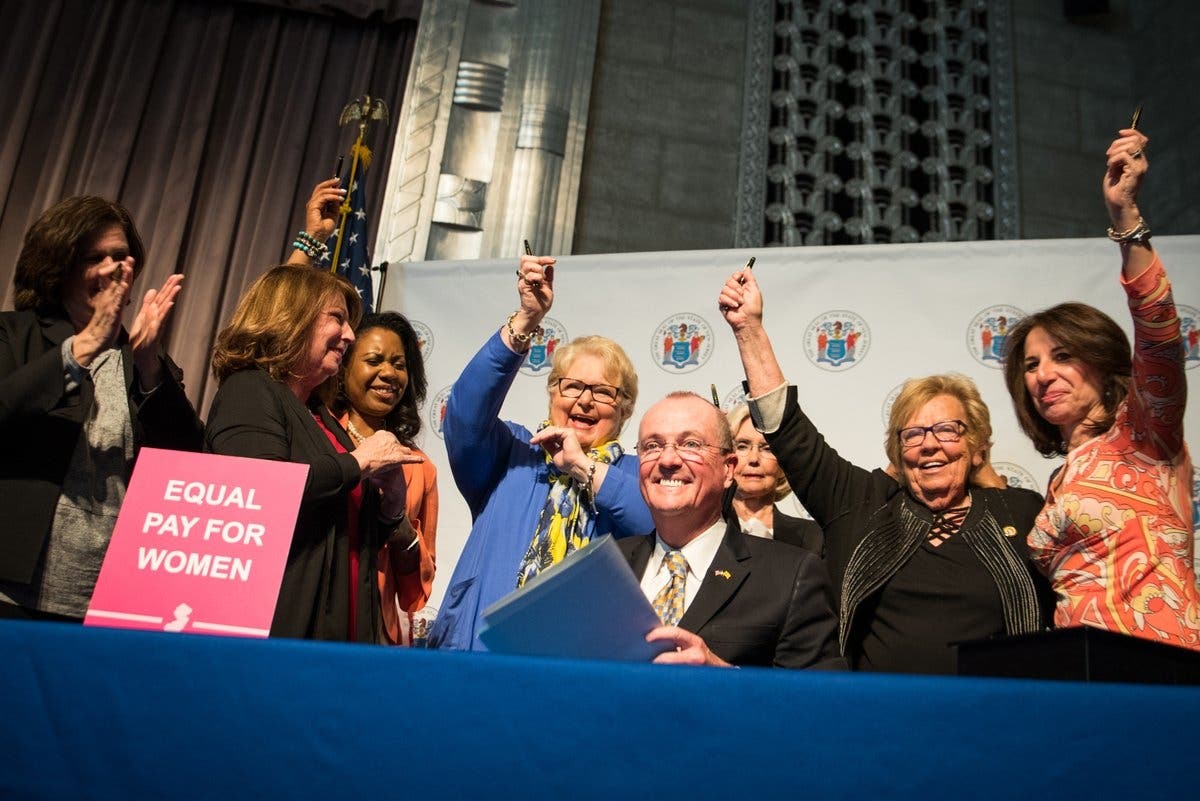

New Jersey Gov. Phil Murphy signed what's considered to be among the strongest equal pay bills in America into law on Tuesday, protecting women and minorities in the state from workplace discrimination by making it illegal to pay them less or offer fewer benefits.
Murphy said he was fulfilling his commitment to fight gender inequity and support equal pay for women in New Jersey, signing the Diane B. Allen Equal Pay Act that strengthens protections against employment discrimination and promotes equal pay for all groups protected by the law.
The law was named for former state Sen. Diane Allen, a Republican, who herself was a victim of bias, Murphy said.
Find out what's happening in Livingstonfor free with the latest updates from Patch.
“From our first day in Trenton, we acted swiftly to support equal pay for women in the workplace and begin closing the gender wage gap,” said Murphy. “Today, we are sending a beacon far and wide to women across the Garden State and in America – the only factors to determine a worker’s wages should be intelligence, experience and capacity to do the job. Pay equity will help us in building a stronger, fairer New Jersey.”
The legislation passed the Senate by a 35-0 vote in March, and the Assembly by a 74-2 vote. Former Gov Chris Christie had previously vetoed a similar measure. Only Assemblymen Michael Patrick Carroll and Jay Webber, both R-Morris, voted against the measure. Read more...
Find out what's happening in Livingstonfor free with the latest updates from Patch.
The legislation had bipartisan support, however. Sen. Kristin Corrado, R-Essex, Passaic, lauded the signing of equal pay legislation into law.
“New Jersey has paved the way for women by being a national leader in the fight for equal pay,” Corrado said. “I am honored to stand with women across our state in the fight for equal pay for equal work. This law honors all of the women who have dealt with sex and wage discrimination in the workplace. Today, we’re standing up to say, ‘no more!’”
The bill will do the following:
- The legislation prohibits employers from discriminating against an employee who is a member of a protected class. Employers will not be able to pay rates of compensation, including benefits, less than the rate paid to employees not of the protected class for substantially similar work.
- The bill also prohibits employers from taking reprisals against employees for discussing their pay with others – and provides for three-times the monetary damages for a violation. Also, the aggrieved employee may obtain relief for up to six years of back pay and it allows courts to award damages for violations of the law.
In New Jersey, the median salary for women working full-time is just over $50,000, or $11,737 less than the median annual salary for a man. Across all races, women working full-time, on average, earn 82 cents for every dollar earned by a male doing similar work, according to the Murphy administration.
African-American women earn about 60 cents for every dollar earned by a white male while a person of Latina descent earns only 43 cents. Overall, the economic cost of this disparity totals an estimated $32.5 billion a year in lost wages and economic power, according to the Murphy administration.
According to the National Women’s Law Center, a 20-year old woman beginning a full-time year-round position may lose $418,800 over a 40-year career in comparison to her male colleague. When that male colleague retires at age 60 after 40 years of work, the woman would have to work 10 more years – until age 70, to close this lifetime wage gap, according to the administration.
The Diane B. Allen Equal Pay Act becomes effective July 1, 2018.
Sponsors of the legislation include Senate President Steve Sweeney, Senators Loretta Weinberg and Sandra B. Cunningham as well as Assembly members Pamela R. Lampitt, Joann Downey, Valerie Vainieri Huttle, Raj Mukherji, Shavonda E. Sumter and Paul D. Moriarty.
Phil Murphy photo
Get more local news delivered straight to your inbox. Sign up for free Patch newsletters and alerts.