Schools
School Tour: Burnet Hill
Up-close look at the school improvements to be completed if referendum is approved on December 8.



With the referendum on two bond proposals to make improvements in Livingston's schools nearing, Patch starts a 3-part series of "school tour" articles examining the school repairs voters will be asked to approve on December 8.
To show what's at stake for students, Patch recently met with Steve Robinson, Business Administrator and Board Secretary, and Jessica Ganz, Manager of Communications and Community Outreach for the district, who gave Patch a tour of some of the schools to see what exactly will be improved if the referendum passes.
Doug Zacker, a photographer and contributor to Patch, came along to capture leaky roofs, drafty windows and outdated auditorium equipment — just some things, among others, that stand to be updated.
Find out what's happening in Livingstonfor free with the latest updates from Patch.
This "school tour" series starts with a visit to Burnet Hill Elementary School, followed by a look inside Harrison Elementary School — the district's oldest dating back to 1929 — and ends with a walk around Mount Pleasant Middle School.
Other schools in the district are also slated for improvements. For a complete listing of what will be replaced in each school, visit the LPS website.
Find out what's happening in Livingstonfor free with the latest updates from Patch.
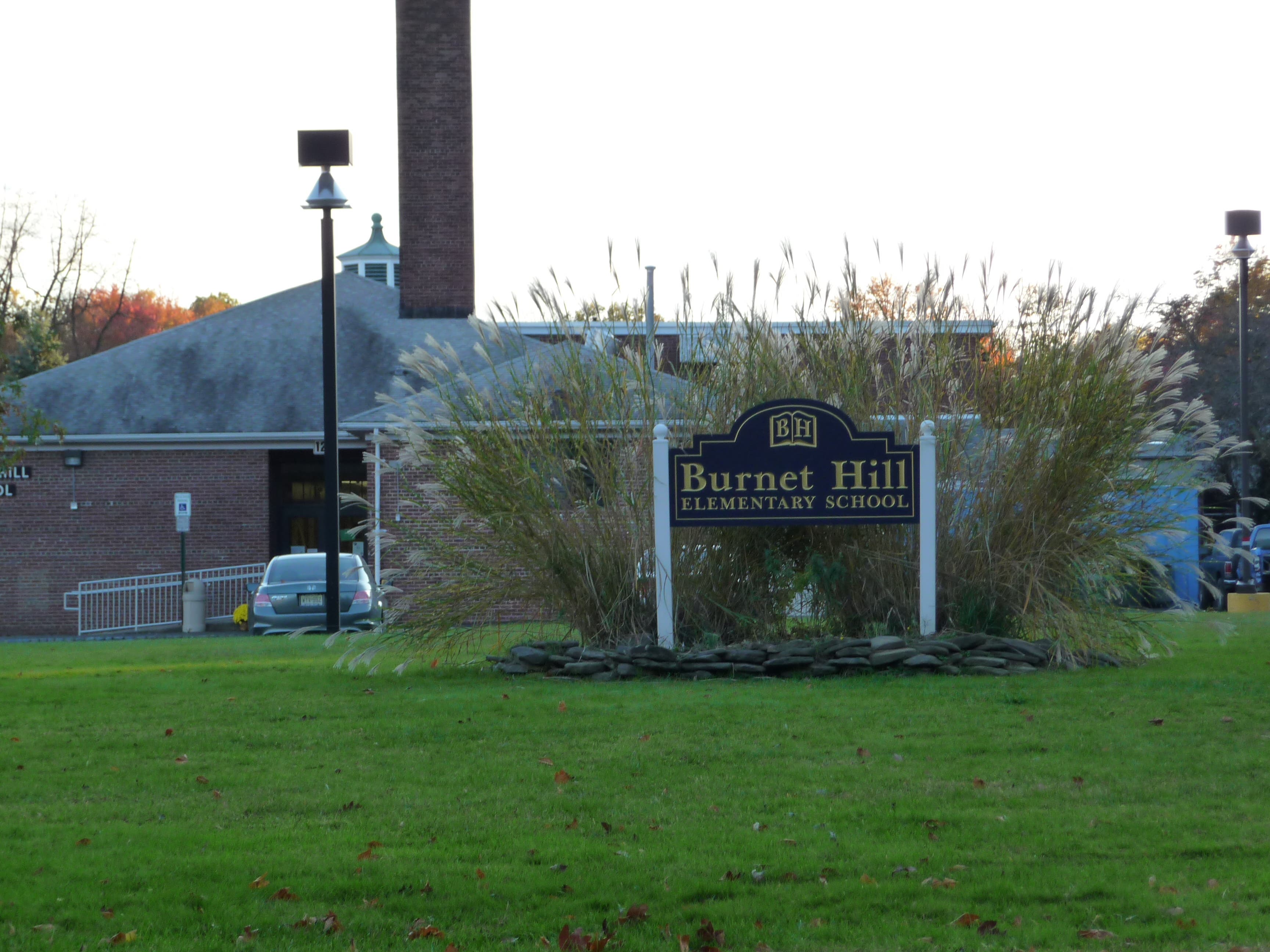
First stop: Burnet Hill Elementary School
Burnett Hill was built in 1952 and further expanded in the mid-1960s. Since then, some renovations and additions have been made to the school. In 1999, for example, a new library, gym and kindergarten classrooms were added.
But much of the school, including the wing with the principal's office, needs some basic repairs: doors that meet safety codes, bathrooms that are accessible for students with disabilities and an efficient heating and cooling system.
To start our tour, we met Frank Pietropinto, the head custodian at Burnet Hill. He knows the school well, having worked there for 10 years.
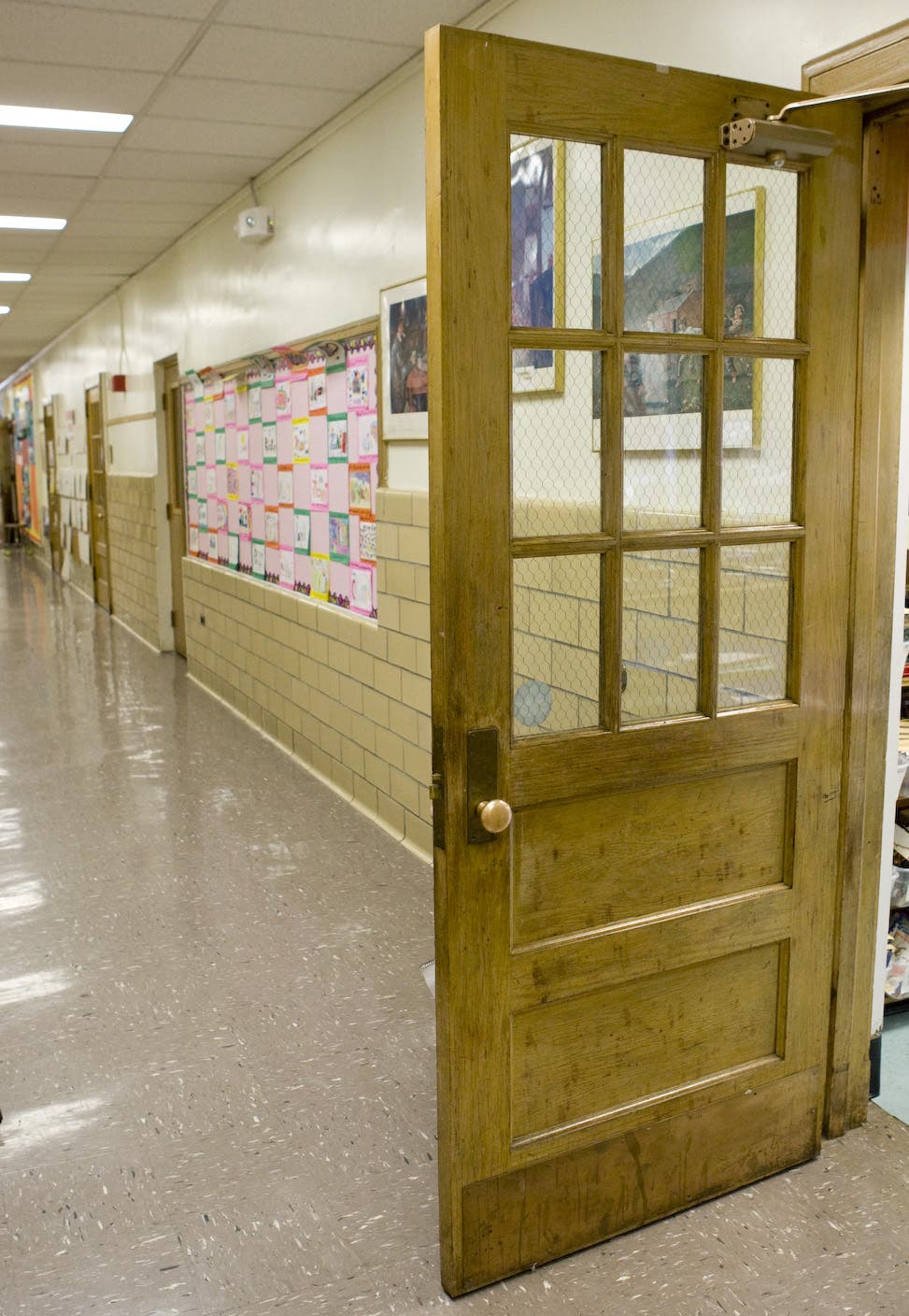
He first showed us the main hallway, where we examined doors, some of them more than fifty years old (see photos). While these doors are clearly well-made —the sturdy type, familiar in older schools — they are not fire-resistant or up to today's safety codes. A key reason the district would like to replace these older doors is because new, up-to-code doors could help contain a fire or keep a fire from spreading rapidly should one break out at the school.
Next, we stopped to see the roof, which is beyond its life expectancy (see photos). Burnet Hill's roof is a patchy mess and on the bond proposal is a plan to replace 22,360 square feet of roofing.
"The roof leaks when it's a heavy rain, sometimes when it's a light rain," explained Pietropinto.
Third grade teacher Angela Consalvo knows this well. In her classroom, which we visited next, the ceiling is stained from water seeping through the roof (see photos).
But that's not the biggest problem she faces in her room, in an older section of the building. The heat is a headache for her and her students.
"It's like a sauna in here," said Consalvo. "We usually leave the windows open."
Windows are left open even in winter, she said, because it gets too hot. But even if the temperature were more moderate, the room would likely be drafty because the windows are single paned (see photos).
"It's kinda crazy to have windows open when the boilers are on," said Pietropinto of the current situation.
To correct the problem she and other teachers face, the board would replace the heating system, which also makes a disruptive sound when it blows air. Also, as is now typical in schools, a cooling system would be installed at the same time (newer rooms at Burnet Hill already have air conditioning, but only the older rooms and areas would be updated. Also, a common cost-saving measure is to install AC at the same time as a new heating system; areas that already have AC would not be updated, nor would gyms be air-conditioned).
The single-paned windows would be replaced with double-paned ones.
Student and staff comfort is a key concern behind these proposed changes. Some students wear T-shirts in colder months so they don't overheat. Also, a newer heating, ventilation and air-conditioning system (HVAC) could better filter fresh air into the schools, which the board suggests could help students with seasonal allergies and asthma.
But mostly, all of the changes are routine maintenance.
"The school is in pretty good shape," said Robinson during the tour. "But maintaining the school is what we are trying to do."
Also, the changes are intended, he said, to keep the schools up to current codes, especially ADA (Americans with Disability Act) compliance.
As it stands now, some of the older restrooms at this school, where we headed next, are not ADA compliant (see photos). Students using wheel chairs, crutches or who have any other disability now have a hard time accessing faucets and toilets. Newer ADA-compliant fixtures would be installed.
Get more local news delivered straight to your inbox. Sign up for free Patch newsletters and alerts.