Business & Tech
These N.J. Towns Hit Hardest By Store Closings, Vacancies, Study Says
A new analysis shows which New Jersey communities have been hit hardest by several rounds of store closings this year and next.


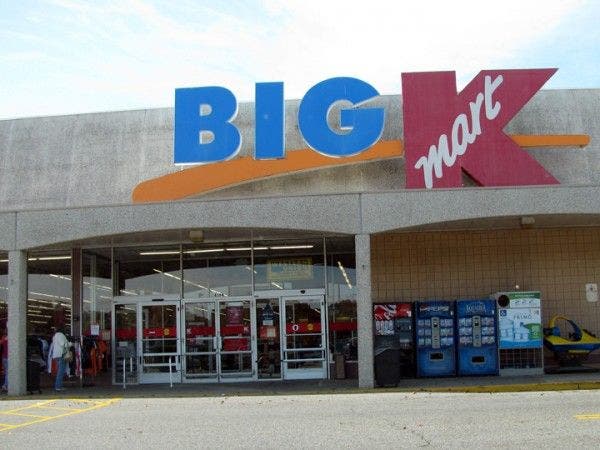
A new analysis released this week shows which New Jersey communities have been hit hardest by several rounds of store closings this year and some that are expected for 2017.
The retail vacancy rate along New Jersey's retail corridors has risen since 2015, ticking up to 7.2 percent after several big-box retailers' announced closings have impacted the state, according to a new survey from real estate services firm The Goldstein Group.
New Jersey is still performing well compared to other states: The national rate is averaging close to 10 percent vacancy. But New Jersey hasn't been immune from the nationwide trend, watching some of its big-box-store buildings go empty this past year as major chains have left the state.
Find out what's happening in Livingstonfor free with the latest updates from Patch.
Those store closings also include Walmart, which plans to close more than 150 locations nationwide; Sears, which recently said it would close 78 Kmart and Sears stores; Sports Authority, which closed all of its stores this summer; and Macy's, which plans to close 100 stores by next year.
The Ruby Tuesday restaurant chain also has closed a number of establishments in New Jersey this year. Others include Office Depot and Staples, and Pathmark and A&P supermarkets, according to Goldstein. The firm said much of the leasing activity has involved smaller retailers opening stores of less than 5,000 square feet.
Find out what's happening in Livingstonfor free with the latest updates from Patch.
"We’re also seeing banks such as TD Bank, Valley National Bank, and Capitol One announce closings of branches," according to the Goldstein report.
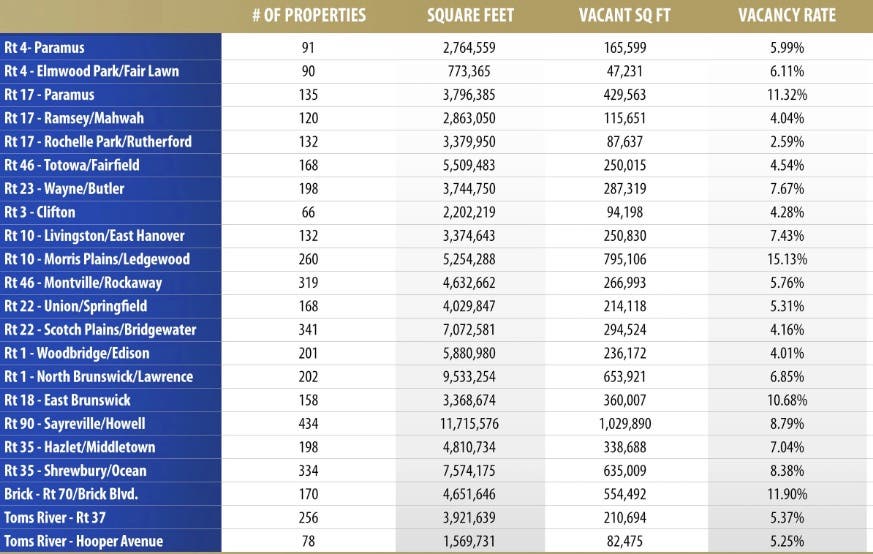
The report says N.J. communities hit hardest by store closings and, as a result, have the highest vacancy rates, are:
- Morris Plains-Ledgewood (Route 10) 15.13 percent
- Brick (Route 70) 11.9 percent
- Paramus (Route 17) 11.32 percent
- East Brunswick (Route 18) 10.68 percent
- Sayreville-Howell (Route 9) 8.79 percent
These are the communities that have suffered the least:
- Rochelle Park-Rutherford (Route 17) 2.59 percent
- Woodbridge-Edison (Route 1) 4.01 percent
- Ramsey-Mahwah (Route 17) 4.04 percent
- Scotch Plains-Bridgewater (Route 22) 4.16 percent
- Clifton Area (Route 3) 4.28 percent
Here is the list of major corridors and their vacancy rates in New Jersey, courtesy of The Goldstein Group:
Analysts said the store closings would almost surely lead to layoffs, though specifics haven't been released yet. The Goldstein Group noted that there is hope in some areas for a retail rebound.
“There was a continued increase in leasing activity throughout 2016 with several markets having minimal space available in corridors such as Route 17 Rochelle Park/Rutherford, Route 1 Woodbridge/Edison, Route 17 Ramsey/Mahwah, Route 22 Scotch Plains/Bridgewater, and the Route 3 Clifton Area,” said Chuck Lanyard, president of The Goldstein Group, in a news release.
“Retailers that continue to expand in the state include LA Fitness, Chick-Fil-A, Costco, Dunkin Donuts, Wawa, Quick Chek, Target, Marshall’s, Home Goods, TJ Maxx, Starbucks and Verizon.”
Leasing velocity in the report totaled more 2.9 million square feet. Additionally, there’s more than 1 million square feet of space currently being built and other projects in the planning stages throughout various communities in New Jersey, including Paramus, Mahwah, Maywood, Rutherford, Wayne, Livingston, Ledgewood, Union, Springfield, Bridgewater, Woodbridge, Edison, North Brunswick, Sayreville, Howell, Hazlet, Old Bridge, Jersey City, Parsippany, Hanover, Eatontown, Middletown, Ocean Township and Brick.
Patch file photo
Get more local news delivered straight to your inbox. Sign up for free Patch newsletters and alerts.