Business & Tech
Turning Sawdust Into Gasoline
Livingston's Exelus, Inc. is leading the nation in a new green technology to convert biomass to fuel.
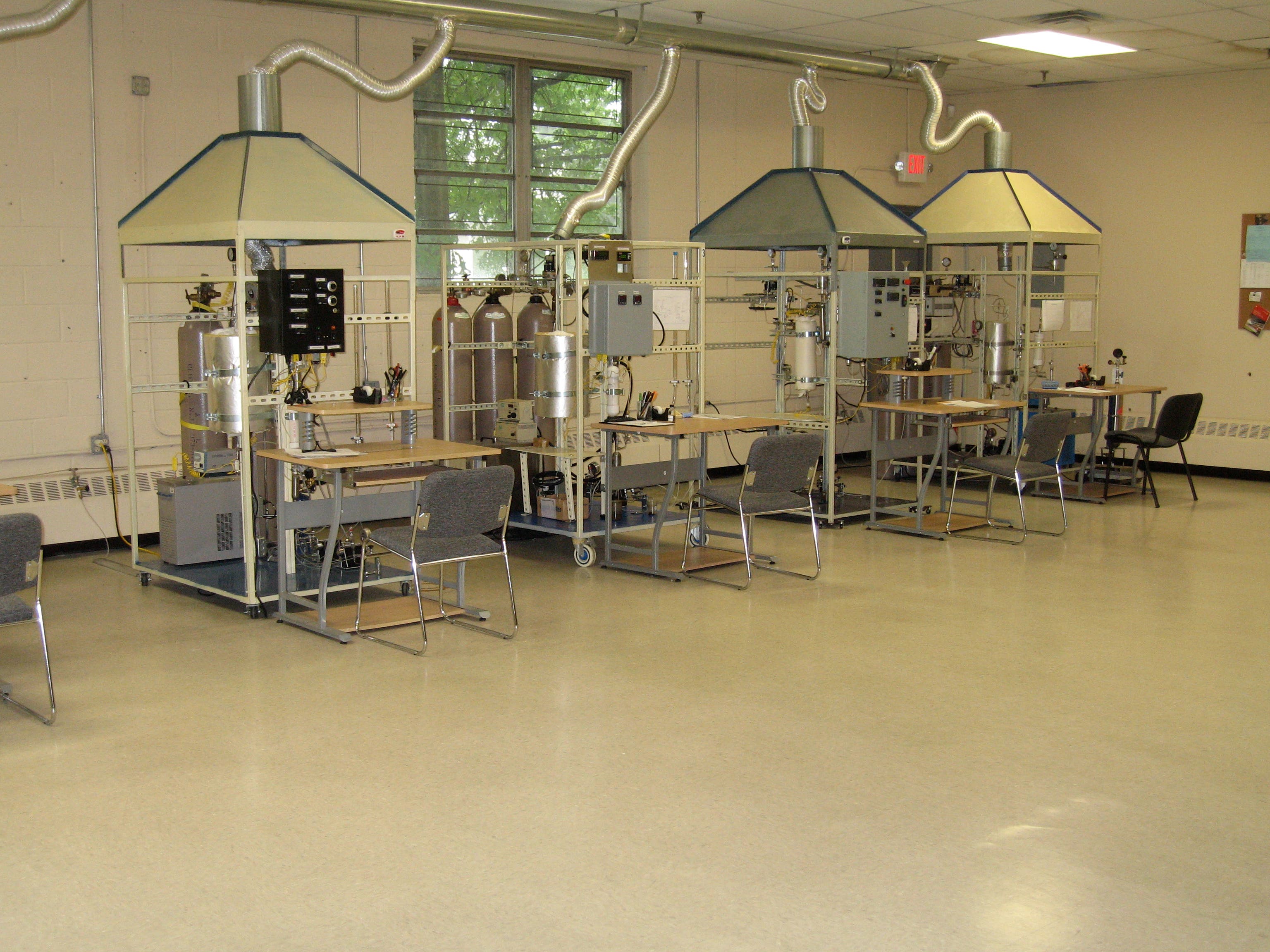

Imagine filling your gas tank with a pile of sawdust, getting behind the wheel and driving across the country. Sounds impossible, right?
While this seems far-fetched, it is not completely out of the question, especially if one Livingston company has its way. Exelus, Inc. is on the cutting edge of developing a technology that converts biomass, such as sawdust, into a usable fuel.
Earlier this month, U.S. Representative Bill Pascrell, Jr. (D-NJ-8) announced that Exelus will receive federal funding, including an award from the American Recovery and Reinvestment Act, for its innovation.
Find out what's happening in Livingstonfor free with the latest updates from Patch.
"The small Livingston-based firm is putting the nation on a course that will reduce foreign oil imports, reduce greenhouse gas emissions, improve energy efficiency and even reduce our dependence on off-shore oil drilling," the congressman said a press release.
This is the third grant to be awarded to the 13-person company.
Find out what's happening in Livingstonfor free with the latest updates from Patch.
Last fall, Exelus beat out billion dollar enterprises, including General Electric and General Motors and Ivy League research universities, to win two highly competitive research grants.
The first is a $1.2 million ARPA-E grant from the U.S. Department of Energy. There were 3,600 applicants and just 37 grants awarded. News of the award came as a shock to founder and president Mitrajit Mukherjee.
"News came out in the New York Times that the US DoE had funded high risk, high reward companies that would change the future of energy in the country," recalls Mukherjee. "I thought there was no chance in hell that we got it."
He saw a response from the DoE in his email inbox, and left it sitting while he went to get a cup of coffee.
"When I opened it," he continues, "I saw that the letter started with the words 'I am pleased' and I knew it couldn't be bad. It was quite a relief!"
A few days later, Exelus was awarded a second grant by the DoE and U.S. Department of Agriculture designed to fund high risk bio-fuel technologies. This time, they were among 24 companies who beat out 2,200 applicants for a grant. Together, the grants total more than $2.5 million.
In the nine months since receiving the grants, Exelus has "made tremendous progress," Mukherjee says.
But how exactly do they turn biomass into fuel?
The chemical engineer is a master at explaining the process. He manages to make it sound simple.
"All the oil that you use today was essentially biomass many millions of years ago. Nature cooked it over long period of time, we're trying to speed it up cheaply using catalysts," he explains. "What takes nature millions of years to accomplish, we can do in about an hour."
Further, the Exelus bio-fuel is efficient for cars.
"Because it is not ethanol based, it's different from other bio-fuels. It is a simple gasoline substitute," he adds, "You wouldn't have to sacrifice your fuel efficiency."
Mukherjee expects that the Exelus product will be in high demand in the not too distant future.
"The world is running out of oil, which is why there are these huge fluctuations in oil prices," the chemical engineer explains. "Oil has been the mainstay for our transportation fuel needs, but unfortunately we are close to or past peak oil, and there is an increased need to look at alternative sources for our transportation needs. Biomass is one such source. We want to be ready with a solution that doesn't hit your pocketbook."
What sets the Exelus method apart from the crowd, Mukherjee explains, is that the company has developed a "Goldilocks" method of conversion.
"There are many companies trying to do this, and there are really two approaches right now: the high temperature gasification approach, where the biomass is cooked under high temperatures (1000-degrees Celcius)," Mukherjee explains, "and a second method, using enzymes are done at room temperature."
The equipment needed for the high temperature method is extremely costly, he says, while that using enzymes takes many days to accomplish, so Exelus is converting the biomass at temperatures "somewhere in the middle. Just like the Goldilocks porridge," he says with a laugh, "we're not too hot and not too cold."
He emphasizes that the Exelus method is not at all harmful to the environment.
The biomass all comes from waste, never from living organisms or food sources.
"It doesn't impact food chain at all," he says. "Lawn clippings, saw dust, these are what we use. Instead of wasting, we said is it possible to do something unique with it?"
With the U.S. DoE reporting 700 million tons of biomass waste each year, there is more than enough biomass to produce fuel without killing live organisms.
Exelus is currently producing the fuel at $1.60 per gallon, though it would be about the same as current rates by the time it reaches a pump. That is still years away, though, as Exelus is only in the early phases of what Mukherjee expects to be a two-three year research project.
Before biomass fuels can reach the mainstream population, bio-refineries must be created. This will not be an impossible sell, says Mukherjee, because bio-refineries using our process will be much smaller than conventional oil refineries.
He understands the challenge before his company.
"Current biomass-to-fuels technologies are not cost effective with conventional fossil fuel based processes," he says, "So the Exelus biomass-to-gasoline technology intends to correct these technical deficiencies by choosing conditions to covert biomass into fuel which are very different from what most researchers are currently working on. And we believe that will give us this cost effective edge over the competitors."
The average consumer may find that possibly the most appealing aspect of the Exelus fuel is one that they will notice immediately: the bio-fuel smells of burnt sugar, a welcome change from the current toxic fumes at the pump.
![Peek Inside Newly Renovated Livingston Supermarket [PHOTOS]](https://patch.com/img/cdn20/users/22844250/20260520/013437/styles/patch_image/public/ribbon-cut-two___20133030252.jpg)