Health & Fitness
Walk Through A Giant Colon In Livingston: Cancer Awareness Month
Afraid of taking a colonoscopy… even though it may save your life? Maybe a stroll through a giant, inflatable colon can help bust your fear.


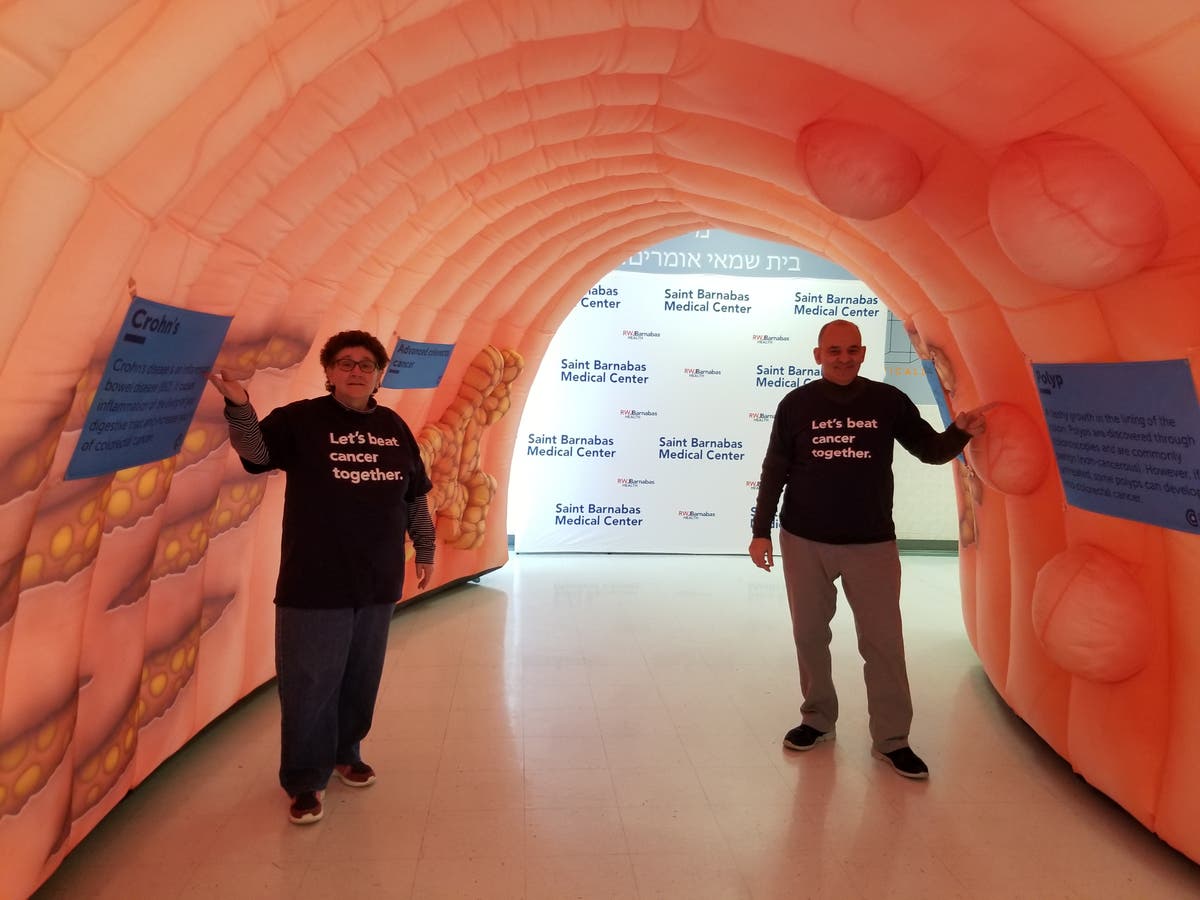
LIVINGSTON, NJ — Are you afraid of taking a colonoscopy… even though it may save your life? Maybe a stroll through a giant, inflatable colon will help bust your fear.
On Tuesday, March 19, Saint Barnabas Medical Center in Livingston will host a National Colorectal Cancer Awareness Month event, featuring a new 20-foot-long inflatable replica of the human colon.
People can take a walk through the unique installation during a free, public exhibition from 9 a.m. to 4 p.m. at the Cooperman Family Pavilion at Saint Barnabas Medical Center, 94 Old Short Hills Road in Livingston. Medical staff from The Cancer Center at Saint Barnabas Medical Center will be available to answer questions about colon health, disease prevention and screenings, and available treatments for colon diseases.
Find out what's happening in Livingstonfor free with the latest updates from Patch.
In addition, a da Vinci Surgical System robot – which helps surgeons perform minimally invasive surgery – will also be available at the March 19 event for the public to “test drive.”
Registration is not required. More information can be found here.
Find out what's happening in Livingstonfor free with the latest updates from Patch.
Hopefully, the unique exhibit will help to lighten up the sometimes-scary notion of getting a colonoscopy, one of the best ways of catching colorectal cancer, hospital administrators said.
According to Saint Barnabas:
“Although colorectal cancer is the third-leading cancer killer among men and women in the U.S., it is a preventable, treatable and curable disease if caught early. The best way to catch colorectal cancer early, however, is to screen for it. Despite the widespread availability of highly effective screening tests, colorectal cancer screening still lags far behind screening for cancers such as breast (mammography), cervical (Pap smear) and prostate (PSA test). According to the Centers for Disease Control and Prevention, only 59 percent of people of screening age go through with today’s available tests.”
“There are fewer tests that are more beneficial than a colonoscopy, said Mark Gilder, a colon and rectal surgeon at Saint Barnabas Medical Center. “Colonoscopy screenings not only allow for the detection of colon cancer, but also allow for the removal of benign polyps or growth before they develop into cancer.”
Gilder recommended that people begin screening for colorectal cancer at age 50.
“There has been a lot of talk to drop the starting age down to 45, but, as of now, if you have no family history of colon cancer, the age to begin screening is 50 for both men and women,” Gilder said.
According to Gilder:
“If nothing is found, it is recommended to get a screening every 10 years. If polyps are detected, it is recommended that the individual have another surveillance colonoscopy in three to five years. However, individuals with a you have first degree relative diagnosed with colorectal cancer, should get screened ten years prior to the age of the family member when they were diagnosed.”
-1552920567-5609.jpg)
-1552920624-3675.jpg)
Keep updated with local public safety alerts at the Patch Livingston Facebook page. Learn more about posting announcements or events to your local Patch site here. Send local news tips and correction requests to eric.kiefer@patch.com
Photos: Saint Barnabas Medical Center
Get more local news delivered straight to your inbox. Sign up for free Patch newsletters and alerts.