Neighbor News
Ramapough Indians Remain Forgotten Amidst Election Crisis
How Donald Trump and Ford Motor Co. used the ecocentric lifestyle of our local Native American community as a means of exploitation.

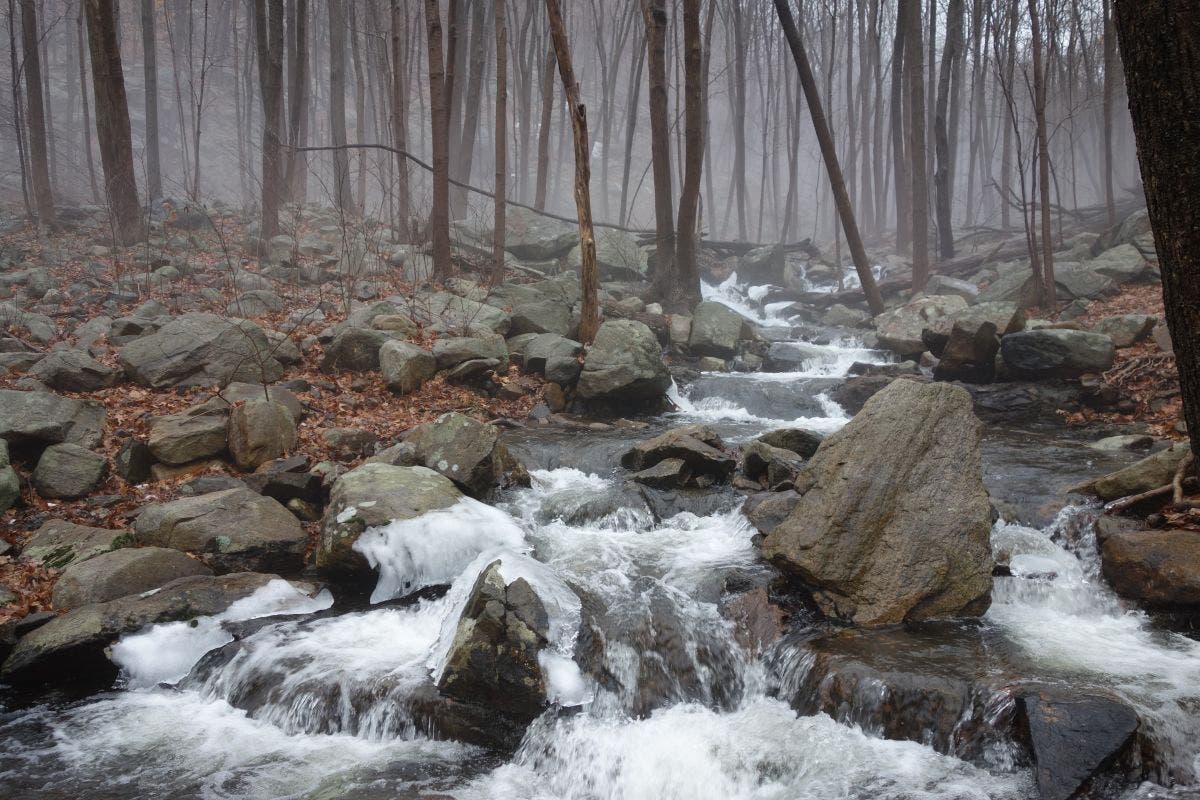
The traditional Native American life, is an ecocentric lifestyle, rooted in deep connection with the surrounding environment. Whereas, the movement of the European settler has been predominantly material based, in deep disconnection with the surrounding environment. Positioned at the foothills of the Appalachian Mountain range, the Ramapo Mountains have been a proverbial oasis for the Ramapough Indians, an offspring tribe of the Delaware Munsee Nation. Commonplace native practices in the area include sustenance hunting, farming, and fishing. And this mountain range, has provided sufficient resources for a practicing Native American culture for centuries. But, situated only 25 miles from New York City, the Ramapo Mountain region has succumbed to a metamorphosis underwent in the modern development of the region, and native culture has shifted, voluntarily or not, in alignment with this movement. The local Ramapough Indian population has tried to stay true to their practices, but overtime the ecocentric based lifestyle of their culture has become a gateway for material based institutions to exploit their populace, leaving them only able to survive by conforming to the corporate structures of our current society.
The Ramapough Mountain Indians have been recognized by the state of New Jersey, since 1980, forcing county and local governments to acknowledge their existence as well. The state of New Jersey cited in Resolution 3031, “Be it resolved by the General Assembly of the State of New Jersey (the Senate concurring): 1. That the Ramapough Mountain People of the Ramapough Mountains of Bergen and Passaic counties, descendants of the Iroquois and Algonquin nations, are hereby designated by the State of New Jersey as the Ramapough Indians,” (State of New Jersey, “Resolution No. 3031”). With governmental recognition, native tribes have access to scholarships for continued education, tax breaks for businesses, and funding for the preservation of the their land. Clearly this resolution indicates enough evidence was found by the state, proving relations between the native populations pre-revolutionary war and the current Ramapough Mountain Indians. So, it would be a reasonable assumption that the federal government would too, look at the evidence presented, and justly conclude that the Ramapough Mountain Indians deserve federal recognition. But, this was not the case. In the late 1970’s, while the state petition of recognition was filed with the state, a federal petition of intent was too filed, seeking federal recognition on behalf of the tribe. The official petition, with supporting documentation was not submitted until 1990, and the Final Determination was reached in December of 1995, citing insufficient genealogical records from 1790-1830 tracing Ramapough natives to their Hackensack River Valley ancestors, meaning the Ramapough Indians would be denied access to federal support and protection. Roger Josyln, a Certified Genealogist with over twenty years professional experience in the New York-New Jersey area, states in a 1993 volume of the Rockland Journal News, “I am writing to tell you their skepticism is unfounded. Recently, building on work begun in the 1970’s, I submitted a certified report to the Bureau of Indian Affairs which traces the Indian ancestry of the modern-day Ramapough tribe to the mid 1700’s…There should be no question that the Federal Government should follow what the states of New York and New Jersey have already done and recognize the Ramapough Mountain Indian Tribe,” (Josyln 471). If two states, and a highly-respected genealogist have agreed on the tribe’s existence, how can another governing body disprove their findings, without having new substance to contribute?
In state-recognized tribes, legal gambling is forbidden, but in federally recognized tribes, the development of legal casino gambling is permitted on tribal trust lands. This presents an ulterior motive for parties with interests vested in current gambling establishments. One of those parties is Donald Trump. Currently, Atlantic City, New Jersey, positioned on the jersey shore, hosts the only legal casinos in the state. Donald Trump, a real-estate mogul, and owner to many of these casinos, would see the proliferation of northern New Jersey casinos, a threat to his properties. In response to this threat, “Donald Trump claimed that Indian reservations had fallen under mob control. He secretly paid for more than $1 million in ads that portrayed members of a tribe in New York as cocaine traffickers and career criminals. And he suggested in testimony and in media appearances that dark-skinned Native Americans in Connecticut were faking their ancestry,” writes Shawn Boburg, of the Washington Post, depicting the outlandish attempts by Donald to subvert the true nature of Native Americans. As a culture that is mostly uninterested in financial acquisition, they are unable to financially match Trump’s media campaign. Leaving the native population unable to voice the truth. But Boburg continues, “His battles with Indian casinos also reveal Trump's contradictions: Even as he was bashing the industry publicly, Trump was quietly trying to strike partnerships with some tribes, records show. In one case, he lobbied a California tribe in person in an unsuccessful attempt to win the right to manage its planned casino,” (Boburg, "Trump Clashed with Native Americans over Casinos"). While it cannot be conclusively said that Trump is the reason behind the Bureau of Indian Affair’s decision to reject the tribe’s federal status, it certainly did contribute to the anti-Native American sentiment he hoped to spread. For the native population casinos represented a hope for a better life, as much of their sustenance lifestyle has been taken away from them with their land loss. Revenue from legal Indian casinos in some cases have gone on to build schools for adolescents. Indicating a positive relationship between Indian casinos and community building initiatives. But, it seems the federal government would rather protect a rich man, instead of natives who have lived off their homeland for centuries. Ultimately, Donald Trump decided to exploit a difference between natives and their surrounding neighbor’s by portraying them as barbaric for living off the land they were born on, in hopes of material gain.
Find out what's happening in Mahwahfor free with the latest updates from Patch.
To any Native American tribe, the purity of their land is held in high regard, and any pollution presents not only spiritual repercussions, but threats to their livelihood. In the Ramapo Mountains, the natives have relied upon, wild turkeys and deer in the forests, and bass in the streams, as substantial food sources. Thus, any pollution on their land would leave them searching for another way to sustain themselves. So, when a major motor company, Ford Motor Co. came to Mahwah, NJ, and built the largest auto manufacturing plant in the country at the time in 1955, one would assume they would employ slight regard for the indigenous folk in the area and properly discard of their toxic waste, sure to not upset the ecosystem the native population is dependent on. Contrary to this environmental ideology, Ford Motor Co., over a four-year period from 1967-1971, dumped industrial waste material in the Ramapough Indians reservation. Most of the waste was in the form of “paint sludge”, a deadly mix of toxic chemicals, including, Freon, heavy metals, lead, and arsenic that saturated the soil and traveled through the air when the highly combustible chemicals ignited and burned (Chermayeff, Mann v. Ford). Out of innocent curiosity, the Ramapough children found joy in playing with the colorful paint, and would sometimes eat the sweet tasting concoctions. Immediate symptoms included rashes, nose bleeds, and migraines. Once assimilation in schools with neighboring communities began, community members were soon to realize major health differences in both groups of youth. A generation later, many families in the native community suffers from in some form of these illnesses, cancer, diabetes, kidney stones, miscarriage, asthma, gastrointestinal disease, and skin disorders (HBO "Mann v. Ford: Synopsis”). As a member of the community these natives call home, I can attest to the fact that Ramapough children deal with skin deformities, and not just as an isolated case, but a distinct characteristic.
The EPA, Environmental Protection Agency responded to growing concern of pollution in 1980, by listing the site a Federal Superfund Site. Responsible for cleaning up the nation’s most contaminated sites, the EPA Superfund program was established to ensure citizens, “can live and work in healthy, vibrant places,” (Environmental Protection Agency, “Superfund). The EPA openly admits to “missing” an estimated eighty percent of toxic waste during the 1990 clean up, and made the Ramapo Mountain site the first ever to be added back to the Superfund list (Chermayeff, Mann v. Ford). While direct contact to the toxic waste is most dangerous, it must be kept in mind, the waste will leach into water supplies and eventually wildlife populations. The State of New Jersey openly warned Ramapough residents in 2007, as to the contamination of local wildlife populations. They specifically pointed to lead contamination in squirrels, a source of food the Ramapough Indians have relied on for ages (The Canadian Press, "N.J. Warns Residents That Squirrel Meat May Be Contaminated by Toxic Dump”).
Find out what's happening in Mahwahfor free with the latest updates from Patch.
In defense, more than 650 affected families filed a mass action suit against Ford Motor Company in January of 2006, claiming negligent toxic poisoning and property damage. Representing attorneys, Vicky Gilliam and Kevin Madonna estimated a $2 billion settlement, about $3 million per plaintiff to be paid by Ford. The case did not even get to court after a settlement was reached. $12 million was to be payed to the plaintiffs by Ford, summing no more than $9k for an individual family. In fear of continuing the case until funds run out, the plaintiffs heeded to the advice of their lawyers and agreed to the settlement. Unfortunately, justice was not tried, but instead the party with greater financial means got to reap the benefits of poisoning a group of people (Chermayeff, Mann v. Ford). And once again, the Ramapough Indians are ignored and exploited, because they can’t financially support self-defense. This would indicate our justice system has become a function of resources, not evidence.
Along with the $12 million to be paid by Ford Motor Co., it was also agreed Ford would be financially responsible for a comprehensive cleanup of the toxic zone. A full excavation of the site was estimated to cost Ford Motor Company, and Ringwood Township $32.6 million. In 2013, Ringwood proposed a plan that was later approved by the EPA, to build a recycling center on the site, which slightly deregulates the area, making a legal “cleanup” cost $5.4 million. Included in this plan is to “cap” the polluted areas, by covering the contaminated soil with topsoil and asphalt (Stewart, "EPA OKs Ringwood Recycling Center atop Superfund Site."). It must be remembered the natives are intrinsically dependent upon the purity of that soil for existence and a local government and major government agency agree that dumping asphalt on it is an appropriate response. Showing in another case these institutions of government are not vested in the protection of its citizens, but in private property and institutions. It must be noted Ford did altruistically volunteer to pay the $1.5 million for the new recycling center, a drop in the bucket compared to the estimated $3 billion settlement (Chermayeff, Mann v. Ford).
All this adds up to present day, where a population of federally unrecognized individuals, the Ramapough Indians, living on toxic land, with a toxic food supply, and poisoned children, are left with no other choice, but to conform to a society they in no part have chosen to be a part of. Broken down very simplistically, the actions of one party contributed to the holocaust of a culture, all in a land where all cultures are to be celebrated? In the cases studied, financial backing played a role in the justice system. Justice should not have to be financed, and when justice must be financed, is it actually just? Had the Ramapough Indians, been federally recognized, they would have had access to resources to fully represent themselves in a court system and justice might have stood a chance. But, in the land of the “free”, one’s ability to defend themselves in a court system is dependent upon financial resources? Flashback to 1993, when Donald Trump decided to sabotage a native community, little did we know that his greed would lead to the Rampough Indians inability to properly defend themselves in court and enable a corporation to rape the environment without real consequence. There are 2,600 current members of the Ramapough native tribe living on the once Superfund site, on the national scale 74 million currently live on or directly next to a Superfund list site (Environmental Protection Agency, “Superfund). The Ramapough Indian’s case is a drop into an ocean of problems the EPA faces. This case only reflects the absolute disarray our political structures are in, how can a functioning institution reasonably let 74 million people live adjacent a toxic wasteland? Living in the same town as the Ramapough people, the reality of this situation is not just existent in newspaper articles and HBO documentaries. I vividly remember making false assumptions about their race, because I didn’t understand their way of life or history. Thankfully I did not have the means or desire to exploit them, but Donald Trump, Ford Motor Company, and government institutions did, and acted. Yet, the Ramapough Indians paid the consequences to these actions. As of December 16, 2016, the United States of America is over $19.9 trillion in debt, an insignificant figure to the moral bankruptcy outlined by the continued actions of federal government and corporations in this country (U.S. National Debt Clock : Real Time.). Lie to a government official, and you’ll spend time in a jail cell; falsify information leading to an indigenous culture’s virtual nonexistence, and apparently, you’ll become president.
Works Cited
Assembly Concurrent Resolution No. 3031, State of New Jersey, filed January 8, 1980.
Boburg, Shawn. "Trump Clashed with Native Americans over Casinos." Regional Business News [EBSCO]. N.p., 26 July 2016. Web. 14 Dec. 2016.
D'Addario, Daniel. "Mann v. Ford Depicts Ramapough Legal Battle." New York Observer 13 July 2011: n. pag. Regional Business News [EBSCO]. Web. 14 Dec. 2016.
Josyln, Roger D. "Ramapough Indian Tribe's Rights." Rockland Journal-News 21 July 1993, 12th ed., sec. A: 471. Print.
Mann v. Ford. Dir. Maro Chermayeff. Perf. Wayne Mann. HBO, 3 June 2011. Web. 14 Dec. 2016.
"Mann v. Ford: Synopsis." HBO. N.p., n.d. Web. 13 Dec. 2016.
"N.J. Warns Residents That Squirrel Meat May Be Contaminated by Toxic Dump." Newspaper Source Plus [EBSCO]. The Canadian Press, 25 Jan. 2007. Web. 14 Dec. 2016.
Stewart, Holly. "EPA OKs Ringwood Recycling Center atop Superfund Site." NorthJersey.com. The Bergen Record, 20 Apr. 2015. Web. 14 Dec. 2016.
"Superfund." EPA. Environmental Protection Agency, n.d. Web. 13 Dec. 2016.
"U.S. National Debt Clock : Real Time." U.S. National Debt Clock : Real Time. N.p., n.d. Web. 16 Dec. 2016.