Neighbor News
Joyce Kilmer's "Trees" Inspiring New Artists
The poet/patriot was killed in World War I, but his "Trees" -- in this case real trees -- continue to live in the hearts of new artists
MORGANTON, NC -- Poet/patriot Joyce Kilmer’s “Trees” continue to inspire artists of all types -- the latest includes potters and real trees in the Joyce Kilmer Memorial Forest in western North Carolina.
An exhibit of seven women potters opened in the Hamilton Williams Gallery in Morganton, NC, and among the artists is Robin Beckett and her creations inspired by the Kilmer forest.
The 3,800-acre forest, famous for its 100-foot high poplar trees, was set aside by Congress and dedicated in 1936 as a memorial to Kilmer, who was killed on a French battlefield in World War I, the most distinguished American to die in the war.
Find out what's happening in Mahwahfor free with the latest updates from Patch.
“Thus,” proclaimed then-President Franklin D. Roosevelt, would Kilmer’s “beloved memory (be) forever honored.”
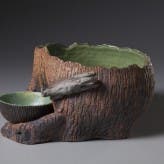
Beckett, of Winston-Salem, NC, is exhibiting her “woodsy pots” fashioned in the form of trees and tree trunks, an article in the Morganton News Herald reported.
Find out what's happening in Mahwahfor free with the latest updates from Patch.
“I love to be outdoors in the wooded mountains of North Carolina,” she said in her exhibit statement. “Over the years I have always returned to nature to inspire my pottery. This collection is particularly influenced by the big tees of Joyce Kilmer Memorial Forest, one of the few virgin forests left in the U.S. Each tree takes on its own creative stance, giving me opportunity to play with the possibility of creative function.”
One of Beckett’s creations is called ”Chip and Dip,” a hollowed-out tree trunk for chips attached to a small bowl for dipping.
The News Herald story said the exhibit was “drawn from the Craft Revival movement that occurred around the turn of the 20th Century when the people of the southern Appalachians had few opportunities for economic improvement...Mothers and wives began to relearn traditional making with an emphasis on quality, design and individuality. The sale of their craftwork helped to reshape the economy and culture of the southern Appalachians and to improve the economic status of women and families.”