Politics & Government
VIDEO: Conversation With Former White House Press Secretary Ari Fleischer
Former President Bush's first press secretary held a talk at Congregation Sons of Israel last Sunday about his experiences in the White House and current events.
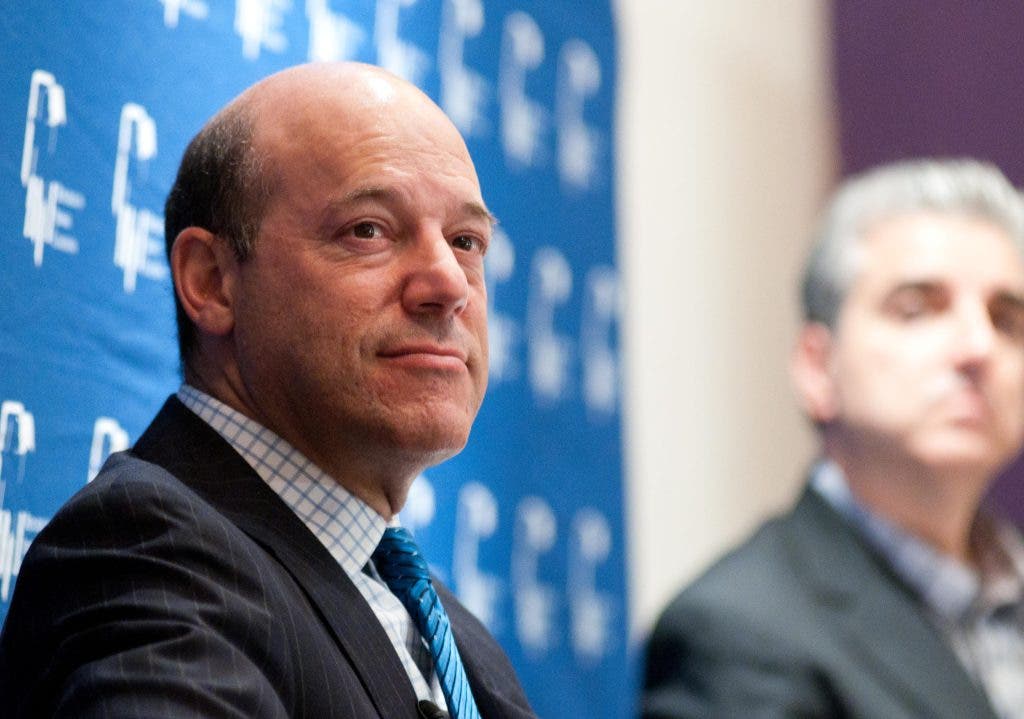


It's not everyday that a former White House official visits Manalapan. On June 12, Ari Fleischer, who served as the Bush administration's press secretary from 2001 to 2003, spoke at Congregation Sons of Israel at Gordons Road in Manalapan. The presentation was in the form of an interview with conservative talk radio host Steve Malzberg.
A multitude of local politicians, candidates, and GOP leaders attended the event, which was organized by a local chapter of the Republican Jewish Coalition, a national non-profit advocacy group. Among these leaders were N.J. Assemblyman Sam Thompson (R-13), former U.S. Congressional candidate for the 12th district, Scott Sipprelle, former 6th district candidate Anna Little, and Sharron Angle of Nevada, who unsuccessfully challenged Harry Reid's Senate seat in 2010. Also in attendance was Stuart Moskowitz, the former mayor of Manalapan.
The discussion focused on Fleischer's journey from Democrat to Republican, life inside the White House, and an analysis of current events.
Find out what's happening in Manalapanfor free with the latest updates from Patch.
"You really are mentally whipped everyday - I don't mean whipped by the press - I mean whipped tired. It's grueling. It's also the best job you'll ever have," said Fleischer. He noted how he attended all major meetings between Bush and foreign leaders including Ariel Sharon and Vladimir Putin. "You're just a firsthand witness to history," he added.
He went on to speak of his experiences through the events of September 11, 2001.
Find out what's happening in Manalapanfor free with the latest updates from Patch.
"The notion on Air Force One on September 11, that we were a nation going to war and that sense that I'm on the job—that this is my duty now to help prepare for war—is profound," said Fleischer.
"The thing that struck me about that day, Steve, was the sheer lack of information about what this was, how many more [attacks] were out there," he said. He noted that the administration had to be careful about its use of the word "war" when describing the United States' response to the attack.
On 9/11, Fleischer spent the day with Bush, taking notes on everything the President said and did. He plans to donate those original notes to the Bush library.
Although he was pressed by Malzberg, Fleischer would not speak ill of the current press secretary, Jay Carney. "There's sort of a press secretary code," Fleischer said. "As much as I substantively and ideologically disagree with everything they are saying, I'm sort of on their side of the podium."
Fleischer did, however, criticize the White House for how the information about the raid that killed Osama bin Laden was released. He said the White House tried to take too much credit and released information too quickly.
"I never, ever spoke about military operations from the podium," Fleischer said. "That was the Pentagon's job [....] The briefing should have waited 24 or 48 hours," he said.
Reflecting on his own experience in the White House, Fleischer said, "The hardest part of my job was hearing what I heard in the Oval Office and then going to the podium, and having to decide what to talk about and what not to talk about, because the press wants you to talk about everything."
When discussing current events, Fleischer expressed a deep concern over President Obama's foreign policies and diplomatic relationship with Israel.
"I think Barack Obama wants to be the great man-in-the-middle who somehow figures out how to bring the Israelis and the Palestinians together. And so he thinks you can't have leverage unless you're neutral, " said Fleischer. He contrasted Obama's strained relationship with Israel with the strong ties of the Bush administration.
Fleischer and Malzberg also criticized the mainstream American media for the way they often portray Israel as an aggressor rather than a free nation trying to defend itself.
"It's like child abuse how these kids are being indoctrinated into jihad and told to take Jerusalem with their blood," Malzberg said about the "summer camps" run by Hamas. "How does the world and the American media stay silent when this is going on, and this is the culture of the Palestinian people?"
"It's a massive underreporting," said Fleischer in agreement, "which is why it's so important for us to stand by Israel's side."
Fleischer is now happily retired from public service and works as a media consultant for professional athletes and sports organizations. His book "Taking Heat: The President, the Press, and My Years in the White House," published in 2005, reached number seven on the New York Times Bestsellers list, while being blasted by the Times for taking "potshots" at the press.
Fleischer said that he will be happy to provide commentary and analysis during the 2011-2012 campaign season, but he will not publicly endorse a candidate.
"The old face is going to be a Romney and the new one is going to be a Pawlenty, a Hunstman or a Bachmann. And the other candidate I think we should keep an eye on is Herman Cain," he said.
When asked by an audience member if he'd run for president, Fleischer said, "Never."
After the discussion, Patch caught up with Fleischer and asked him about Governor Chris Christie's political future.
Fleischer had positive remarks about the governor. "I think it's great how Chris Christie has just brought so much excitement to Republicans everywhere and the country, because he's done what he said, and he's tackled a lot of economic problems," said Fleischer.
He said to take Christie's word that he is not running for president in 2012 but to keep him in mind for 2016 if the Republicans don't win the White House.
When asked what specific things the Republican Party can do to attract more Jewish voters, Fleischer's advice was to listen to the President. "The more Barack Obama keeps talking about Israel, the more Jews are going to vote Republican," he said.
Fleischer also said that the efforts of groups like the Republican Jewish Coalition are important at a local level. "That's where grassroots politics really works and makes a difference in this country. People believe in a cause, they get active and they join."