Health & Fitness
A Conscious Guide to Buying the Best Quality Food
Learn THE most important thing to consider when choosing what to eat and how to do it.
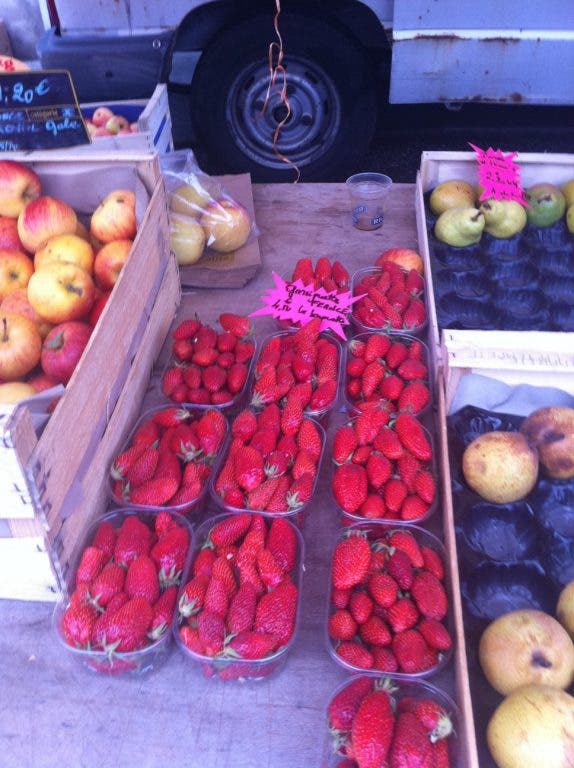
"Don't eat anything your great-grandmother wouldn't recognize as food."
— Michael Pollan
I just returned from spending about 8 days in France, most of which was spent in small towns in the South. One thing that I noticed while I was there was that I rarely saw an overweight person and it was even rarer to see an obese person. There were lots of baked goods made with butter, delicious cheeses and duck fat was used often in cooking (you can’t make potatoes any more delicious than cooking them in duck fat with some garlic). I believe that the primary reasons for people not being overweight were the quality of the food and portion size.
I did not see people snacking on things like chips, nor did I see much processed food in general. While baked goods were common, they were freshly made and while soda was available, the can was half the size. Mostly, I saw people eating real food. The quality of ingredients is the single most important thing to me when talking about healthy eating. This trip just reinforced that belief for me.
Find out what's happening in Maplewoodfor free with the latest updates from Patch.
So to help support people in making this a way of life for themself and their family I’ve decided to share with you a portion of chapter 3 of my book “Delicious For Life: Your Everyday Guide to Making Quick & Healthy Meals”. This will give you some tips on how to buy the best quality, real food. Here you go:
Prior to attending Culinary School, I ate a lot of refined food. Interestingly, I didn’t know that I was doing that or even that there was an alternative. I relied heavily on white flour and a lot of white sugar. My diet at that point was focused primarily on eating low-fat foods and I didn’t understand that many of these processed choices were a burden to my body. And while I didn’t feel great, I had never fully experienced the difference and had nothing which to compare my health. In fact, I carried my childhood health habits into adulthood and considered “healthy food” to have fewer calories and then later, less fat.
Find out what's happening in Maplewoodfor free with the latest updates from Patch.
But once I got to school, my entire point of view changed. I began to understand that it is the quality of the ingredients and how the food was produced that determines it health benefits and detriments. I also began to understand how the various nutrients of each food work together. I learned that when we eliminate food groups we can actually deprive our body of vital vitamins and minerals. And I also learned that refined foods not only remove nutrition from food but also, some of the ingredients in many refined foods can make it difficult for our bodies to function optimally. Ideally, we want to be eating food that provides all of our essential nutrition if possible. Ultimately, we want to be eating a diet rich in whole foods.
When I teach classes I often begin by asking my students if they can define a whole food. A wide range of answers are offered, revealing that most people do not know the definition. And until I went to culinary school, I didn’t have a clue either. In fact I’m not sure that I had even heard of the term back then.
Fast forward to the present and I now believe in eating whole foods whenever possible. The working definition that I share with my students and clients for “whole foods” is foods as close to the way nature created them as possible, with all their edible parts. So for me, when I choose ingredients I want them to be as close to whole as possible. But what does that mean in practice?
For starters, you don’t want food treated with chemicals or full of artificial ingredients. You don’t want it stripped of its original nutritional value or to have the nutrition mechanically added back to it. Try to use organic ingredients as much as possible and pay close attention to the type of fats you choose. Begin eliminating white sugar from your cooking and replace it with natural sweeteners like maple syrup and organic apple juice. Opt for generous servings of vegetables and nuts. And seek out wild and sustainably caught fish and grass-fed meats because grass is the natural diet of the animal.
It may sound complicated at first but I promise you it’s not. Once you begin choosing higher quality foods and eliminating inferior products, you’ll begin feeling and looking better and WANT to continue your new food practices. Here’s my rule of thumb when shopping: not 100% of everything that I use is entirely whole but the overwhelming majority of the ingredients that I choose are unprocessed or minimally processed and my great-grandmother would recognize them as food. I believe that the quality of my ingredients is most important consideration in preparing food that tastes great and is great for us.
"Shake the hand that feeds you."
— Michael Pollan
How can you begin this process without becoming overwhelmed or discouraged?
Here are some steps to get you started:
Shop Farmers’ Markets: When they are available, this is the easiest way to get the freshest food. Many vendors at these markets sell only what they grow while others sell things from other producers as well. Shopping this way will allow you to talk with the Farmers and ask important questions about how your food got to you. At Farmers’ Markets you can get produce, meats, cheeses, baked goods, eggs, fish and an assortment of other things. Short of producing your own food, this is the best way to know what you will be eating. Establish a relationship with your farmers and it will be mutually beneficial.
Join a CSA (Community Supported Agriculture): This is a similar concept to shopping at a Farmers’ Market. You are buying directly from the farmer here but are paying a lump sum of money up front to receive your share at a later date. In my CSA, we pay in January and receive a weekly share from June through November. Unlike the Farmers’ Market, I don’t get to pick what I want, I get what is brought to us but I know where my food is coming from and the standards used to produce it. CSAs vary in their offerings from only vegetables to fruits and vegetables, meats, dairy and various other items. If this is something that interests you, do a search in your area to find out what is available. Again, this is a great way to meet like-minded eaters who can be a great support during your transition.
Maintain a relationship with a Farmer in the “off season”: When the Farmers’ Market is not open in my area there is one Farmer who will deliver certain items like grass-fed meat to my home. See what is possible where you live, again it can be mutually beneficial.
Shop trusted online sources and keep food on hand: There are companies that are local to certain communities and can provide you with food from local farms year round. Then there are also companies that are national and ship grass-fed meat, fish and other organic items to your door. Ask if you can buy in bulk to save money. Store things in your freezer if you have room, or invest in a stand-alone freezer for this purpose. You’ll also be able to store meats and fish from the Farmers’ Market in the freezer as well.
Buy the highest quality items you can find at the store. Educate yourself. If you haven’t seen the movie Food, Inc. I consider it required viewing for anyone who eats (parental discretion may apply) as it is an eye opening view on the current state of our food. You’ll be inspired to purchase products from smaller companies whose production standards are high. There are often local farmers and artisans whose products are in neighborhood stores. If I don’t buy eggs from a local farmer, I typically buy a brand at the store that admittedly costs more money but has standards I can trust.
These steps can get you started with fresh, high quality and delicious ingredients which are at the foundation of fast, healthy and great tasting meals. If you’d like to talk about this in greater detail, send me an email.