Health & Fitness
Addressing The Gender Achievement Gap
Madhu, Wayne and Jeff discuss a growing gender achievement gap and the need to address it within our own school district.
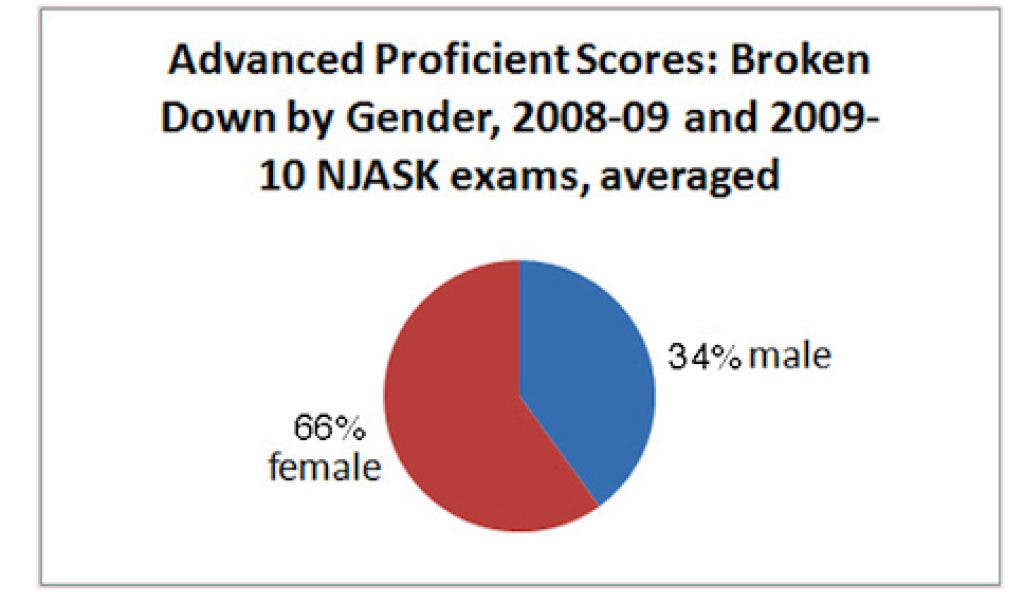


Over the past two decades a large and enormously consequential achievement gap has emerged between girls and boys.
In 2010, the Center for Education Policy published a comprehensive study showing that boys have fallen dramatically behind girls in reading and writing throughout the United States (http://www.cep-dc.org/). Boys outnumber girls in special education by 2 to 1, are much more likely to have significant reading problems, and are somewhat more likely to drop out of school. In South Orange-Maplewood, across grades, girls outscore boys on the NJASK by about 10 percentage points, with boys making up 60-65% of students scoring Partially Proficient on the Language Arts NJASK (which is much larger than the statewide gap where boys are only 56% of students scoring Partially Proficient) and girls making up 60-65% of students scoring Advanced Proficient.
These trends in primary and secondary education appear to carry over into college – barely 40% of new college graduates are male, a fact which will have huge social and economic consequences for men and women as individuals and for the nation as a whole. What is particularly alarming is that the gender achievement gap appears to disproportionately affect students of color, particularly African-Americans.
Find out what's happening in Maplewoodfor free with the latest updates from Patch.
The growing body of research and dialogue about this issue led New York Times columnist Nicholas Kristof to write:
[I]n the United States, many people still associate the educational “gender gap” with girls left behind in math. Yet these days, the opposite problem has sneaked up on us: In the United States and other Western countries alike, it is mostly boys who are faltering in school. The latest surveys show that American girls on
average have roughly achieved parity with boys in math. Meanwhile, girls are well ahead of boys in verbal skills… (NY Times, March 27, 2010.)
Find out what's happening in Maplewoodfor free with the latest updates from Patch.
There are many reasons why boys are falling behind girls. This is not a complete analysis, but boys tend to have shorter attention spans, their energy levels sometimes do not comport with classroom expectations, they read significantly less than girls do and when they do read it tends to be fact-based reading and not what currently predominates school curriculum.
Several years ago gender was among the many categories included in State of the District reports, but the South Orange-Maplewood School District has not focused on the issue of a gender achievement gap in our schools recently. Given the significance of this issue and its serious consequences, we propose four steps for the District to take to assess the problem and determine what can be done:
(1) Conduct a Focused Data Analysis on the Gender Achievement Gap in South Orange and Maplewood – The Board should charge the Administration to analyze data and present a report to the Board and the public on the size and nature of any gender gap in reading and other subjects among our students. The data should be broken down by race to determine which groups are disproportionately affected.
(2) Conduct an Informal Survey of Teachers and Administrators to Determine Experiences and Awareness of the Issue Among Educators in the District.
(3) Ensure that Teacher Training and Development Includes Reference to the Growing Body of National Research and Discussion on this Topic.
(4) Propose and Identify Interventions and Solutions That Will Address Problems Identified by Steps (1) and (2) – We have a number of ideas that we believe can be tested against the research as ways to address boys who are behind in reading. For example, we think it would be productive to train teachers on how to deal with energetic boys and explore strategies for giving boys more opportunity to use that energy in positive ways. We must also react to the reality that boys read less than girls and carefully conduct outreach to boys and their parents to get boys to read more. Developing and implementing the non-fiction elements of the Common Core standards should benefit the reading patterns of boys. In addition, adding more teaching time to science and social studies in elementary school will help engage boys early on in their educational journey. We also believe that grading could be balanced so that boys’ particular strengths can be recognized and that they are not unduly penalized for weaknesses that are not centrally related to learning. We must make our tutoring and mentoring more robust to prevent any students from developing deficits that are difficult to close. But we believe that before exploring such interventions in detail, the District must understand the scope of the problem.
In proposing that the School District look at the gender achievement gap and consider action to address it, we are mindful of the long history of educational discrimination against women in which women were excluded from studying many subjects and joining many professions. And even today, we note that there is a documented gap between men and women in the work world, with women in some cases not being paid equally for equal work. But at the same time that we need to be conscious of that broad picture, we should also be conscious of the issue of lagging achievement by boys in contemporary American education. We should determine whether boys are having a particularly difficult time in our schools, and how we can address that problem to the degree it exists.
- Madhu Pai, Wayne Eastman & Jeff Bennett