Health & Fitness
Fashion Firsts Explained
Alexander McQueen will be remembered as a fashion genius. But what about those clothing innovators whose remarkable innovations remain unknown. Who will tell their stories?
It’s unlikely we will ever know the precise circumstances surrounding the development of the wheel, beer or mother-in-law jokes. They’re all part of our shared cultural heritage that we take for granted. But recent advances in archeology have uncovered the origins of a several important fashion innovations. The following report is an attempt to set the record straight and bring well-deserved recognition to a few creative individuals whose achievements are still making a difference today.
Balling Up Socks
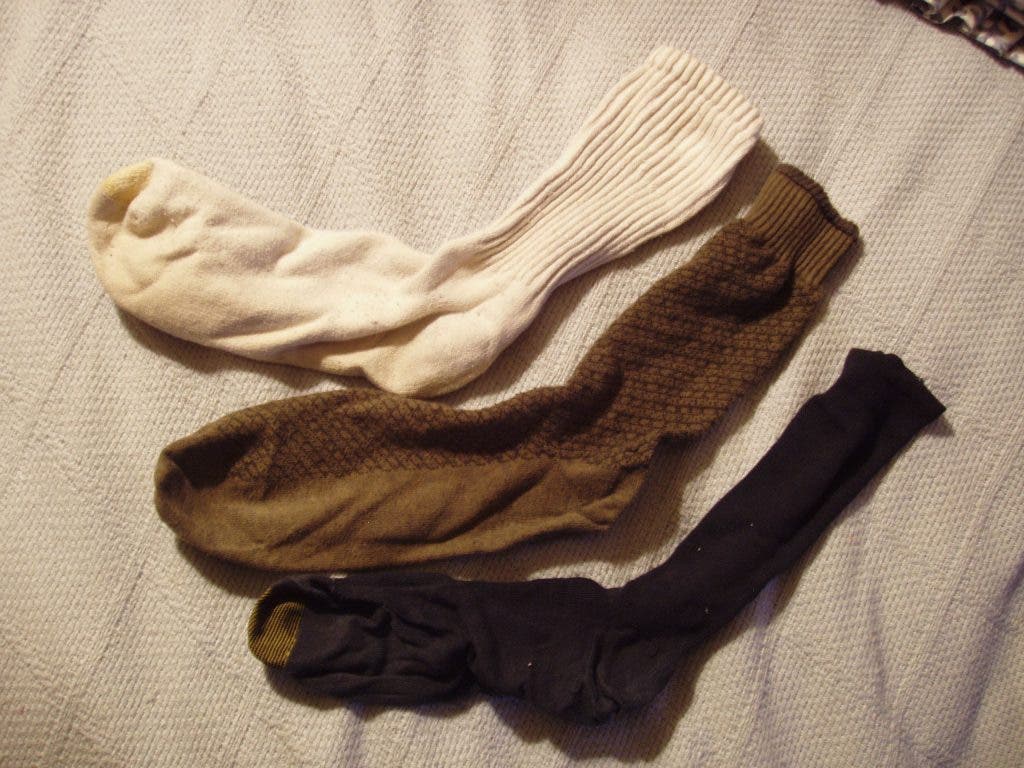
Socks were new, invented just a few years earlier, by a cold sensitive sheepherder, living during the late ice age in what’s now northern France. The problem was keeping track of pairs.
Find out what's happening in Maplewoodfor free with the latest updates from Patch.
Clothing closets and dressers didn’t exist (it’s hard to build drawers in a cave wall) and although the new invention was a big hit, single socks were always going missing. That’s when a young toolmaker came up with the idea of rolling socks up into a ball. Not only were they easier to keep track of, but even if they did go missing it was the pair that was lost and the victims avoided the dreaded trauma caused by single sock anxiety.
The Button
Find out what's happening in Maplewoodfor free with the latest updates from Patch.
The early Scandinavians of the late Ice Age were a hearty people who laughed at the cold. But even they had their limits. So to protect themselves from the icy chill they wore layers of bear fur and deer hides. That worked fine until a stiff wind blew their coverings open exposing them to frigid temperatures.
As a result outdoor activities were held to a minimum during the colder months and society suffered. That is until one day when an argument over a frozen smelt led to a startling discovery.
Two hunters were returning from an unsuccessful hunting trip when they both spied the frozen fish in the distance. Running at top speed they reached the fish at the same time and a fight ensued. The battle was pretty even until one broke free grabbed the smelt and knocked the other over the head with his frozen prize. When the loser regained consciousness he was so angry he threw an arrowhead at the victor. It pierced through several layers of hides stopping just short of rival’s chest. Although it hurt the arrowhead had secured his clothing so that it remained close despite the wind. Thus the first button was born.
In the decades that followed the local tribes adopting the strategy remained warm even in the worst weather, although until someone figured out that buttonholes could be made in other ways getting dressed was always very painful.
Open Toed Shoes
Boots were an accidental discovery. Many years ago when Woolly Mammoths still roamed the Asian Steppes, a young, not so bright hunter noticed the discarded hind legs of a giant bear, hollowed out by vermin and worms. Slipping his legs into the paws he noticed that his feet were cozy and warm and that he could step on twigs and pebbles without injury or pain.
His discovery brought instant fame and he was soon elevated to the coveted position of animal trap checker as a result of his newfound ability to walk comfortably in the snow.
All was well until the mate of the dispatched bear caught wind of her scent that still emanated from the bear boots. The frenzied bear raced towards the trapper intent on getting his revenge. Seeing the bear the trapper raced away and clamored up a cliff barely out of reach of the frustrated and angry animal.
The two remained like that for hours until the bear tried one final gambit. With one enormous leap he swiped at the boots and tore them off at the toes. Responding to the trapper’s scream the villagers sized up the situation and chased the bear away. Just then one of the villagers called attention to the open toed boots. The fronts are missing he said and everyone laughed. But the trapper said that aside from a little pain he felt fine and wiggled his toes prove it.
The new style was a big hit especially in the summer when the temperature rose. But the trend soon died out when no one could be found to assume the role of shoemaker