Health & Fitness
One Pride Event You Don't Want to Miss
Tyler Clementi's family will come to Columbia High School to talk about bullying, and how we can make our children stronger.


North Jersey Pride Week begins today! We have planned a whole week of events celebrating diversity, equality and community in the upper Garden State, beginning with a kickoff cocktail party at Coda Kitchen, featuring “equality martinis” and DJ Flo serving up tunes. We are so excited about the events lined up, including Wednesday night's author signing with Tim Federle at Word's Bookstore; a screening of "Gun Hill Road" for trans-themed Movie Night at St. George's; a "Coming Out" story slam with Studio B; a Dance for Equality; and our wonderful family-friendly Pride Festival on Sunday, June 9th. We hope you’ll join us for every one of them.
But if you can’t get to them all, I hope you’ll make a special effort to attend the event this Tuesday night at Columbia High School, “Engaging Families: Turning Bystanders into Upstanders.” In partnership with the Tyler Clementi Foundation, GLSEN, and Spectrum, Columbia’s own Gay-Straight Alliance, North Jersey Pride will host a very special community discussion about bullying, led by Jane and Joe Clementi, the parents of Tyler Clementi, and his brother James.
On September 22, 2010, Tyler, an 18-year-old Rutgers University freshman, died by suicide, jumping from the George Washington Bridge. Four days before his death, it was revealed that Tyler’s roommate, Dharun Ravi, had set up a webcam in his dorm room to spy on Tyler and found him in a personal encounter with a man, and had encouraged other students to watch remotely. In a much-publicized court case following Tyler’s death, Ravi was indicted on and convicted of 15 counts of invasion of privacy, bias intimidation, tampering with evidence, among others.
Find out what's happening in Maplewoodfor free with the latest updates from Patch.
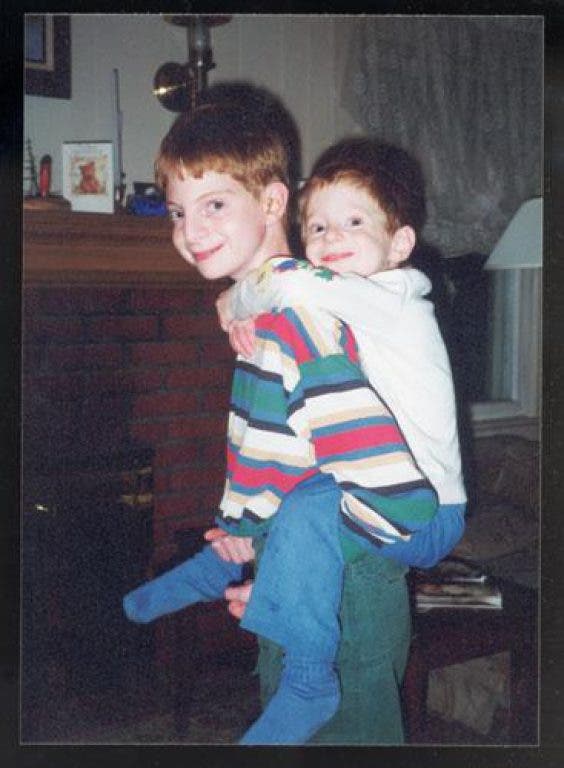
The high-profile case thrust the topic of cyber-bullying into the spotlight and, along with it, Tyler’s grieving parents and his older brothers, James and Brian. Rather than closing themselves off, the Clementis chose to use the media attention to promote awareness around bullying and the vulnerability of LGBT youth. In December 2011, they launched the Tyler Clementi Foundation and have been speaking at schools around the country. Tomorrow night, they will join us at Columbia High School to talk about what they experienced when they lost Tyler, and share ways that we can all help our children reach a different outcome. Although things have improved for LGBT youth, the statistics are still alarming: they are twice as likely as their peers to say they have been physically assaulted at school and four times as likely as their straight peers to attempt suicide. We need to stop this.
A couple of weeks ago, James Clementi and I had the opportunity to speak about the work his family is doing in his brother’s name. What follows is an excerpt from that conversation. Again, I hope you’ll join us tomorrow night to hear more. The only way we can truly make change is if we all join in the conversation and come up with the solutions together.
Find out what's happening in Maplewoodfor free with the latest updates from Patch.
What is the mission of the Tyler Clementi Foundation?
Our mission is to take what we learned through losing a brother and a son to suicide, and use it as a way to help others. Tyler’s story has been connected to bullying but it’s so much more than that. Tyler’s experience connects to other topics such as LGBTQ inequality, higher education support systems, family acceptance, online safety, and the need for empathetic dialogue to protect our youth. The Tyler Clementi Foundation is focused on creating and promoting safe and inclusive environments for LGBT and vulnerable youth at multiple levels of society including, home, churches, schools and the online community.
After Tyler’s death, the media focused heavily on “bullycide” and the ways in which cyberbullying led to Tyler’s death. What do you see as the problem with comingling these two things?
The media, and those headline writers, crafted up a lot of terms and sensationalistic headlines at the expense of kids really struggling. ‘Bullycide’ was a word that was created in a news blurb somewhere—you know, ‘student dies from bullying.’
It’s just very irresponsible. Let me be very clear, suicide is not the inevitable outcome of being bullied. Terms like “bullycide” should not be used. When you start putting that out there, it subliminally encourages students who are really struggling to believe they have no positive options and resources. Talking responsibly about Tyler’s situation has been something we’ve been very careful about. Putting so much attention on Tyler, who was a high-profile case of suicide, is risky because there are kids who are feeling suicidal and we never want to suggest that that is a way to get attention or solve problems. But it does raise a conversation that demands to be addressed within the right framework. We ask people wherever we go “Do you have a support person? Do you reach out to others who may be in crisis? Are you an Upstander for others? Do you know the options for help that are difficult to see when you are in a crisis? Do you know the number of the crisis hotline?” Our focus has been on highlighting positive options and remembering that you have support. That you matter and each person is valuable.
Do people reach out to your parents and you for advice?
Yes, definitely. We have been doing a lot of talks at different schools and colleges, businesses and places of faith. People often come up to my mom, dad and I to share their own personal struggles with depression and bullying and how they cope with it. This removes a lot of the stigma and shame. Watching my mom and dad talk to parents and youth who are searching for places of support, I feel like they are saying all the things they would be saying to Tyler. It’s always very bittersweet.
It must be so cathartic, yet so painful to do this work.
Yes, it is. That pain is always going to be there, no matter what we do. We went through a loss that doesn’t make sense and doesn’t feel fair or right, but then we realize, this could be happening to other families right now and maybe our voices can prevent more tragedy.
Do you see a link between the absence of marriage equality and the bullying we see among teens in school?
Absolutely. Bullying usually evokes the image of kids in schools, but it does happen on a broader societal level as well. When government tells one group of citizens they are not equal, not entitled to the same rights, this inequality impacts young people. Teens see that this group is at a lower status in our culture, and interpret that to mean it is okay to target LGBTQ peers with hatred, aggression, or contempt. Having marriage equality erases a lot of that. Equal treatment under the law sends a clear message that we are all the same.
Who needs to come to this?
Everyone. Coaches, teachers, principals, parents, students—there is just no shortage of people who would benefit from hearing the message of bystanders becoming Upstanders. All of us have at least one person in our lives who we can help just by listening to them and standing up for them.
Is it an emotional experience giving talks like the one you’ll be doing at Columbia High School, speaking to kids around Tyler’s age?
It is. It’s definitely been very emotional work for me. I have my whole heart in this. As we move forward sharing our message, we know there are many families and kids out there that are hurting. If we can reach them, if we make a difference for one family, it is all worth it. It’s a way of honoring Tyler’s life and keeping his legacy alive.