Politics & Government
Public Works is Patching the Proliferating Potholes
Maplewood Public Works is filling potholes as fast as they can. Call 973-762-1175 to report a pothole. Meanwhile, AAA gives advice on how to protect your car from potholes.

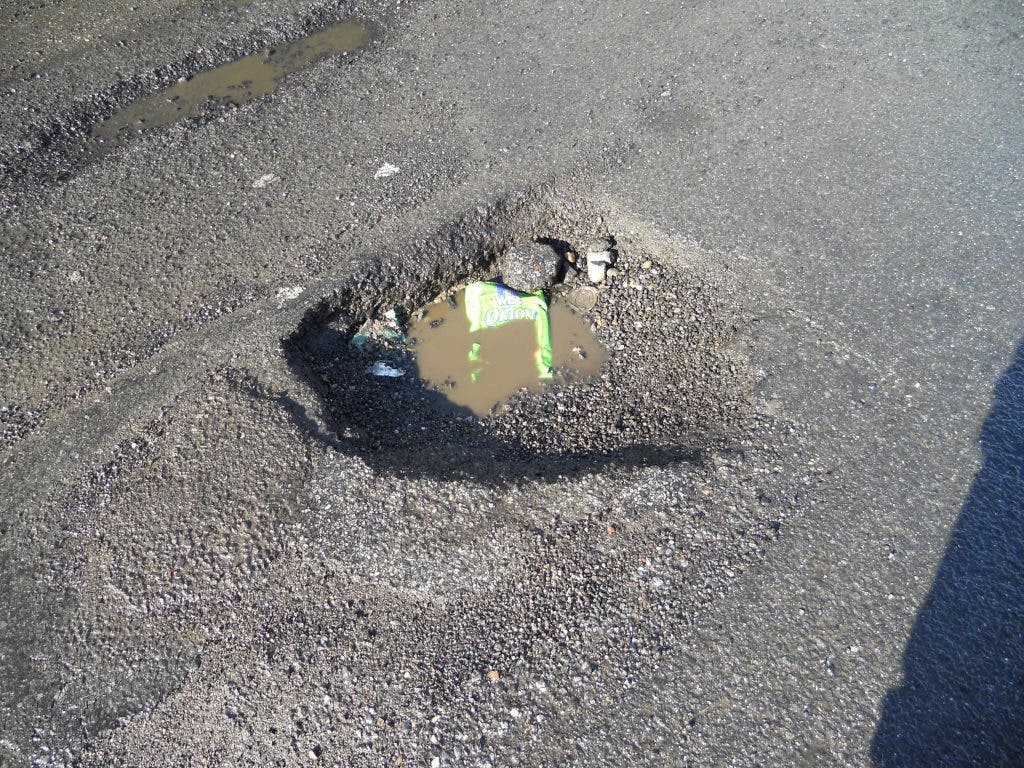
If you've been driving around town lately, you've noticed that what you really need is an off-road vehicle, not a minivan.
The proliferating potholes have turned Maplewood's roadways into something resembling the landscape of the moon — in grade, if not color. With this winter's gargantuan amounts of snow and the constant salting and plowing, thawing and freezing, potholes have propagated in size and number.
Eric Burbank, Director of Maplewood's Department of Public Works, tole Patch in February that DPW is responsible for filling the holes. "We have been going street by street," said Burbank. "We do the major roadways and bigger holes first. That being said, there are some streets that have what are called 'shells' meaning they are not deep enough to hold 'winter mix' — used for potholes, aka 'old patch.'"
Find out what's happening in Maplewoodfor free with the latest updates from Patch.
Burbank explains that the streets with the shallow "shell" potholes will have to have to wait until the asphalt plants start making "hot mix."
Burbank also warns that, even though Public Works has been filling holes, climate has worked against them over the winter. "We may fill a pothole only to have water underneath freeze up that night and push the cold patch right back out again. This is just a condition of the winter storms and cold temperatures."
Find out what's happening in Maplewoodfor free with the latest updates from Patch.
If residents know of a bad pothole, Burbank asks that they should "call my office immediately. I have at least two crews out a day on this detail." Public Works' number is 973-762-1175.
Meanwhile, here's some advice from AAA on protecting your car from pothole damage:
AAA Offers Advice to Protect Your Vehicle from Pothole Damage
When all the snow and ice finally melts away, in its place will be an unpleasant reminder of this winter’s severe storm season-potholes.
“We’ve had our share of winter storms this season,” said Cathleen Lewis, director of public affairs for the AAA New Jersey Automobile Club. “Although many motorists’ cars have made it through relatively unscathed, they could still fall victim to a pothole left in its aftermath.”
Potholes form when moisture collects in small holes and cracks in the road surface. As temperatures rise and fall, the moisture expands and contracts due to freezing and thawing. This breaks up the pavement and, combined with the weight of passing cars, eventually results in a pothole.
The AAA New Jersey Automobile Club offers the following advice to protect your vehicles from pothole damage:
Inspect tires. The tire is the most important cushion between a car and a pothole. Make sure tires have enough tread and are properly inflated. To check the tread depth, insert a quarter into the tread groove with Washington’s head upside down. The tread should cover part of Washington’s head. If it doesn’t, then it’s time to start shopping for new tires. When checking tire pressure, make sure that they are inflated to the manufacturers’ recommended levels, which can be found on the inside of the driver’s side door or in the owner’s manual. Don’t use the levels stamped on the tire sidewall.
Inspect suspension. Make certain that struts and shock absorbers are in good condition. Changes in vehicle handling, excessive vibration or uneven tire wear are all indicators of bad shocks or struts. Have the suspension checked by a certified technician if you suspect problems.
Look ahead. Make a point of scanning the road ahead for potholes. If you see a pothole in advance, you might have time to avoid it, so it’s important to stay focused on the road and not on any distractions inside or outside of the vehicle. Before swerving to miss a pothole, check surrounding traffic to make sure you will not cause a collision or endanger nearby pedestrians or cyclists.
Slow down. If you can’t avoid a pothole, reduce speed safely and be sure to check the rearview mirror before any abrupt braking. Hitting a pothole at higher speeds greatly increases the chance of damage to tires, wheels and suspension components.
Beware of puddles. A puddle of water can disguise a deep pothole. Use care when driving through puddles and treat them as though they may be hiding potholes.
Check alignment. Hitting a pothole can knock a car’s wheels out of alignment and affect the steering. If your vehicle pulls to the left or right, have the wheel alignment checked by a qualified technician.
Recognize noises/vibrations. A hard pothole impact can dislodge wheel weights, damage your tire or wheel, and bend or even break suspension components. If you notice any new or unusual noises or vibrations that appear after hitting a pothole, have your vehicle inspected immediately by a certified technician.
Report it. Save yourself and others from hitting the same pothole again and again by reporting it to the New Jersey Department of Transportation at (800) POT-HOLE (768-4653) or online at www.state.nj.us/transportation.
Get more local news delivered straight to your inbox. Sign up for free Patch newsletters and alerts.