Neighbor News
3 Myths About the New SAT
Important information and misconceptions about the New SAT, from a tutor who knows.
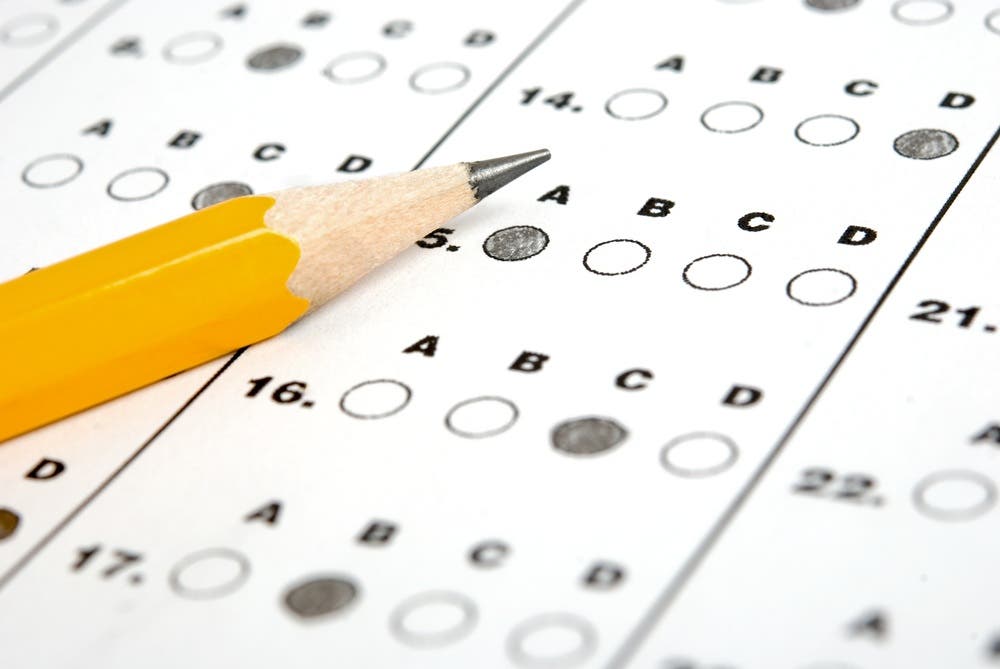
It’s finally here! As of last month, we are officially in the era of the NEW SAT. There have been several changes to the test, so it is important that students familiarize themselves with the new format before they take it for the first time. As a tutor, I come into contact with many students who are preparing to take the test, and every one of them seems to have a different misconception about it: “I heard this” or “My friend said that…”. The amount of incorrect information that surrounds this test has always been tremendous. Some of the same rumors that were flying around when I was in High School are still around today, but now that the test has changed, there is a whole new crop of myths and misinformation. Today, I will tackle 3 of the big ones surrounding the new test.
But first, a quick word of advice: Nothing beats your own research. Never assume that your friends know more than you do when it comes to the SAT or the College Application process. Sometimes even teachers and Guidance Counselors can have the wrong information. Do your own research and get your information from trusted sources. In fact, most college admissions offices can be reached with a quick email (Rutgers Admissions got back to me the same day!), and admissions officers are the authority on what they accept.
Ok, here we go.
Find out what's happening in Marlboro-Coltsneckfor free with the latest updates from Patch.
MYTH 1: They got rid of the Writing Section
This is the biggest misconception I’ve heard circulating so far. It’s true that the test is back to its old 1600 score—although students taking it now don’t remember the good old days—but the writing section has not disappeared. Instead of providing a separate writing score, the test-makers have created a new “Evidence-Based Reading and Writing” score, which includes the Reading Test and the Writing and Language Test. Grammar rules are still tested heavily, with an added emphasis on punctuation: colons, semicolons, commas, etc. The SAT Writing and Language section also tests heavily on Expression of Ideas, including development of arguments, effective use of transitions, relevant details, redundancy, etc. The format of this section has changed from largely self-contained, one-sentence grammar questions, to interrelated passage-based questions, requiring a bit more reading comprehension.
Find out what's happening in Marlboro-Coltsneckfor free with the latest updates from Patch.
In addition to the changes mentioned above, the test-makers have made the Essay optional and have changed it’s format significantly. Rather than craft their own arguments, students will now have to dissect someone else’s, analyzing the author’s use of evidence, reasoning, and stylistic and persuasive elements. Some students may find this easier because they do not have to provide external support to prove their points—all the evidence they need is right in front of them—but this new essay does require significantly more reading than the old essay. The new essay has a time limit of 50 minutes (double that of the previous essay). Again, the Essay is optional and DOES NOT impact the Evidence-Based Reading and Writing score, so students might not need to take it unless certain schools require it.
MYTH 2: Vocabulary Isn’t Important on the New SAT
Wrong. The College Board’s canned statement (which we’ve heard countless times by now) is that the test-makers have removed arcane vocabulary (like “arcane” perhaps?) and replaced it with “words like ‘synthesis’ that have a more practical application….blah, blah, blah.” Although “synthesis” is the word that I’ve heard every College Board representative in the last year or so use as an example, I have not seen that word appear in any of the official SAT practice material. But we get the idea. The College Board pledges to focus on vocabulary that students will use more in everyday life and in their future occupations. More specifically, there are no more sentence completion questions on the test. There are, however, quite a few Vocabulary in Context questions, reminiscent of those on the old Critical Reading section. These questions refer to a passage and might be worded as follows:
In context, the word “unprecedented” (line 42) most nearly means
- unfinished
- commonplace
- singular
- luxurious
Even though I have not provided a made-up passage to go with this made-up question, for those of you playing at home, the best answer would be (C) singular, meaning unique. Bonus points if you answered correctly!
So if you’re a student who thinks that you won’t have to study vocabulary to do well on the SAT, I hate to break it to you, but that’s probably not the case. In addition to these Vocabulary in Context questions, all of the reading passages require that students have a fairly extensive vocabulary in order to fully comprehend them, and even the writing sections are filled with Word Choice questions testing commonly misused or confused words. So while the kind of vocabulary you will need to study may be different, it is unlikely that you will be able to eliminate it completely.
MYTH 3: No Wrong Answer Penalties and Fewer answer choices Make the test easier
This is half false. Yes, since the New SAT has four answer choices instead of five, it is easier to pick the right answer. And since the test-makers have removed the wrong-answer penalty, guesses can’t hurt you and can earn you extra points. But remember, the SAT is, and has always been, a curved test that measures how students score in relation to everyone else. So, if it’s easier for you, and it’s easier for everyone else, you’re not likely to see your score increase simply because of those changes.
Once again, remember to do your own research. Many people are mistaken about the test and the admissions process. Talk to someone who specializes in the SAT or the application process, like a tutor or an admissions officer if you want accurate information.
Until next time kids, I wish you Perfect Prep!
Anthony
About the Author:
A graduate of Rutgers College Honors Program, Anthony Xerri is a full time SAT/ACT Tutor and Owner of Prep 4 Perfection. For more information or to read more, visit www.Prep4Perfection.com
Sources:
Lieberg, Carolyn, Jim Patterson, Andrew Schwartz, Jessica Marks, and Sergio Frisoli. The Official SAT Study Guide. New York: College Board, 2015. Print.