Health & Fitness
Does Your Preschool Care About Relationship Development?
Early childhood education should be about relationships as well as the ABC's and 123's.

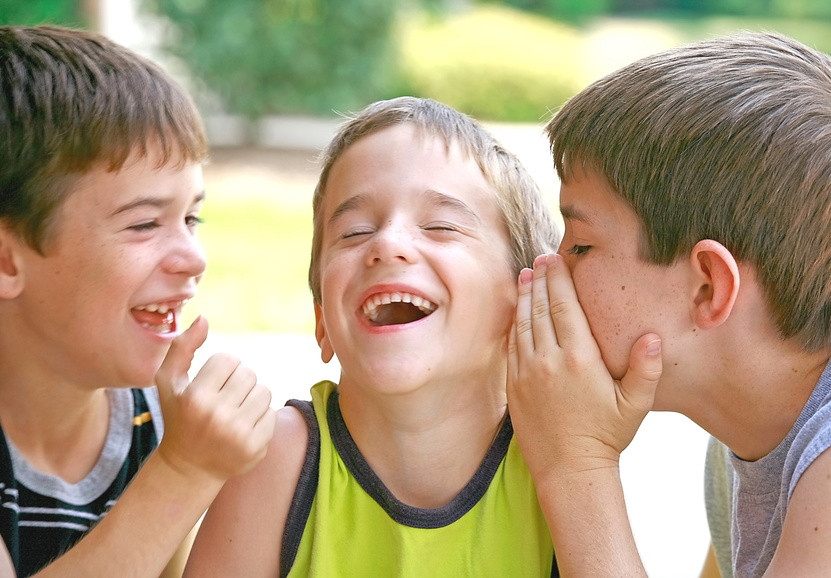
As preschool enrollment season approaches, I find myself smiling as I read documentation about the importance of promoting relationships in early childhood centers. I smile because my ELC does work to promote relationships though it strikes me that others must not. The documentation I am reading wouldn’t be necessary if all preschool directors and staffs understood the positive effects of relationships. It is important that preschools have a developmentally appropriate curriculum that is child centered and promotes social, emotional & cognitive growth. It is equally important that positive relationships are encouraged both among the students and the adults. Parents need to consider whether their child’s early childhood experience includes:
Peer Relationship Development Across Ages and Classrooms: Are your child’s social interactions limited only to the children in his/her classroom? Early childhood centers need to open the doors, walls and windows to allow interaction among students from all classes and ages. In her book The Three Rs of Leadership: Building Effective Early Childhood Programs Through Relationships, Reciprocal Learning and Reflection, Julie K. Biddle writes that optimally “Space is designed to stimulate relationships and time is provided to further them.” Biddle notes that some schools have common space used for children of all ages to come together like in a town square. Others have connected children from different classes by installing windows, speaking tubes and more. I am fortunate to work in a building with moveable walls and we have opened them. As is the practice in Montessori schools, children should have relationships with more than their class and age group. They get to be leaders, learners and self-determine with whom they are most comfortable. When shopping for a preschool or considering the effectiveness of yours, notice if peer relationships are limited to only part of your school’s population. Who is deciding your child’s comfort level – your child or the adults who are assigning space? Does the space allow for many types of human interaction?
Collaborative Relationships Among Staff: When teachers work cooperative from age to age and classroom to classroom, your child will have a more cohesive early childhood experience. Another unfortunate by-product of walls is that they promote isolationism and territorialism. While a class may take place in its own space, your child’s experience crosses spaces. Every teacher should know the goals of every age group. Teachers should work together to plan experiences that promote building upon previously learned skills as well as experiences that can be shared. Ask your preschool or potential preschool if teachers plan collaboratively or individually. This will tell you if the school sees your child’s experience as fluid from one space and age to another.
Find out what's happening in Matawan-Aberdeenfor free with the latest updates from Patch.
Opportunities for Parental Involvement: School relationships should extend from our walls to yours. Your child has two primary worlds – school and home – and those worlds need to connect. Sometimes, as Biddle points out in her book, parental involvement includes what you do at home when you support classroom learning through practice, conversation and family activities. Other times, your child’s world should be connected through what we do at early childhood centers. Parents should have opportunities to be involved in school activities. Every early childhood center should have an open door policy that acknowledges your right and gives an invitation to visit any time. When you show up at random times at your child’s preschool, do you feel welcome? Are there special days or events when families or caregivers are encouraged to join the classes? Are you provided with developmentally appropriate ideas of how to extend learning to home? Never forget that as parents, you are an integral part of your child’s learning experience.
When parents tour the early learning center that I direct, we discuss their whole child and the importance of developmentally appropriate practice. Children need a positive social skills experience as well as those skills that you can see demonstrated on paper. When children are given opportunities to find their social niche and negotiate interactions, they will go onto larger classes and larger schools with confidence.
Find out what's happening in Matawan-Aberdeenfor free with the latest updates from Patch.
More information about leadership and relationships in preschools can be found in the book The Three Rs of Leadership: Building Effective Early Childhood Programs Through Relationships, Reciprocal Learning and Reflection by Julie K. Biddle, PhD.
_________________________________________________________________________________
Ask your questions about parenting & education, read more articles and learn about workshops for parents and early childhood professionals at www.helpingkidsachieve.com.
For information about The Early Learning Center of Temple Shalom (all are welcome at the ELC) or Temple Shalom Religious School, contact Cindy Terebush at eddirector@templeshalomnj.org or call 732-566-2961.