Politics & Government
23-Cent N.J. Gas Tax Hike Passes, Awaits Gov. Christie's Signature
Lawmakers approved a 23-cent gas tax hike Friday that awaits Gov. Chris Christie's signature.


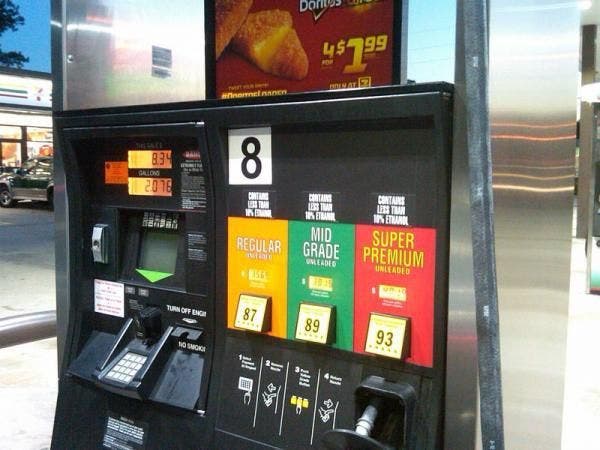
The 23-cent gas tax hike is one signature away from being official.
The state Legislature approved a plan Friday to raise gas taxes by 23 cents, a Gov. Chris Christie-backed plan that will take effect by Nov. 1 once the governor signs it. The state Senate voted 24-14 to approve the plan, while the state Assembly voted 44-27 to approve it, with 9 not voting, soon afterward.
Christie is expected to sign the bill that will also provide a small cut in the sales tax but also renews the Transportation Trust Fund. The TTF provides money for state transportation projects that Christie shut down three months ago when lawmakers couldn't agree on a plan to replenish the fund.
Find out what's happening in Mendham-Chesterfor free with the latest updates from Patch.
Sponsored by Democratic Sen. Paul Sarlo and Republican Sen. Steve Oroho, the plan will provide dedicated funding of $2 billion a year for 8 years, the "most significant" investment in the TTF since it was created 30 years ago, lawmakers said.
Read more: N.J. Gas Tax Hike: What You Need To Know
Find out what's happening in Mendham-Chesterfor free with the latest updates from Patch.
With matching federal funds, the state’s $16 billion investment will increase to almost $29 billion.
“This is one of the most significant investments in New Jersey’s infrastructure and economy in recent history,” said Sarlo, the chairman of the Senate Budget and Appropriations Committee. “This is an investment plan that addresses the transportation needs that are so important to New Jersey."
The gas tax hike plan had its share of opponents who saw it as a drag on the New Jersey economy.
Senate Republican Leader Tom Kean said a tremendous number of his constituents "have reached out to me to say they oppose increasing the gas tax. I’ve received thousands of phone calls, emails and comments on social media over the past few days."
“I’ve listened carefully to the grave concerns many overburdened taxpayers have expressed about the severe financial impact another tax increase would have on them, and that’s why I voted ‘no’ today,” he said in a statement.
The state’s gas tax will increase by 23 cents a gallon to 37.5 cents, an amount that will still be less than the neighboring states of New York, Pennsylvania and Connecticut, according to supporters. The plan will produce $1.2 billion in annual revenue that will be constitutionally dedicated to the TTF.
The sales tax will be reduced by one-third of a penny over two years. On January 1, 2017, the sales tax will go from 7 percent to 6.875 percent; followed by a decrease to 6.625 percent on January 1, 2018, for a total reduction of .375 percent.
The Earned Income Tax Credit will be increased from 30 percent to 35 percent. Veterans will gain a $3,000 personal tax exemption, retirees will pay less in taxes on their retirement income, and the estate tax will be phased out over two years, eliminating a duplicative tax that can fall on middle class families.
The plan will also:
- Phase out the estate tax over the next 15 months, replacing the current $675,000 threshold with a $2 million exclusion after January 1, 2017 and eliminating the estate tax altogether as ofJanuary 1, 2018.
- Tax Savings for Retirees: Increase the New Jersey gross income tax exclusion on pension and retirement income over four years to $100,000 for joint filers, $75,000 for individuals and $50,000 for married/filing separately.
“New Jersey is one of only two states with both an inheritance tax and an estate tax, which drives capital, income and jobs out of New Jersey,” said Oroho, a professional financial planner. “Parents and grandparents feel compelled to move out of New Jersey, away from their families, to keep more of their hard-earned assets to pass on to their children and grandchildren."
Others who opposed the plan included Laurie Ehlbeck, New Jersey state director of the National Federation of Independent Business, who offered this statement:
“There’s not a tremendous amount left to be said. The level of frustration that our members are experiencing over this bill is probably the highest that I have witnessed in my years as state director for NFIB. Small business owners have been diligently working to keep their doors open since the great recession and all they ask for in return is for Trenton to spend their hard earned tax dollars wisely. Today, a bill was passed that will allow lawmakers to mismanaged another billion or so dollars and we could not be more disillusioned with the process as a whole or the outcome.”
Patch file photo
Get more local news delivered straight to your inbox. Sign up for free Patch newsletters and alerts.