Community Corner
As NJ Reports 1300 Drug Fatal Outcomes in 2025, Morris County Families Are Asking About Detox Before a Crisis
Understanding detox, withdrawal risks and continuing care can help Mendham families make informed treatment decisions before a crisis.


This is a paid post contributed by a Patch Community Partner. The views expressed in this post are the author's own, and the information presented has not been verified by Patch
For families in Mendham and surrounding Morris County communities, conversations about addiction are changing. Instead of waiting for an emergency or a life-threatening event, more people are learning about treatment options before a crisis develops. That shift reflects a broader need for accessible information about addiction treatment across New Jersey. Although the state recorded encouraging progress in 2025, the need for timely support remains significant.
Understanding what medical detox involves, how withdrawal can affect the body, and what happens after detox allows families to make informed decisions. When questions are answered early, it becomes easier to respond calmly and confidently if a loved one is ready to accept help.
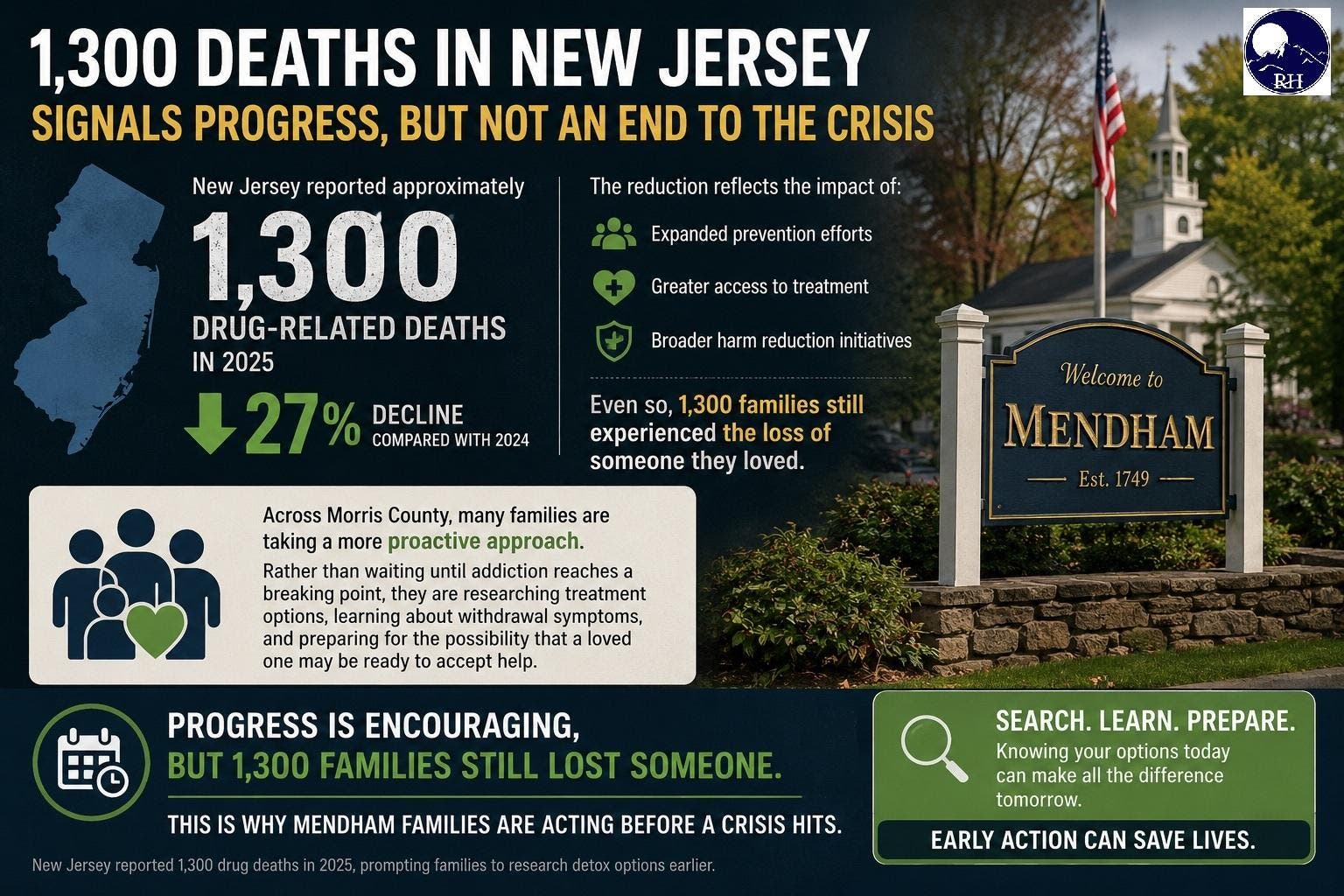
1,300 fatal outcomes in New Jersey Signals Progress, But Not an End to the Crisis
New Jersey reported approximately 1,300 drug-related deaths in 2025, representing a 27 percent decline compared with 2024, according to the figure cited by Rehab.com. The reduction reflects progress in overdose prevention and response efforts, but the overall number of deaths shows why treatment access and early intervention remain important.
Even so, the number represents families and communities affected by fatal drug overdoses. Progress is encouraging, but it doesn’t mean the challenges have disappeared.
Across Morris County, families can benefit from understanding treatment options before addiction reaches a point where an emergency response becomes necessary. Learning about withdrawal symptoms, medical detox, continuing care, and available treatment providers can make future decisions easier.
This is why families across Morris County are learning about treatment before a crisis hits.
Why Morris County Families Are Researching Medical Detox Before a Crisis
One reason families begin researching treatment early is a better understanding of withdrawal risks. Stopping alcohol or certain drugs without appropriate medical guidance can lead to serious complications, depending on the substance involved, the length of use, and a person's overall health.
Common concerns include:
- Seizures
- Dehydration
- Cardiac complications
- Severe autonomic instability
Learning about these risks can encourage families to seek professional guidance rather than attempting withdrawal at home. Many also begin researching drug rehab in New Jersey and looking for treatment providers that can help determine whether medical detox is needed, coordinate appropriate placement, and establish a continuing treatment plan afterward.
Families aren’t waiting for rock bottom. They are learning what options may be available before a crisis develops.
What Families Don't Always Understand About the First 72 Hours of Detox
The first several days after stopping drugs or alcohol can be difficult to predict. Withdrawal symptoms may begin gradually or change quickly, depending on the substance involved and the individual's health history.
Medical detox is designed to provide appropriate medical oversight when withdrawal requires that level of care. For families researching treatment, an assessment can help determine whether medical detox is necessary and what type of setting is appropriate.
New Jersey's growing investment in harm reduction also reflects a broader effort to connect people with support earlier. According to the New Jersey Department of Health's 2024 data, participation in harm reduction programs increased 122 percent between 2022 and 2024, from approximately 2,500 participants to 4,500.
Detox is often the first step rather than the complete course of addiction treatment. For people who need more time and structure after detox, families may also explore longer-term addiction treatment options, including a 90-day rehab program in New Jersey.
Withdrawal can change significantly during the first 72 hours, which is why determining whether medical detox is appropriate can be an important first step.

The Fear That Keeps Families From Making the First Call
For families, the greatest obstacle isn’t a lack of information. It’s uncertainty.
Questions often arise naturally.
"Will my loved one be safe?"
"Will they be judged?"
"What if they refuse help?"
These concerns are understandable. Medical detox is a medical process intended to help manage withdrawal appropriately when that level of care is needed. Understanding how treatment works can make the first conversation less intimidating and give families a clearer picture of what may happen next.
Questions Morris County Families Can Ask When Medical Detox May Be Needed
When withdrawal symptoms indicate that medical detox may be appropriate, families can ask treatment professionals what type of detox setting is needed, how placement is coordinated, and what addiction treatment should follow stabilization.
Questions may include:
- How is the need for medical detox assessed?
- What type of detox setting may be appropriate?
- How is detox placement coordinated?
- What happens after detox?
- Is there a step-down plan?
- How will the next treatment provider coordinate with the family?
These conversations can also help families understand what may come after detox and which continuing level of addiction treatment may be appropriate. Depending on clinical need, that may include residential treatment with another provider or structured outpatient care such as PHP, intensive outpatient treatment, outpatient care, medication-assisted treatment, and evidence-based therapies.
Asking the right questions helps families make informed decisions about detox coordination and continuing addiction treatment.
How to Talk to a Loved One About Detox Without Blame or Shame
Starting the conversation doesn’t require perfect timing or perfect words. A calm discussion that focuses on concern rather than criticism is often more productive.
Helpful conversation starters include:
- "I'm worried about your health."
- "I love you and I want to help."
- "Let's find out what options are available."
- "You don't have to do this alone."
Families in Morris County may also find value in community-based approaches that connect residents with behavioral health resources. According to the Morris County Prosecutor's Office, the county recorded 1,226 ARRIVE Together interactions as of June 25, 2025. The program is designed to provide an alternative response when behavioral health concerns intersect with community safety.
The conversation doesn't have to be confrontational. Focus on safety, not blame.
Addiction Treatment and Detox Coordination Near Chester, New Jersey
Rolling Hills Recovery Center provides structured addiction treatment in Chester, New Jersey, including PHP, intensive outpatient treatment, outpatient care, medication-assisted treatment, and evidence-based therapies.
When medical detox or residential treatment is clinically appropriate, the team can help individuals and families understand and coordinate the appropriate next step.
For families in Mendham and surrounding Morris County communities, having addiction treatment close to home can make assessment, family involvement, and continuing care easier to navigate. Rolling Hills Recovery Center is located nearby in Chester, New Jersey.
Families considering their options can review directions from Mendham to Rolling Hills Recovery Center before scheduling a confidential consultation.
Proximity matters when you are supporting a loved one through withdrawal and continuing treatment.

What Families Learn After Making the First Call
Many expect the first phone call to involve pressure or immediate commitments. Instead, families can use the conversation to gather information about medical detox coordination, insurance coverage, available levels of addiction treatment, and potential next steps.
Free insurance verification is available, allowing families to better understand their coverage before treatment begins. A confidential conversation can also help clarify whether detox or another level of care may be appropriate and what treatment options may follow.
For Mendham and Morris County families researching drug and alcohol rehab in New Jersey, the first conversation can help clarify whether detox or another level of care may be needed, what treatment options are available, how insurance benefits may apply, and what continuing care could look like.
Rolling Hills Recovery Center in nearby Chester provides structured addiction treatment and can help families understand appropriate next steps. Families don't need to wait for addiction to become an emergency before asking questions.
This post is an advertorial piece contributed by a Patch Community Partner, a local brand partner. To learn more, click here.