Community Corner
Bluebirds: Nesting with Doting Moms
Establishing nesting boxes for Eastern bluebirds will give you a front-row seat as pairs raise their young




The following column was written by Graelyn Brashear:
The eastern bluebird is a beloved species, and with good reason. They’re beautiful — the male’s striking blue is legendary.
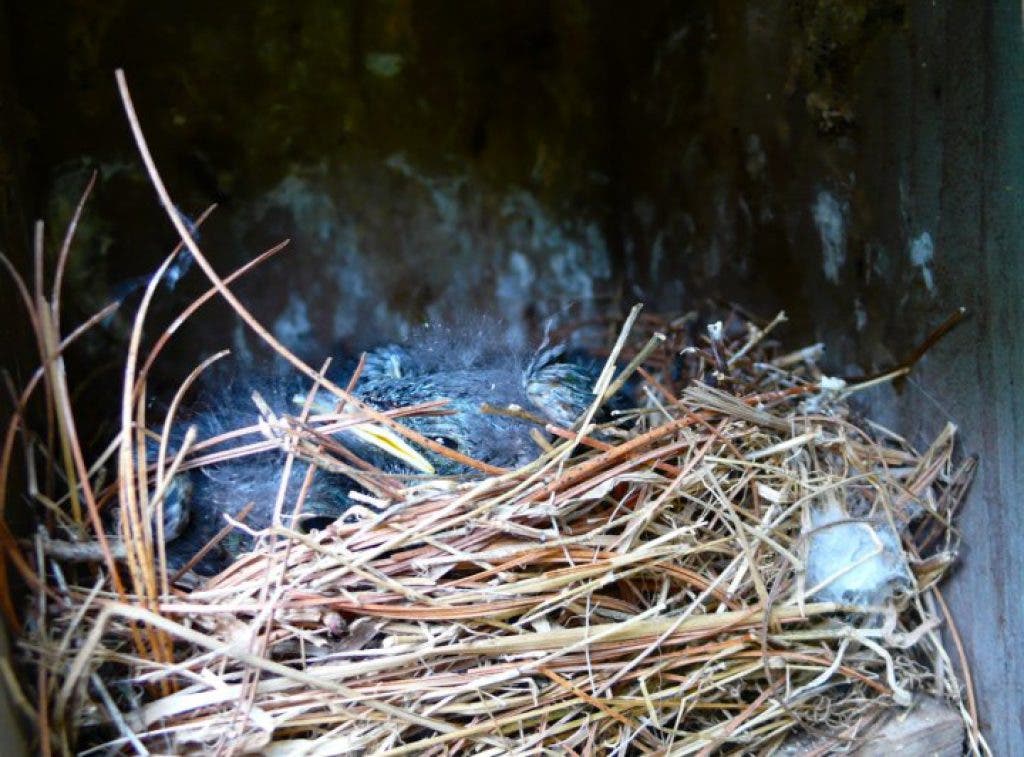
They’re also devoted parents and partners, and because they tend to live out their lives near human habitation, they’re easy to observe as they go about the business of raising their young.
Find out what's happening in Middletownfor free with the latest updates from Patch.
On this Mother’s Day, we’ll tell you how to give a mama (and papa) bluebird a leg up by installing a box of your own.
What it is:
Find out what's happening in Middletownfor free with the latest updates from Patch.
Buying —or building — a bluebird box that’s just the right size and has the right features can encourage the birds’ success. Donald and Lillian Stokes, authors of The Bluebird Book, a definitive guide to attracting the species, have come up with some winning dimensions.
The inside floor of the box itself should be about 4 inches by 4 inches, and the height from the entrance hole to the floor should be between 5 and 7 inches. The entrance hole should be about an inch and a half in diameter, and there should not be a perch outside it — the bluebirds don’t need it, and it may attract competitors.
The roof of the box should overhang the entrance by an inch or two to provide protection from sun and rain, and some small ventilation and drainage holes should be drilled in the sides and bottom of the box. It should also be easy to open the box — preferably from above — for cleaning and monitoring.
Mount the box about 4 to 5 feet off the ground on a pole, fence post or tree. Green metal U-posts are ideal. It’s best to face the box north or east so that there’s less direct sun on the entrance.
Where to put it:
Bluebirds are a bit picky about their nesting sites, so it’s important to consider habitat. They’ll primarily look for suburban and rural settings, with plenty of cut grass (meadows, lawns) where they can forage for insects and young trees, shrubs and fence posts where they can perch. They also are known to set up house in our more open Pineland forests.
Roadsides aren’t bad sites for boxes, but be sure they’re set back about 10 feet or more from the street. It’s also good to set up the boxes a good 100 feet from overgrown brushy areas. Otherwise, you may end up with wrens nesting instead of bluebirds.
Why bother:
Like the osprey, detailed in a recent column, the bluebird is a conservation success story. Many of our American bluebird species saw a serious decline in the last century, largely because deforestation eliminated their usual nesting sites — holes in dead trees.
But bluebirds have made a comeback since legions of their adoring fans have begun setting up nesting boxes for them in a targeted campaign to increase their numbers.
A few more notes:
It’s perfectly OK to monitor the box during nest building and even after eggs have been laid — just be quiet in your approach and don’t keep the box open for long. Once babies are about 12 days old, though, you should leave the family alone.
Despite your best efforts, you may end up with some other species of bird in your nest box. You can also do a little research into the bluebirds’ most common competitors — aggressive, nonnative house sparrows; invasive starlings; swallows; and wrens — and take measures to keep them away.
Other sources: A couple good websites to turn to for more information are www.sialis.org and www.bluebirdnut.com. And consider getting a copy of The Bluebird Book – it’s chock full of helpful tips.
Get more local news delivered straight to your inbox. Sign up for free Patch newsletters and alerts.