Home & Garden
Coyote in Sandy Hook: Where is He?
Coyotes were once "as ubiquitous as deer in Monmouth County," Sandy Hook's chief of Natural Resources tells Patch.


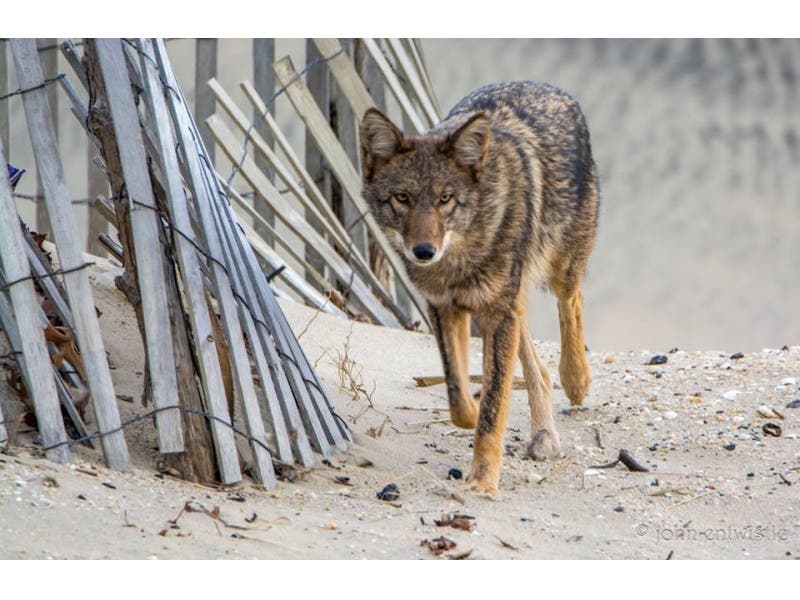
Sandy Hook, NJ - The coyote spotted in Sandy Hook in early January has not been seen for several weeks, park employees told Patch Wednesday.
That means the animal is likely long gone from the 1,665-acre national park, said Doug Adamo, a wildlife biologist and chief of Natural Resources for Gateway National Recreation Area, which includes Sandy Hook, Jamaica Bay and small parts of Staten Island.
“It probably came into the area looking for a mate to breed with, as pups are delivered in the spring,” Adamo told Patch. “However, he or she most likely did not find one, which means they’ve moved on to another area to find a mate.”
Find out what's happening in Middletownfor free with the latest updates from Patch.
Coyotes can cover 20-30 miles a day, he said, so it’s impossible to even guess where the animal is now. He also said he could not tell from the photo or videos whether it was a male or female.
Don’t be surprised to hear of coyotes in Monmouth County
Find out what's happening in Middletownfor free with the latest updates from Patch.
Even though park rangers were initially surprised when the coyote was first spotted running along the dunes on Jan. 8, Adamo said coyotes are indigenous to New Jersey, and were once “as ubiquitous as deer in Monmouth County and throughout the state,” he said. In fact, a “pretty-good sized” coyote population still lives in Monmouth County, he said, although he does not have an estimate on how many.
“I was very pleased to hear we had a coyote sighting,” he said. “It means another indigenous form of wildlife is back. This adds to the deer we have in Sandy Hook, and we have seals there now, too. All of those are species native to this area.”
Another coyote was recently spotted in Jamaica Bay in Queens, foraging around Jacob Riis Park in the Rockaways, he said.
If the coyote comes back ...
If the coyote does return, Adamo said the park would try to let it live, undisturbed.
“It would only be a problem if they overpopulated the area, because then they would be foraging for food and could forage from the endangered bird species,” he said. “But the policy of the National Park Service is: If it’s native to the area; let it alone, let it breed, etc.”
“Of course, we would tell park visitors to keep their distance, should they see it. It really will be scared of you and should run off,” he said, adding that coyotes have not been known to have rabies.
Get more local news delivered straight to your inbox. Sign up for free Patch newsletters and alerts.