Schools
Middletown BOE's Critical Race Theory Research Sparks Fight
A brief but heated argument over critical race theory broke out at the Middletown Board of Education meeting Wednesday night.


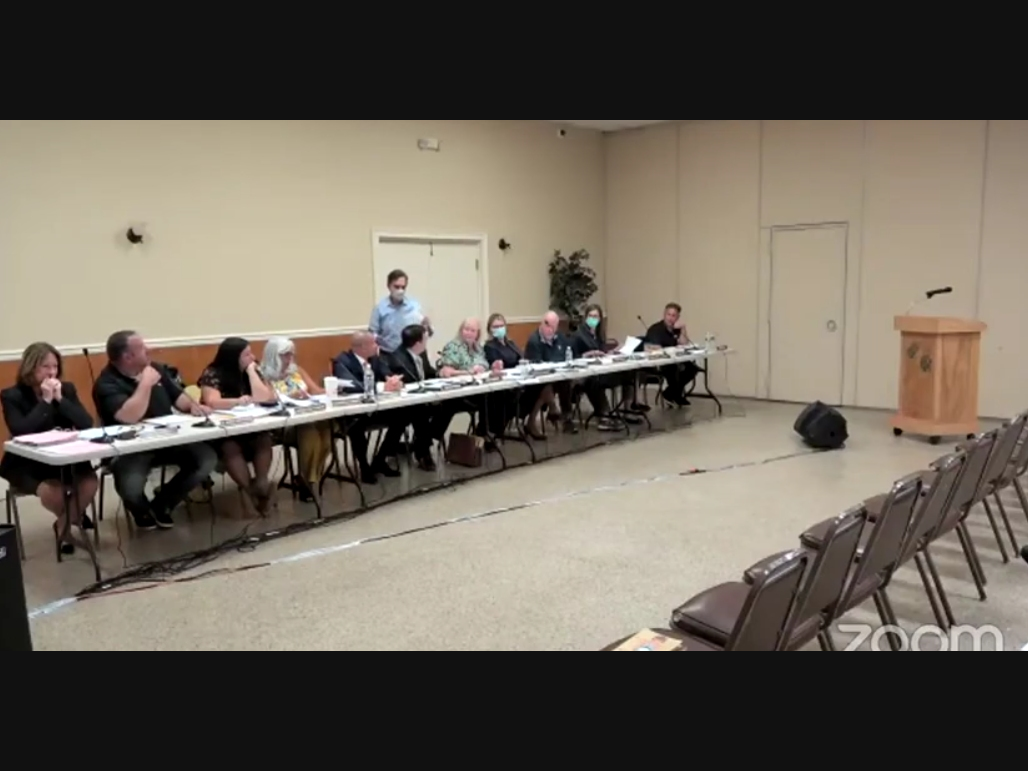
MIDDLETOWN, NJ — A brief but heated argument over critical race theory broke out at the Middletown Board of Education meeting Wednesday night.
At the meeting, board member John Little said he wanted to know who authorized or instructed the board's lawyer, Bruce Padula, to research critical race theory. Padula, through his law firm Cleary, Giacobbe, Alfieri & Jacobs, asked to be paid a $2,250 bill in legal services for research he did; the board was asked to approve that bill Wednesday night.
"I noticed in July and August apparently we were doing work on critical race theory, or CRT," said Little. "I guess my concern here is ... I just don't know why we are spending money, legal expenses on (this)."
Find out what's happening in Middletownfor free with the latest updates from Patch.
"And some of the work I saw here were things like putting together a map of other states' bans on CRT and the '1691 (1619) Project;' downloading House bills of states that passed CRT bans. Some of this stuff people could Google on their own," said Little.
"And I'm not arguing over CRT; I'm indifferent to that," he continued. "The question is who authorized this work? At the end of the day, we are not lawmakers here. This is their job," he said of regulating or monitoring how critical race theory is taught in schools.
Find out what's happening in Middletownfor free with the latest updates from Patch.
Nobody answered him. Padula, becoming visibly agitated, told Little he would "get back to him."
"Who authorized this particular work?" demanded board member Tom Giaimo walking towards Padula holding the bill at one point, to which Padula told him "Can you please step away from me?"
On Thursday, the day after the meeting, Board member Jackie Tobacco said it was Board president Joan Minnuies and Frank Capone who directed Padula to look into critical race theory. She said they were responding to requests from Middletown community members.
"It started in the community. Based on multiple community requests, the board leadership asked the attorney to research the topic of critical race theory. We wanted to know what kind of legislation was coming down the pipe, what to prepare for," said Tobacco. "I know the (Middletown) public had a lot of concerns. People wanted us to ban critical race theory."
Board member Harmony Heffernan said he spent the past year working with Padula and the board lawyer before him researching whether and how critical race theory would be implemented in Middletown schools.
In January of this year, Gov. Phil Murphy signed a bill that requires all NJ schools “examine the impact that unconscious bias and economic disparities have at both an individual level and on society as a whole.” The law takes effect in the 21-22 school year.
In Middletown, Murphy's requirement will be implemented in the form of an honors Social Studies elective offered to 12th grade students.
Tobacco said she reviewed the course, which is called "Power, Prejudice and the Human Experience," and she is "satisfied" with it.
"I thought it was a very fair class," she said. "It's not teaching critical race theory, but it is teaching everything from Amistad, the Holocaust to diversity and inclusion. I think the class is age-appropriate, fair and balanced and encourages critical thinking on controversial topics."
Tobacco sits on the school district's curriculum committee. She said all members of the curriculum committee, Little, Heffernan and Capone, reviewed the class and were "satisfied" with it.
Critical race theory is an academic theory that started in the 1970s and examines how race and racism shaped U.S. laws and institutions. One key idea of critical race theory is that race and racism helped create many current American laws, and that such laws can perpetuate racism and continues to disadvantage people of color, even to this day.
But critics of critical race theory say it pits students against each other and divides students based on their race. The "1619 Project" Little referred to was written by a New York Times journalist and it examines how slavery shaped the formation of America.
Currently, there are very passionate debates underway in America about how much critical race theory should be taught in schools: Just last week, Republican Assemblyman Gerry Scharfenberger, who is actually from Middletown, introduced a bill to ban critical race theory from being taught in New Jersey public schools (the lawmaker said he isn't aware specifically of critical race theory being currently taught in any New Jersey schools, but aims to "get out ahead of it").
But Giaimo said Thursday "this is not just about critical race theory."
He accused Capone, Tobacco and Minniues of "hiding" policies, research and other initiatives from him, board members Deborah Wright and Little.
"How many times have you heard some board members saying, we did not discuss this. Where is this coming from? Who authorized this?" he said. "We have accomplished nothing this year. It's been one distraction after another. This board has been hijacked."
"This is about some members of the board doing things in secrecy and keeping things from the rest of the board," he said.
He said he was referring to when Padula, at the instruction of board members Tobacco and Capone, wrote a policy that tried to exempt students from mask wearing as long as their parents wrote them a note. Gov. Murphy threatened to sue the Middletown school district if they went through with it, and even put new language in his executive orders that forbade the parental notes, specifically to prevent what Middletown was trying to do.
"The board attorney is doing the bidding of certain members of the board and he will rue the day he decided to go in that direction," warned Giaimo.
Tobacco said the parental note policy went through all the proper committees and was approved by a majority of the board.
Padula, Capone and Minniues did not respond for this article.
A majority of the board voted to approve Padula's $2,250 bill, with Wright and Donlon voting not to pay it. Little abstained.
Related: Monmouth Co. Assemblyman Wants To Ban Critical Race Theory In NJ (Sept. 23)
Watch the Sept. 29 Middletown BOE meeting:
Be the first to know. Sign up to get Patch emails: https://patch.com/subscribe Contact this Patch reporter: Carly.baldwin@patch.com
Get more local news delivered straight to your inbox. Sign up for free Patch newsletters and alerts.