Finally a break from the unforgiving cold and snow that has battered the Lower New York Bay region for much of the winter. This weekend felt like spring with gorgeous sunshine and high temperatures reaching in the low to mid 50s.
It was a tantalizing spell: mild temperatures, longer days, and the sun slowly climbing higher in the sky. Spring was in the air, at least until Monday when another round of cold temperatures and winter storms will return.
Yet, the milder and more tranquil conditions around the estuary enticed at least one bird species to migrate northward, perhaps a bit earlier than normal.
On Sunday, I encountered my first-of-season sighting of an American Oystercatcher in Lower New York Bay. Not just one, there were three adult oystercatchers flying around and resting in Spermaceti Cove, part of Sandy Hook Bay and located downstream from New York City.
This was the earliest I have seen an oystercatcher in the estuary, let alone three birds. I usually don’t spot one or two until March, so this sighting was at least a week or two earlier than in the past.
Author Alan Richards in his book entitled, Shorebirds: A complete guide to their behavior and migration, writes that “most oystercatchers return to their breeding grounds in February and early March.” Up till now I wouldn’t believe it was possible to see an American Oystercatcher in New York Harbor in February. Goes to show, you never know what to expect from wild animals.
This early sighting is perhaps due to an increasing population of American Oystercatchers over-wintering in southern New Jersey. According to the Conserve Wildlife Foundation of New Jersey, the state is an important place for oystercatchers during the non-breeding season, hosting nearly 1,000 oystercatchers, slightly less than 10% of the population, mostly near Absecon and Hereford inlets. Large population of American Oystercatchers will also over-winter at Chincoteague or the Virginia barrier islands, and the Outer Banks of North Carolina.
There is no indication where exactly these oystercatchers came from, but the birds were unmistakably hard to miss, especially during the winter. They are one of the largest and showiest shorebirds around with brightly colored black, brown and white feathers, a long bright orange bill, bright yellow eyes, and pale pink legs. A striking bird and one of the easiest shorebirds to identify. Nonbreeding plumage is nearly the same to breeding plumage.
I first heard the birds before I saw them. Loud whistling weeps or cries. What was that commotion? Looking through binoculars I saw three oystercatchers flying over the water, eventually landing near a large flock of gulls on a sandy distant spit of land.
The birds must have been worn-out from their migration. The three oystercatchers just stayed on the spit near the gulls, resting and hardly moving as I departed the scene after an hour or so of observing them.
If the three oystercatchers decide to remain at Sandy Hook, they will spend the next few weeks skirmishing over nesting territories and finding a mate before another breeding season begins and egg laying commences sometime towards the end April or early May. You can always find one or two hanging around the tidal flats of a beach or in coastal salt marshes around Lower New York Bay, with decent sized nesting populations found at Sandy Hook, along the Navesink River, and in Jamaica Bay.
Who know why the birds showed up so early before winter’s end. Perhaps they know something we don’t. Who cares! For someone who is looking forward to the arrival of spring, catching sight of a trio of oystercatchers was the highlight of the day!
For more information, pictures and year-round sightings of wildlife in or near Sandy Hook Bay, Raritan Bay, and Lower New York Bay, please check out my blog entitled, Nature on the Edge of New York City at http://natureontheedgenyc.blogspot.com
This post was contributed by a community member. The views expressed here are the author's own.
The views expressed in this post are the author's own. Want to post on Patch?
More from Middletown
Community Corner|
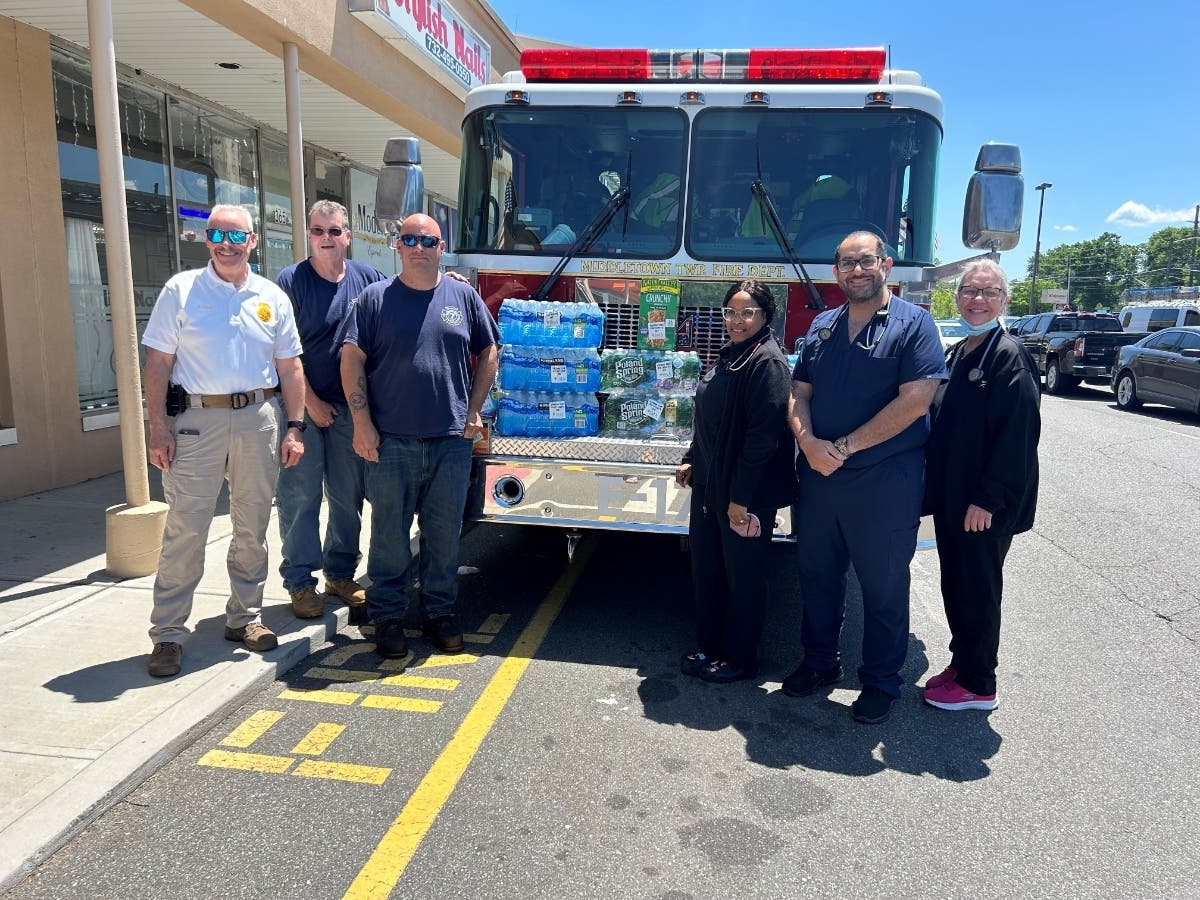
IMA Thanks People Who Donated To Their Bottled Water Drive
Politics & Government|
Ryan Clarke, Morganne Dudzinski Win Middletown Republican Primary: Unofficial Results