Crime & Safety
'Incredible' Rescue Mission Saves Raritan Bay Humpback Whale
A daring rescue mission Wednesday afternoon saved the life of a young humpback whale badly entangled in fishing netting in Raritan Bay.


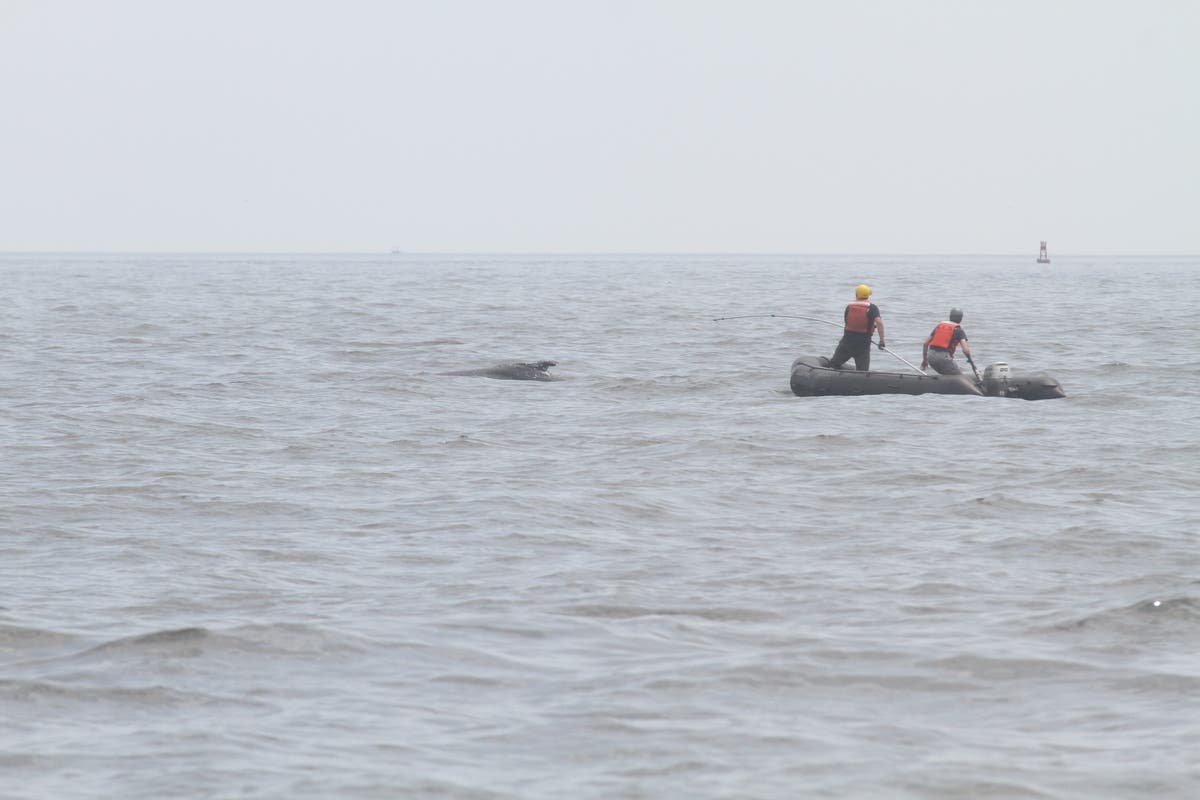

HIGHLANDS, NJ — A combination of local, state and federal agencies working together resulted in what is being described as an "incredible" rescue mission that saved the life of a young humpback whale badly entangled in fishing netting in Raritan Bay. Marine biologists working with the federal government pulled the netting off the whale Wednesday afternoon in 45 feet of water just off the tip of Sandy Hook peninsula. Photos from the scene are above, provided by the federal government.
Patch first reported on the whale last week: The juvenile humpback had been spotted by boaters earlier this July happily splashing about and feeding in bunker-rich Raritan Bay. Except there was one problem: The whale was badly entangled in a gill-net panel, used by commercial fisheries all over the world. The entanglement was very serious: The net was caught on both sides of the whale's mouth and extended up over its eyes and blow hole, which whales need to breathe.
When the U.S. Coast Guard heard about the whale, they contacted the state division of Fish & Wildlife and even the National Oceanic and Atmospheric Administration.
Find out what's happening in Middletownfor free with the latest updates from Patch.
The whale's dire situation prompted the federal government to send a team of professional whale disentanglers down from Provincetown, Massachusetts.
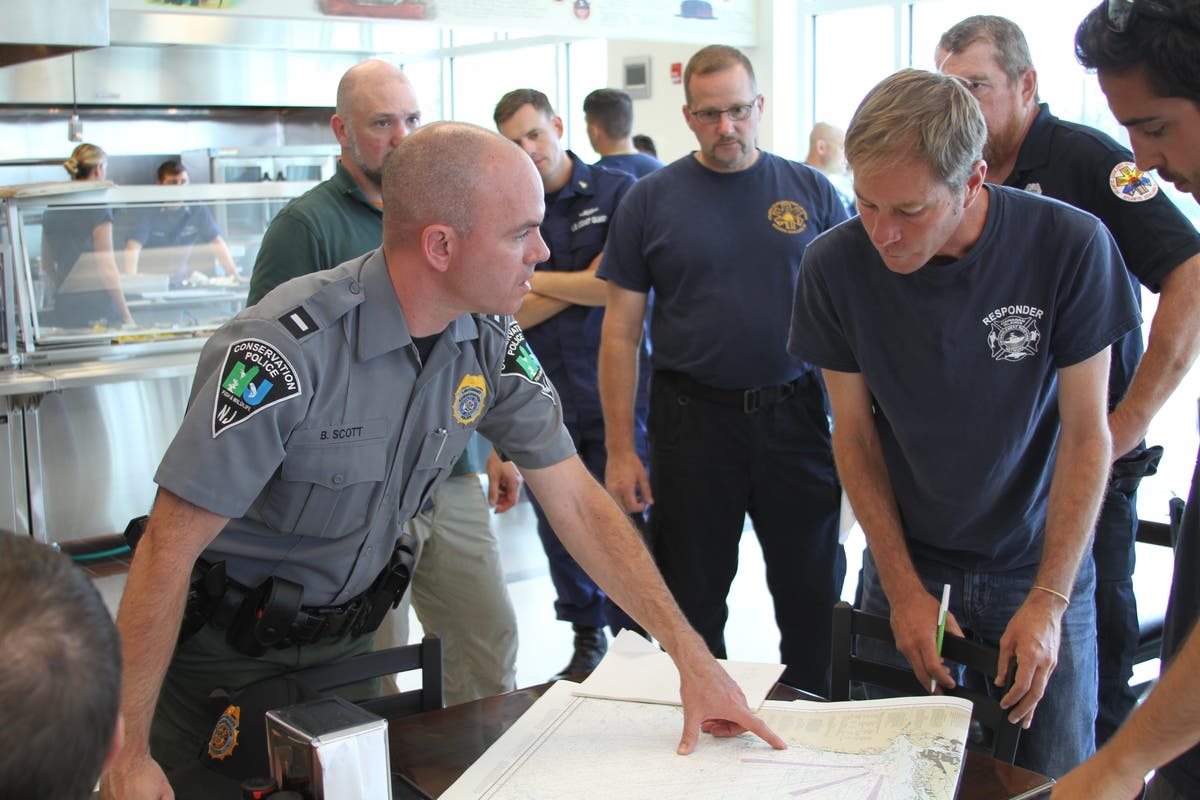
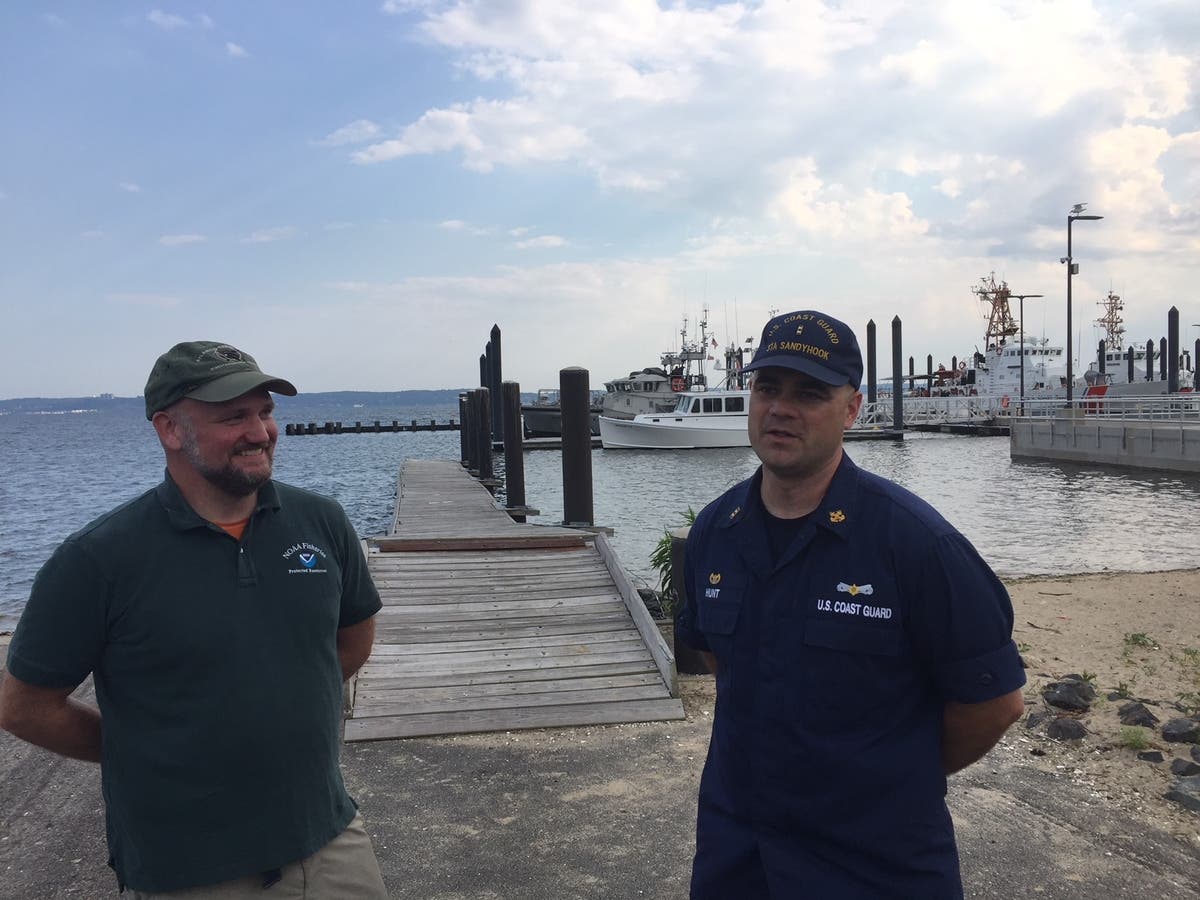
"This was a very bad entanglement," explained David Morin, a marine biologist with NOAA. As the sun set Wednesday evening, he spoke to Patch from the Coast Guard station at Sandy Hook, just hours after the whale was saved. "Because this was a juvenile humpback, the whale would have continued to grow and it eventually would have grown into the netting. The lines would have tightened and killed it. It's an extremely painful and agonizing way to die. We've seen it happen. Trust me, it's not pretty."
Find out what's happening in Middletownfor free with the latest updates from Patch.
The whale was saved at about 2 p.m. Wednesday, with the New York City skyline in the distance.
"We only do rescue attempts if two things occur," said Jennie Lyons, a NOAA spokeswoman, also speaking from Sandy Hook yesterday. "The first is if the animal will likely die if we don't act, and the second is if there is some chance a rescue will be successful."
That was the case with this humpback.
For the past two weeks, the Atlantic Highlands fire department, Middletown fire department and U.S. Coast Guard had been keeping an eye out for the humpback. However, due to the density of boat traffic over the July 4 holiday week, any attempts at a rescue had to be put off until July 8, NOAA determined. The whale was last seen Monday near the shore in Raritan Bay. By yesterday morning, the Sandy Hook Coast Guard team was getting nervous: A humpback can swim 60 miles in a day, and could easily be far out at sea by now. Any life-saving attempts would vanish.
The Coast Guard sent a marine rescue helicopter up from its Atlantic City base to look for the whale. Miraculously, they spotted it from the air Wednesday morning, still frolicking in Raritan Bay.
"Everything went right in this case," said Morin. "It's extremely unusual for a whale to stick around that long. They really like all the bunker that's in Raritan Bay."
Immediately, the Coast Guard called in the New Jersey Fish & Wildlife police to help set up a perimeter around the humpback. At the same time Wednesday morning, the federal government flew a team of experienced whale handlers down from the Center for Coastal Studies, a non-profit trained in whale disentanglement based in Provincetown, Massachusetts.
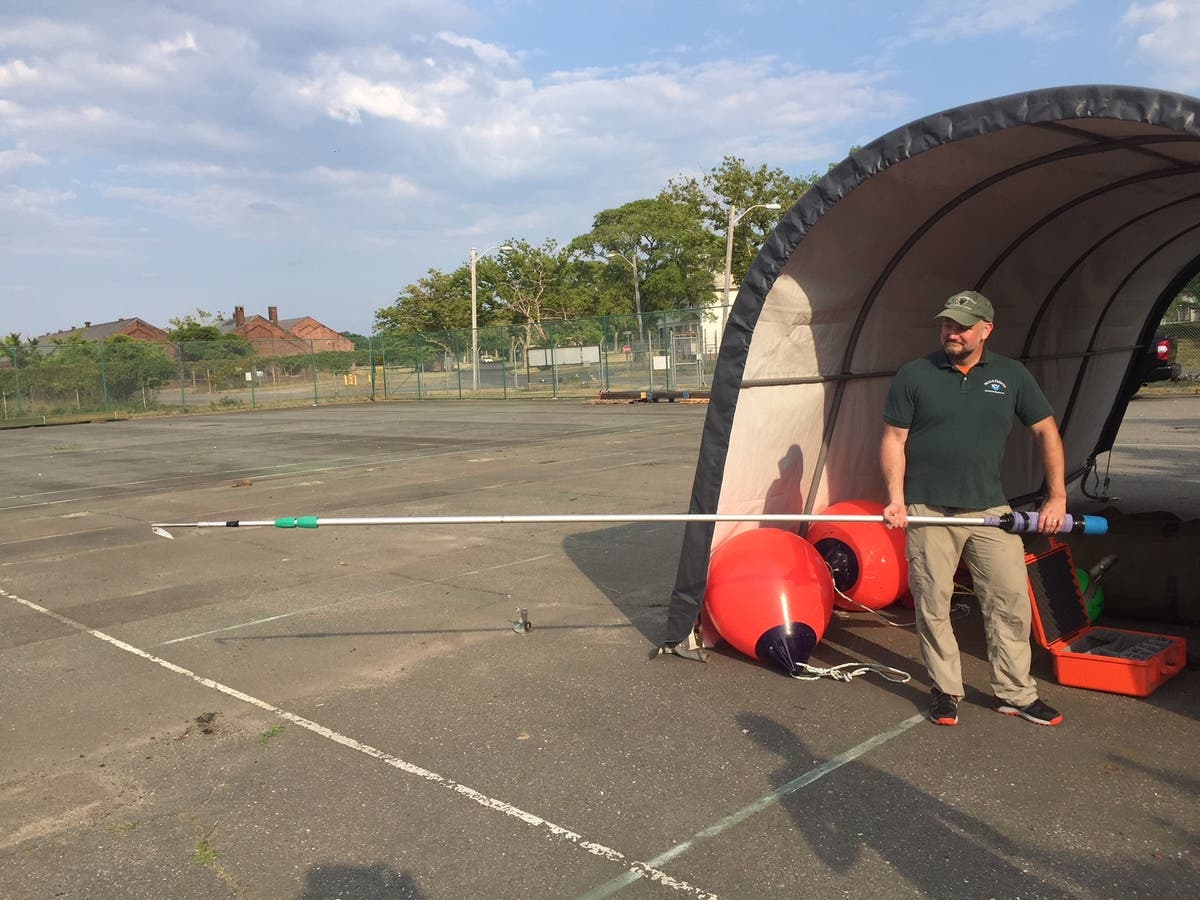
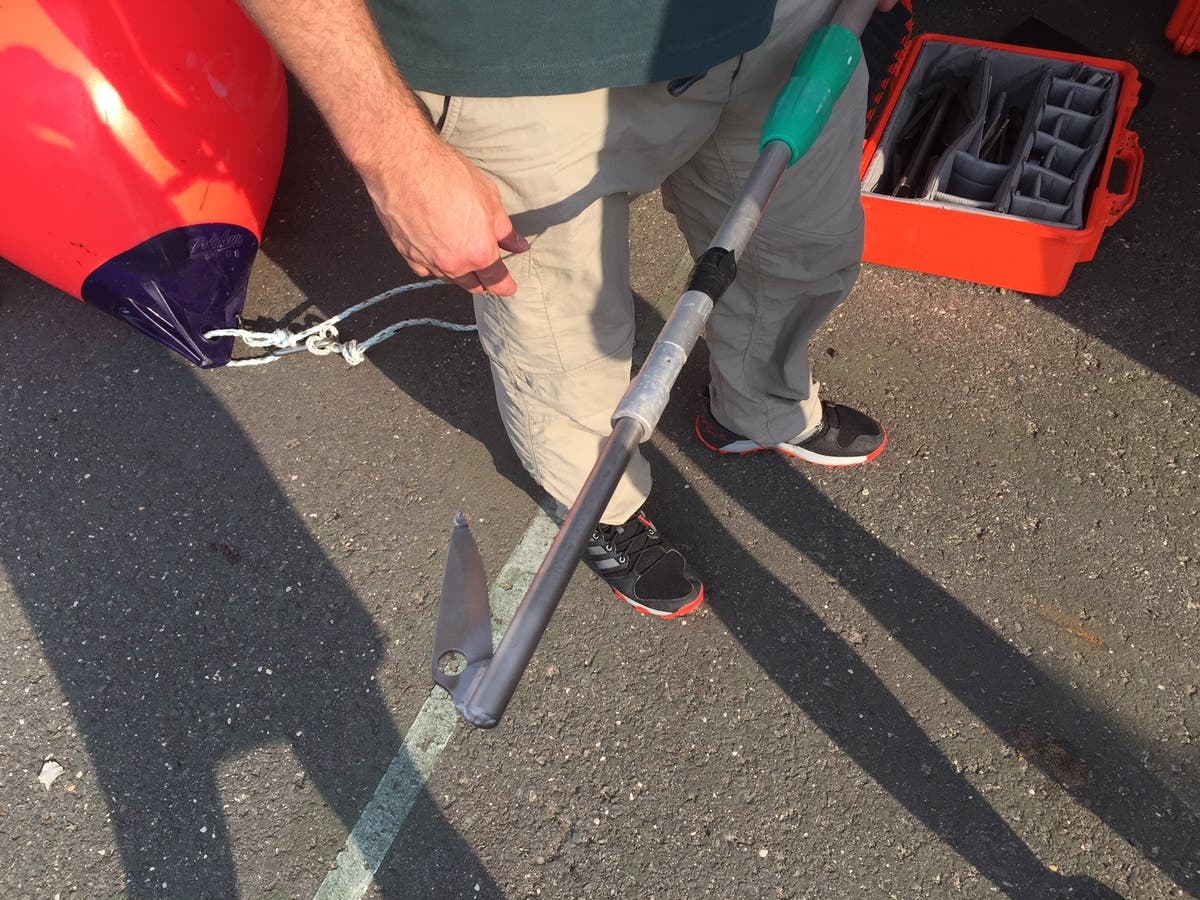
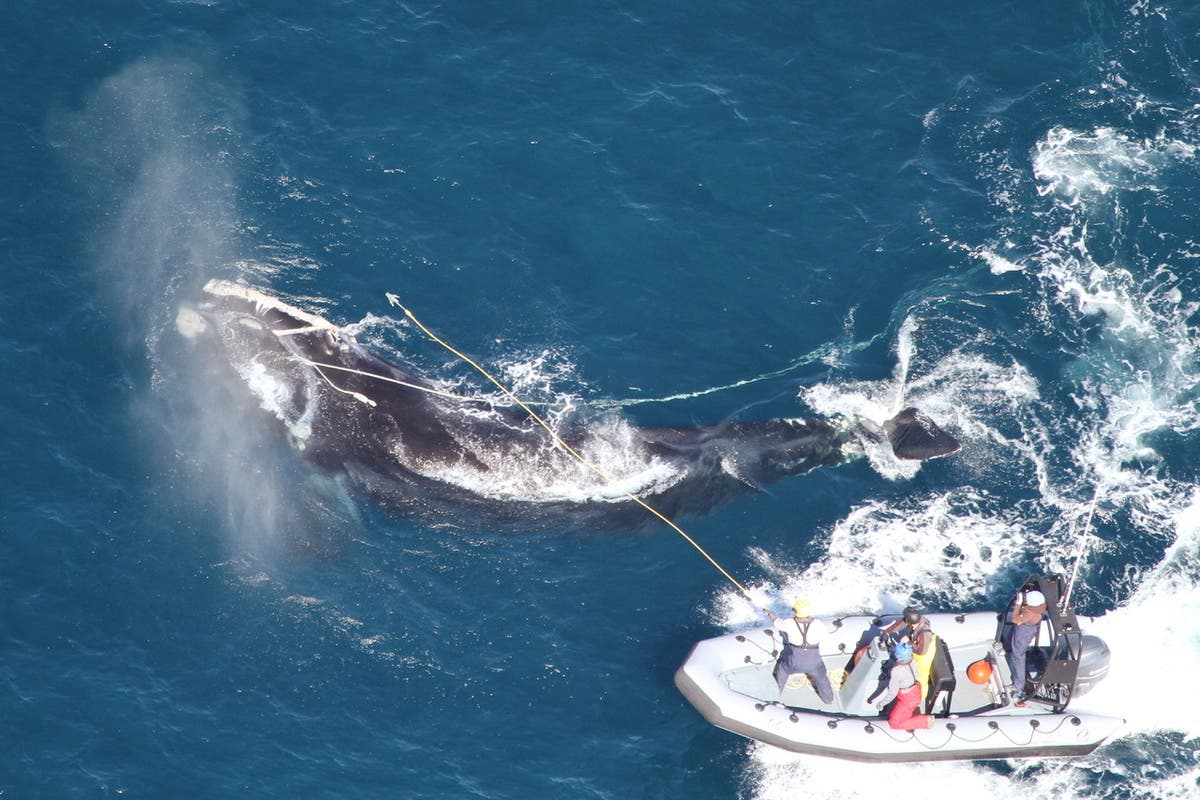
Once the team landed in New Jersey yesterday, they had to act calmly, but quickly. They had only minutes to get out to the whale before it swam away. Using the Fish & Wildlife boat "Integrity," they launched from Sandy Hook and went out to where the whale was, less than half a mile offshore. From the Integrity, they launched a small rubber dinghy that enabled them to get within feet of the animal.
"It's a very dangerous thing to do," said Morin. "That young humpback was about 30 feet and probably weighed about 20 tons. It's also free swimming in the water and doesn't know you are trying to help it. Any strike with their tail could be fatal."
In fact, on July 10, 2017 a Canadian fisherman, Joe Howlett, who saved dozens of endangered whales was killed just moments after he freed a tangled whale. The right whale flipped over onto him just minutes after he cut it free. Morin personally trained Howlett, and said he was a very close friend. Yesterday, he declined to speak about his death.
But fortunately, for whatever reason, this humpback was very calm and content as it floated in the middle of Raritan Bay, with the New York City skyline behind him, basically "hanging out in the shallow end of a swimming pool for a whale," said Morin. The team approached the whale as it surfaced and had an area of about one foot to make the cut. Keeping their distance, they were able to reach over from the dinghy and cut the netting from where it was tightest around the whale's head.
"This was an incredibly successful mission. It was really just a home run for us," said Morin. "Everything just aligned perfectly for us to save this whale's life. The story is not over yet; the whale now has to do its part to get the netting off it. But we did our part."
According to NOAA, whales getting entangled in fishing lines is not a new phenomenon. It's just being reported more frequently these days with increasing awareness among boaters of the problem, which is ultimately a good thing. If you see a whale entangled in fishing lines, report it right away to the NOAA Hotline at 1-866-755-6622.
Prior reporting: Entangled Humpback Whale Struggles To Survive In Raritan Bay
Photos taken by Carly Baldwin/Patch and provided by NOAA.
Get more local news delivered straight to your inbox. Sign up for free Patch newsletters and alerts.