Community Corner
Middletown's History Of Slavery Explored At Marlpit Hall
A new exhibit just opened at Marlpit Hall and it explores an uncomfortable topic: Slavery in Middletown.




MIDDLETOWN, NJ — A new exhibit just opened Oct. 23 at Marlpit Hall and it explores an uncomfortable topic: Slavery in Middletown.
Many may think of slavery as something that only occurred in the American South, but slavery as a cultural and economic institution thrived in New Jersey, explains Joe Zemla, associate curator of the Monmouth County Historical Association, who helped put the exhibit together.
"There were tens of thousands of slaves in New Jersey," he said. "I believe in the year 1800 it peaked at 12,500 documented slaves in New Jersey. Slavery wasn't just a small or 'quiet' thing here; it flourished. Delaware, Pennsylvania and New York all also had slaves as well, but there's a reason New Jersey was known as 'the slave state of the North' for a very long time."
Find out what's happening in Middletownfor free with the latest updates from Patch.
And large farming communities, such as Middletown, in particular had slaves.
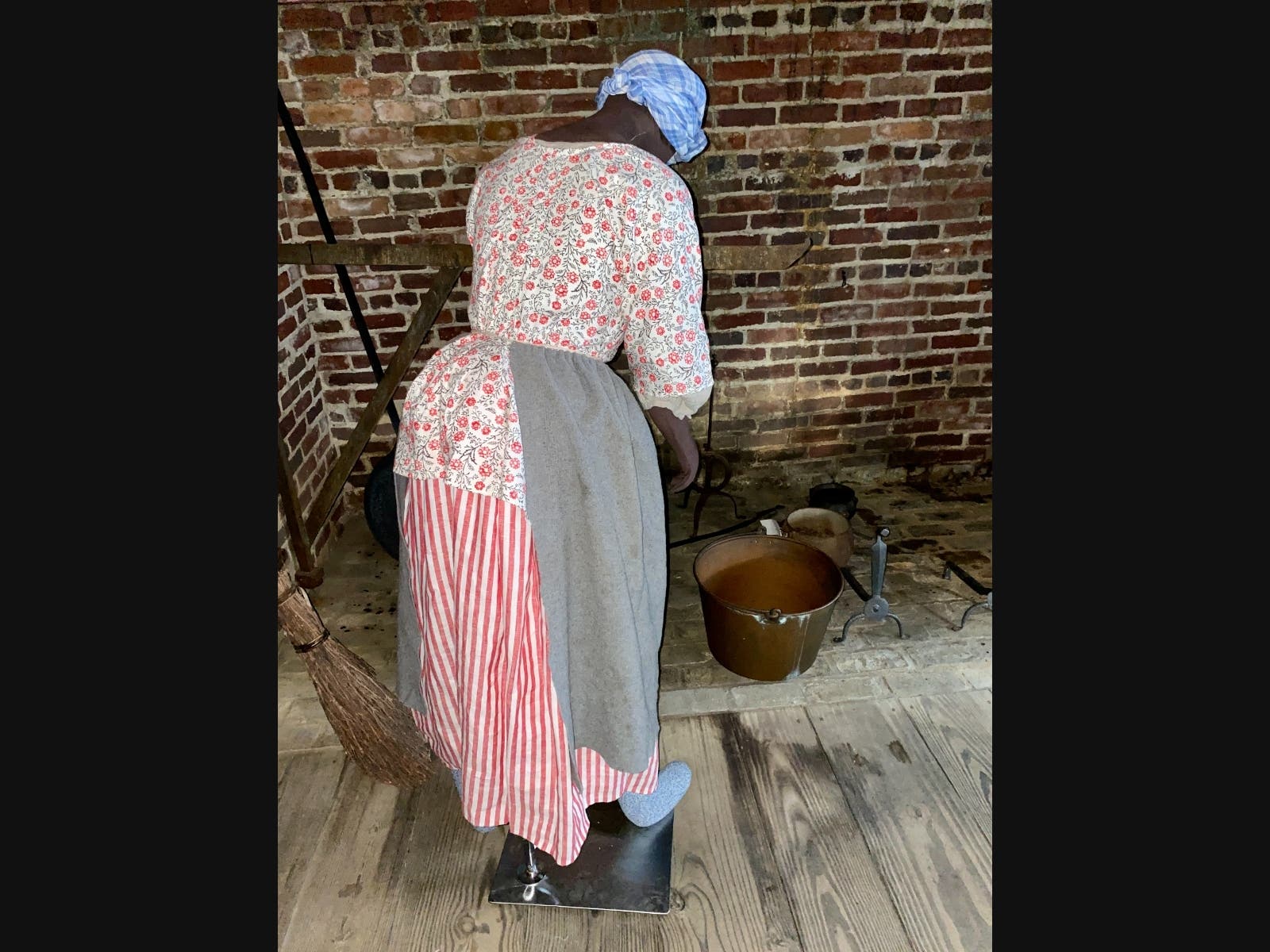
The exhibit is called “Beneath the Floorboards: Whispers of the Enslaved at Marlpit Hall” and it depicts the lives of seven slaves that historians have documented as living at Marlpit Hall.
Find out what's happening in Middletownfor free with the latest updates from Patch.
Marlpit Hall is a historical manor home right off Kings Highway in Middletown.
The exhibit just opened Oct. 23 and it is open to the public every Friday-Sunday from noon to 5 p.m. Just walk in. Zemla said they hope to attract school groups from Middletown and other area schools.
It's always been known that Marlpit is a historic site, but this is the first time Marlpit's ties to slavery are being unearthed and retold, he said.
Marlpit Hall was built in the 1750s, but Zemla said historians suspect its foundation dates back to even earlier, possibly as early as the 1600s. Starting in the 1770s, it was owned by Middletown's well-known Taylor family (the Taylor-Butler House is right next door). The patriarch of the Taylor family was a famed Loyalist in this area; he did not want the American colony to separate from England and was often at odds with his Middletown neighbors who considered themselves American patriots.
"The Taylor family owned slaves up until the year 1830 or so, at least 10-12 slaves," said Zemla. Archaeologists learned this by digging under the house:
"Digging under the floorboards, they found the remains of spiritual rituals that looked like they came from West Africa, things like deliberately placed clam shells, corn cobs arranged in a cross-mark pattern and markings on the wall, plus bones and pieces of glass that were known to be spiritual 'charms,'" he explained. "It's remarkable we have all these; there aren't many sites that have all this in the Northeast."
In Northern states, the enslaved very often resided in the house, as opposed to separate living quarters common in the South. Many times in the Northeast, the living quarters for slaves were located in or above the kitchen, as this was considered their "domain."
Historians also found written records at Marlpit that marked the slaves as "property," logged similarly to owning a horse, cattle or piece of furniture.
In one disturbing find, archaeologists even found human shackles under Marlpit Hall.
"The shackles were actually found in the mid-1990s but they had been sitting in a box marked 'miscellaneous iron,' and I was just looking through it one day," said Zemla. "When I picked them up, it really jumped out at me. I said, 'These look a lot like shackles.'"
Zemla took them to a fellow expert in Middletown-area history, Richard Veit, anthropology professor at Monmouth University, who confirmed they are likely slave shackles.
"We can't say for certain, but other things like this have been found in New Jersey's slave history: A neck restraint, for example. All kinds of horrible things. We want to make it known and bring these stories to light," said Zemla.
"We've gotten a lot of surprised visors already," he said. "They are stunned to see that slavery not only existed but was flourishing in New Jersey in the 1700s and 1800s."
Marlpit Hall is located at 137 Kings Highway, Middletown, NJ 07748. Phone: 732-462-1466 “Beneath the Floorboards: Whispers of the Enslaved at Marlpit Hall” is open from noon to 5 p.m. every Friday-Sunday this winter. No reservations needed. Learn more: https://www.monmouthhistory.or...
Be the first to know. Sign up to get Patch emails: https://patch.com/subscribe Contact this Patch reporter: Carly.baldwin@patch.com
Get more local news delivered straight to your inbox. Sign up for free Patch newsletters and alerts.