Community Corner
A Revolutionary Plot in Short Hills: The Parsil Family Cemetery
The cemetery at the corner of White Oak Ridge and Parsonage Hill roads dates back to Revolutionary times.
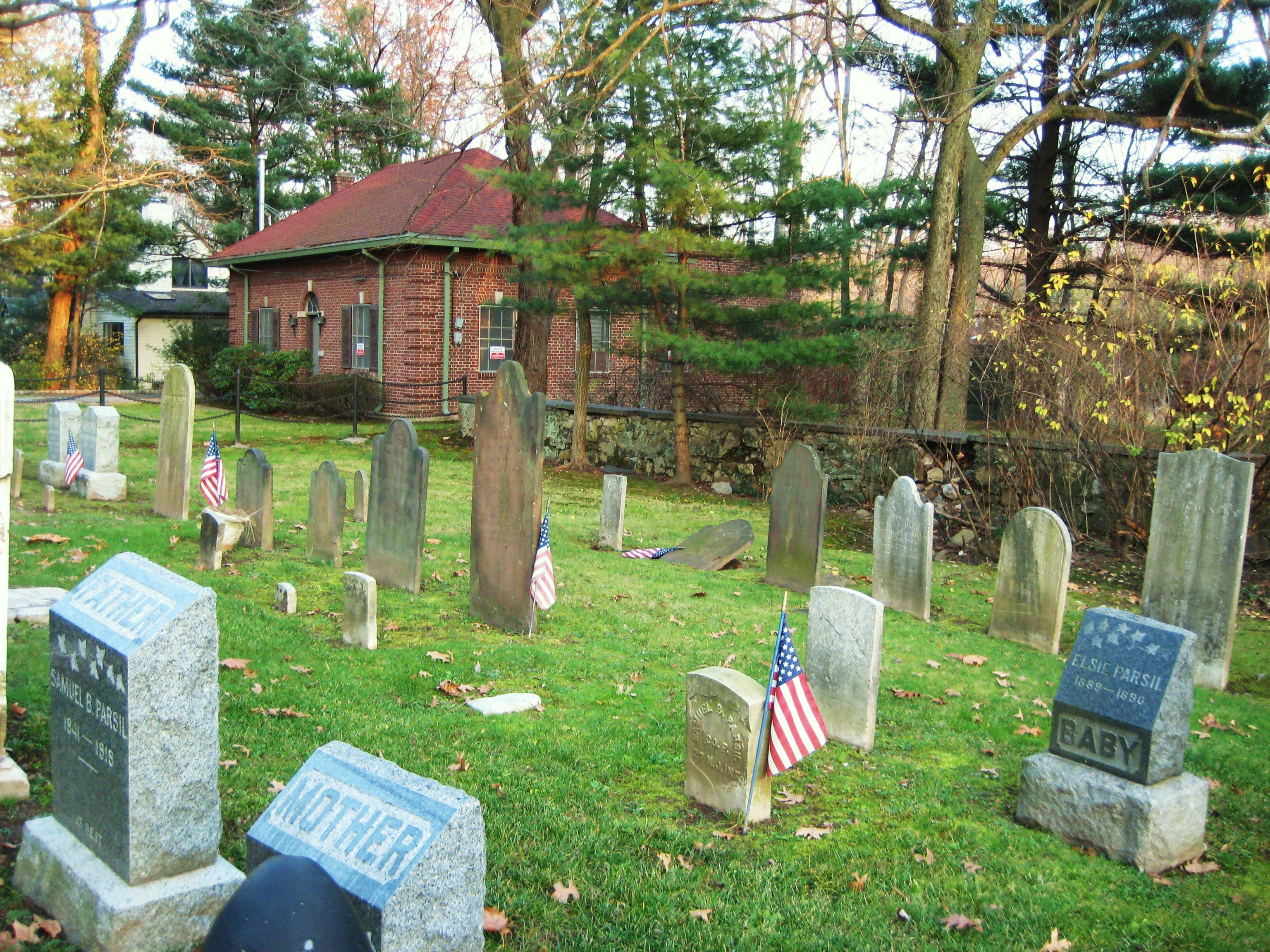


It only takes three seconds to drive by the 40 by 60 foot Parsil Family Cemetery at the corner of White Oak Ridge and Parsonage Hill Roads. You've probably done it countless times. But if you ever take a few minutes to find a safe roadside parking spot so that you can step inside the tiny burial ground, a piece of local history awaits.
Visitors will find the names of men who fought in the Revolutionary and Civil Wars among the weathered tombstones. Captain Thomas Parsil, who died on July 4, 1778, was the first person to be buried on this site, which is the last vestige of the Parsil family's property. Thomas and his brother, Nicholas, were known to be two of the largest landowners in this part of the country in their day.
Thomas, who lived on 423 White Oak Ridge Road, was a captain during the Revolutionary War. He suffered from wounds sustained in the Battle of Connecticut Farms, which is now Union, and passed away in his backyard under the canopy of a locust tree. On June 18, 1780, Nicholas met his death in the Battle of Springfield and found his resting place with his brother. Two Civil War weterans, William H. Sprigg (1842-1882) and Samuel Parsil (1841-1918), are family members also interred in the graveyard.
Find out what's happening in Millburn-Short Hillsfor free with the latest updates from Patch.
It's been documented that at least two dozen Parsil descendants lie in that location. Tiny tombstones mark the babies' graves. Mrs. Samuel B. Parsil was the last person buried there in 1933. White Oak Ridge Road resident Dorothy Akers is the last Parsil descendant currently residing in town.
A stone wall once surrounded the cemetery. It's now fenced in by an iron chain link fence which makes visibility better for drivers rounding its corner. Before Memorial Day, a number of local organizations—including the fire department, American Legion and the Boy Scouts and Girl Scouts—plant miniature American flags at the gravesite.
Find out what's happening in Millburn-Short Hillsfor free with the latest updates from Patch.
It's often difficult to read the inscriptions on old grave markers. For people interested in deciphering worn away epitaphs, Lynne Ranieri, curator of the Millburn-Short Hills Historical Society said, "Don't use substances such as talcum powder, bleach, shaving cream or anything else." These products contain stearic acid and biological products that can ruin the stones' porous material over time.
It's best to visit a cemetery when sunlight is shining on a headstone or grave marker, and to then place a mirror at an angle to the stone so as to reflect sunlight back onto it. This technique helps to reveal the obscured letters because it enables the depressions and raised areas to become more visible, explained Ranieri. This procedure is called "raking light."
There is piece of a heavy tombstone that's tucked under a bench at the historical society museum. The tombstone was found by two boys behind their home on White Oak Ridge Road under a sand pile almost 30 years ago. A copy of a D.A.R. survey at the society lists 1-year-old J.W. Ferris, the name inscribed on the stone, as one of the children buried in the Parsil plot.