Schools
BOE Approves Redistricting Plan
The plan would move students between Glenwood, Hartshorn and Deerfield while grandfathering fourth and fifth graders and siblings.

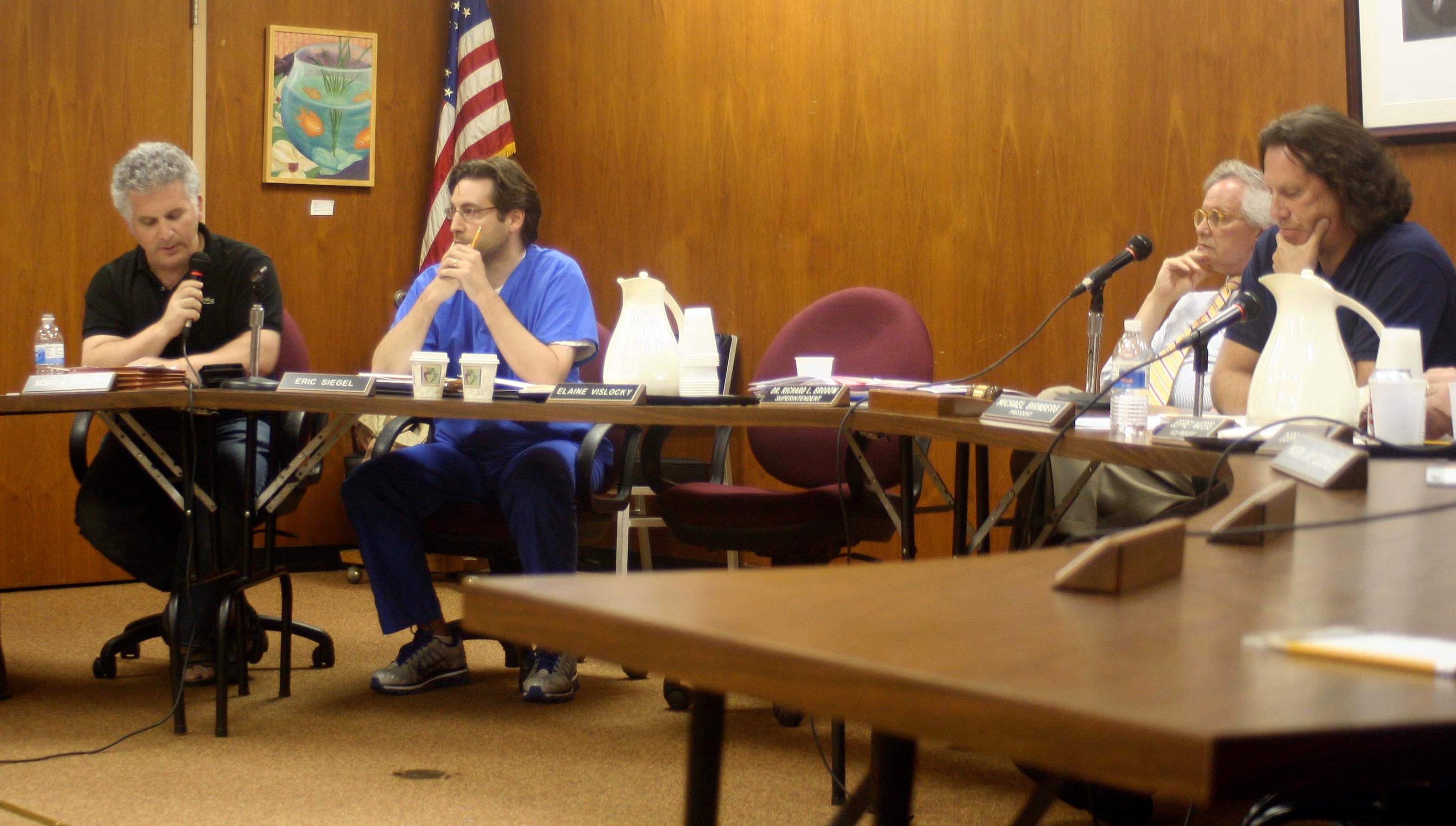
The Board of Education voted Thursday night to approve a plan to redistrict Glenwood, Hartshorn and Deerfield students.
The plan before the board Thursday would shift students from Glenwood to Hartshorn and Deerfield. Additionally, Hartshorn students would move to Deerfield. There would be grandfathering of fourth and fifth graders and siblings for one year. The plan is based on the work completed by Rich Haber, a consultant hired by the school board.
The board voted 7-2 on the plan. Board members Lise Chapman and Debra Fox voted no.
Find out what's happening in Millburn-Short Hillsfor free with the latest updates from Patch.
The plan without grandfathering would move 58 Glenwood students to Hartshorn and nine to Deerfield. With grandfathering, it's 44 students going to Hartshorn and seven going to Deerfield for a total of 51 students moved from Glenwood. It's 16 less students moving than without grandfathering.
Without grandfathering, 30 students move from Hartshorn to Deerfield. But with it, 17 students will be moving.
Find out what's happening in Millburn-Short Hillsfor free with the latest updates from Patch.
With grandfathering, Hartshorn would gain 26 students, two less than without it. With grandfathering, Deerfield would gain 25 students, 14 less than without it.
Grandfathered students' families would be responsible for their transportation.
School officials are looking to solve an overcrowding situation at Glenwood Elementary School. Schools Supt. Richard Brodow said he still believes like he did in February there is an overcrowding situation that needs to be resolved with redistricting. Brodow's original plan moved 61 Glenwood students to Deerfield.
It is a relatively short period of time school principals and he would need to react to what is enacted, but that is why something needs to be done now, he said.
The plan saves two sections at Glenwood, which would create a situation where the building could be scheduled more efficiently and effectively, Brodow said. It means classes do not need to be scheduled in substandard rooms.
Brodow said the plan presented Thursday wouldn't necessarily be the plan he would present, but it is a workable redistricting plan. Any redistricting plan would be difficult and it is not a decision anyone would want to make.
"No one wants to move children from any school," he said. "No one wants to put that angst into the life of a child or a parent."
Eric Siegel, Property Committee chairman, said the plan is the best one for the community at large. It will improve the district and equity between the schools. It'll give the children a better education overall. He knows there will be some dissent, but something needs to be done.
Chapman said she felt the process had been flawed from the beginning. Two plans were presented before Glenwood's principal met with the Property Committee. She doesn't want to make a bad decision and have to see redistricting be done again a year from now.
"Does this address the problem? No," she said.
The board needs to understand the impact better, she said. The trailers will continue to be at the site, which are supposed to be temporary. "They will be permanent," she said. "My recommendation is we do nothing... Keep going and do this right."
Scott Kamber, a Property Committee member, said redistricting isn't new. The district was going to need to do it after building on more to Deerfield than Glenwood nearly a decade ago. The redistricting proposal is a sustainable solution.
Kamber said in order to move the trailers, it would require moving 80 students from Glenwood. Moving them too early would be devastating because it would destroy boundaries to neighborhoods. Over time, though, the population will be reduced so the trailers could be removed.
"It's easy to second guess," he said. "Sometimes solutions need to be painful in order for them to be effective."
Rona Wenik, a board member, said she doesn't accept that the situation is dangerous, but believes there are issues of educational parity because of the overcrowding at Glenwood. The school is overcrowded now and relief is needed, especially with instructional aides eliminated.
She hasn't seen another solution other than redistricting to solve the problems at Glenwood. The two plans presented are effective, and the plan presented was geographically logical.
Fox called the decision difficult. "There are many people on both sides of the issue," she said. She feels there isn't enough time to make it a smooth transition. The talk is about numbers, but they represent children, small children. It is too late for a decision, she said.
Mark Zucker, a board member, said redistricting is divisive and taken out the true colors of the community, but not the best ones. Self-interest seems to be the theme and he questioned what happened to the global good.
He had said he wouldn't support a plan that moved more children than necessary. The plan does seem to be the best compromise available. "The plan isn't perfect, but it seems to be the best one at hand," he said.
Sam Levy, a board member, said he was concerned about the data. He had come in to the meeting intending to vote no. He wants a pledge the trailers will be removed from the school, which was the subject of a letter that most moved him.
No one has ever challenged if the educational integrity has been compromised at Glenwood and will continue to be, he said. The board's job is to deliver education. Because no one has challenged it, the board doesn't have the authority to reject redistricting.
Board Vice President Jeff Waters said the educational issues have been swirling for quite some time, and the board directed Brodow to study redistricting because of it. Glenwood Principal David Jasin reiterated to him the need for changes as recently as April 16.
There have been comments the board isn't listening to the public, but there were comments that changed his opinion. Someone said in February the original plan created artificial boundaries. He drove between the neighborhoods and then to the schools. He reached the conclusion that it was a fair argument.
The plan presented in early May made more sense, he said. It had disadvantages, but it was a more sound plan.
Brodow was asked if he was confident in the information provided to the school board, and he said officials reviewed the numbers several times. "They're not 100 percent, but they're pretty close," he said. School officials would continue to check them until notices are sent out to families.
The board debated what its role is for overseeing the implementing of the plan when questions rose about how the new available space would be used. Waters said the board only hires the superintendent and only oversees him. They entrust him to implement the plan, which he endorsed as viable.
But Fox said when Glenwood Principal David Jasin was asked in the Property Committee what he would do with space, he would use it for music and band. When asked about disrupting students for band and music, that's when he raised the safety concerns, she said. "I have a problem with disrupting students for music and band," she said.
When asked what would happen to special education students, Brodow said the individual education plan follows the special education student no matter where they go to school. The issue would be for self-contained special education students, he said, but redistricting would not affect those students.
Get more local news delivered straight to your inbox. Sign up for free Patch newsletters and alerts.