Community Corner
Local History: Dow Designed Wyoming Homes
Designed the renowned house known as Princessgate at 232 Sagamore Road

The collection of local memorabilia at the Millburn-Short Hills Historical Society museum includes information about local architecture and architects.
Among the local architects about whom the society collects material is Joy Wheeler Dow, a man, who lived in and built many desirable homes in the Wyoming section. The book "American Renaissance" is one of the few books about or by Dow that is in the society's library of books. Dow authored the book and featured within it the Wyoming homes that he designed.
Among the Wyoming-section homes Dow designed is the renowned house known as Princessgate at 232 Sagamore Road. Dow designed Princessgate for himself in 1896 and considered the architecture to belong to that of the “romantic school pure and simple.” Steep Dutch gables, projecting eaves and roof dormers all contribute to the Dutch and English feeling of the house. The architect deliberately faced the dining room window southeast so that the bright light would greet the homeowner on winter mornings.
Find out what's happening in Millburn-Short Hillsfor free with the latest updates from Patch.
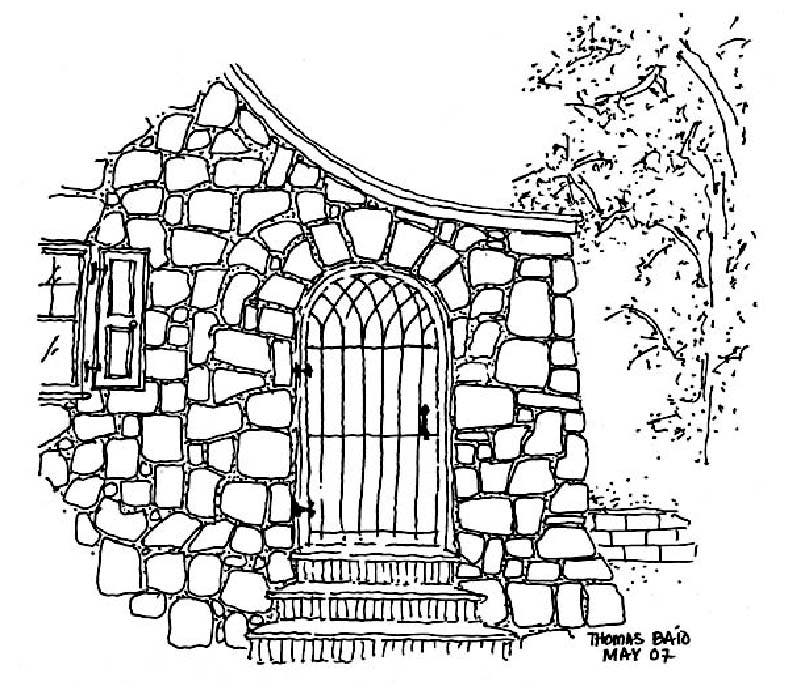
In 1906 Dow wrote “the agencies of an English garden were … called upon to secure … privacy at Princessgate.” Placing the front door so it opens directly upon the “court, terrace, an English garden or whatever else it happens to resemble” at the side necessitated “a house that does not face the street upon which the lot is supposed to be situated.”
The sketch seen here, of Princessgate's entry to the side patio was created by contemporary architect and former historical society president Thomas Baio.
Find out what's happening in Millburn-Short Hillsfor free with the latest updates from Patch.
The original house was a space, Joy said, where you could “play at keeping house” even though he said he believed “all the girls who liked housework are dead.” He held out hopes that a younger generation would take to it again when they found that it is “possible to convert what used to be drudgery into a huge game of dolls, only in a grown-up people’s doll’s house.”
Members of the Millburn-Short Hills Historical Society write a weekly column highlighting items in the collection, which can be seen at the museum located at the Short Hills Train Station on the Hobart Avenue side.