Community Corner
Looking Back: Hurricane Irene In Millburn
Eight years have passed since Hurricane Irene flooded roads and cut power in the first wave of superstorms that plagued the region.


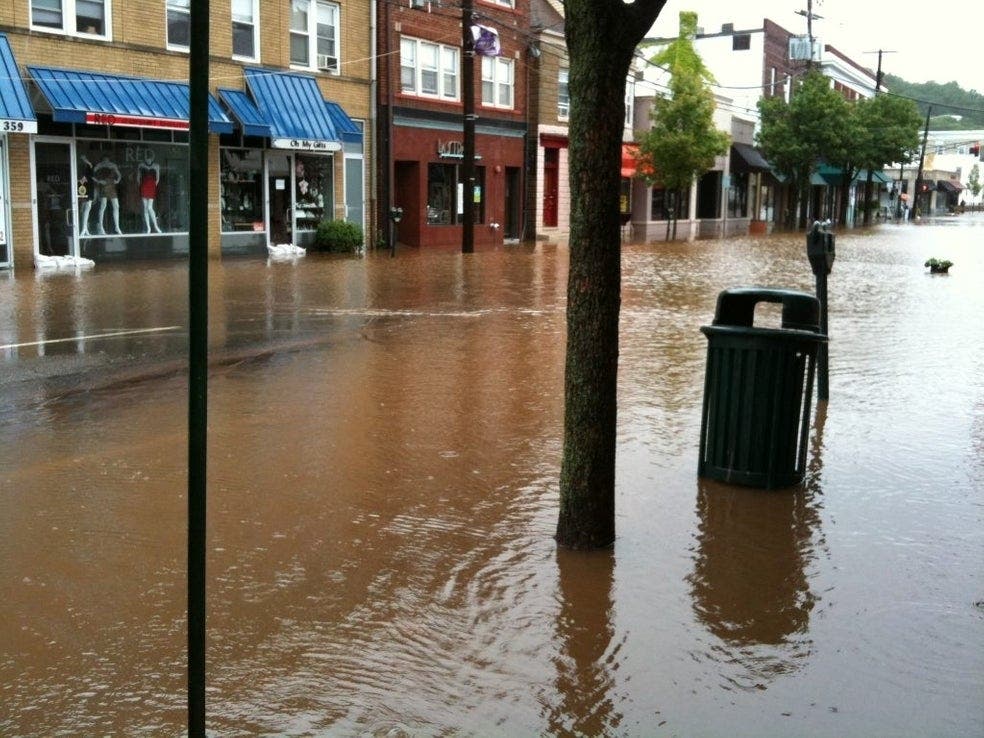
MILLBURN, NJ - As Hurricane Dorian barrels its way toward Florida heading into the Labor Day weekend it is hard for New Jersey residents not to be reminded of the Labor Day weekend storm that ravaged the region back in 2011.
Hurricane Irene was the first of several superstorms that plagued New Jersey causing widespread flooding and massive power outages. The violent storm flooded downtown Millburn, knocked down trees and left many throughout New Jersey without power, in some cases, for as long as a week.
During and after the storm, Millburn Patch reported on the damage that swept through the town and it left Millburn picking up the pieces for weeks.
Find out what's happening in Millburn-Short Hillsfor free with the latest updates from Patch.
"I think I've been trying to block it out subconsciously," Superintendent Department of Public Works John Bace told Patch at the time. "We were going around the clock for the first two weeks."
In that time, the DPW hauled out more than 1,500 tons of flood-damaged items and pumped out up to 100 houses throughout town. The DPW spent five to six weeks working to clean up downtown Millburn as fast as possible, Bace said.
Find out what's happening in Millburn-Short Hillsfor free with the latest updates from Patch.
"If you go stand at Gilbert Place and imagine water up to your neck, that's how bad it was," he said.
The fire department spent time evacuating residents from their homes and preventing for flooding itself. The department put sandbags around the headquarters and had to make room for extra trucks. In Millburn, there was low water pressure, fire officials said, so the department needed to have specific pumper trucks; because if there was a fire, the department couldn't use hydrants throughout town.
"It hit us really hard," Fire Chief Michael Roberts told Patch. "We had all staff on 24 hours a day for several days. We handled several hundred calls in the matter of three days."
Hurricane Irene would have been the first hurricane to make landfall in New Jersey in more than a century, had it actually been packing hurricane-strength winds at the time.
But by the time Irene rolled ashore at Little Egg Inlet in southern Ocean County, its wind speed had already decreased to 69 m.p.h. – a full 5 m.p.h. short of hurricane strength – meaning it was actually just a tropical storm.
The findings were released by the National Hurricane Center, the latest of equivalent post-mortems the agency has posted on every other storm of the 2011 hurricane season. Every year, the hurricane center releases "tropical cyclone reports" on each named storm after hurricane season ends Nov. 30.
The report said a storm surge of 3 to 5 feet along the state's shoreline caused moderate to severe tidal flooding with extensive beach erosion, but not surprisingly, the bulk of the damage caused by Irene was in the northern counties due to river flooding.
"The most severe impact of Irene in the northeastern United States was catastrophic inland flooding in New Jersey, Massachusetts and Vermont," the report stated.
This post contains reporting by Craig McCarthy.
Thanks for reading! Learn more about posting announcements or events to your local Patch site. Have a news tip you'd like to share? Or maybe you have a press release you would like to submit or a correction you'd like to request? Send an email to russ.crespolini@patch.com
Subscribe to your local Patch newsletter. You can also have them delivered to your phone screen by downloading, or by visiting the Google Play store.
Get more local news delivered straight to your inbox. Sign up for free Patch newsletters and alerts.