Business & Tech
More Than Manischewitz — Fine Kosher Wines for Passover
Dispelling some myths about kosher wine.



Time was Passover wine meant Manischewitz or Mogen David, sweet table wines that could practically be switched out with grape juice and no one would hardly notice.
But in the last several years, kosher for Passover wine has come a long way. Perhaps, some might say, enough to entice Elijah to actually come inside and drink his cup.
In addition, Passover wines from Israel are much better now, said Frank Rhien, a wine consultant at the Wine Library on Morris Avenue.
Find out what's happening in Millburn-Short Hillsfor free with the latest updates from Patch.
“Israel has made breakthroughs in wines and not just kosher wine,” Rhien said. “People used to buy Israeli wine to support Israel. More and more it’s the quality they’re buying it for. Israel’s wines are fabulous now.”
In fact, he said, Yarden Cabernet Sauvignon 2004 of the Golan Heights Winery was the first Israeli wine selected for the Wine Spectator’s Top 100 in 2008.
Find out what's happening in Millburn-Short Hillsfor free with the latest updates from Patch.
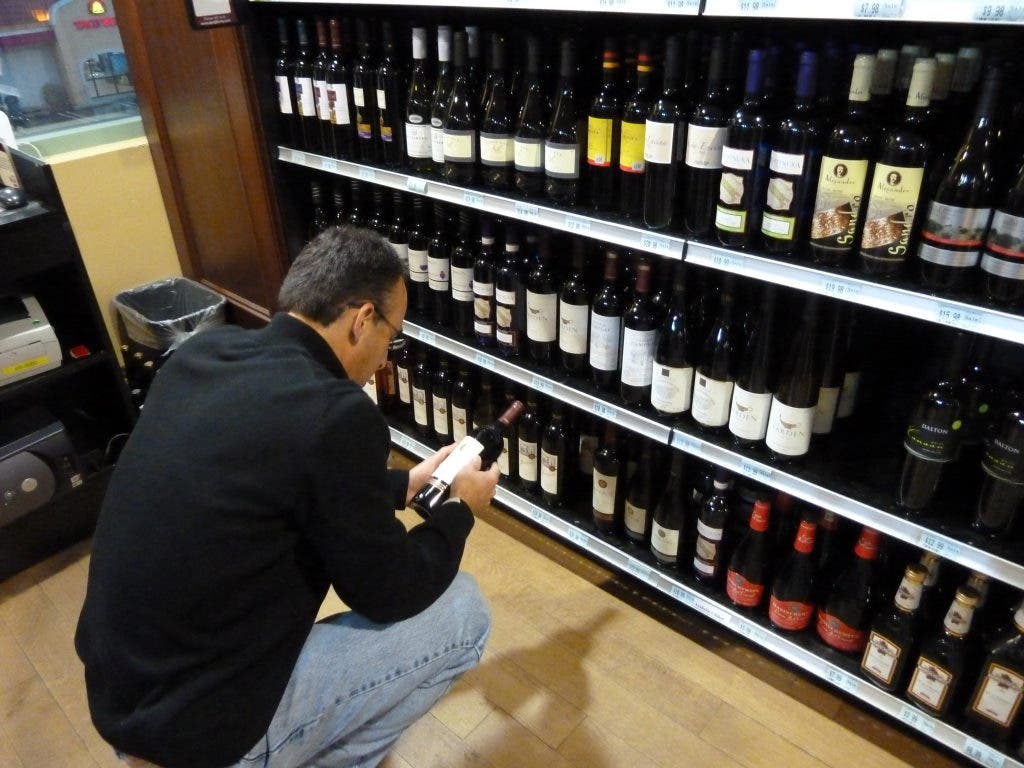
The staff at the Wine Library had a class in kosher wines a couple of days ago, tasting the wide selection they offer from a $7 Chardonnay to a $139 Bordeaux and lots in between. Wineries all over the world from Chile to New Zealand to California to Israel and beyond now offer kosher wine.
“I was buying a Chilean wine for years before I knew it was kosher,” Rhien said.
Alan Weiser of Maplewood's has some fond childhood memories of his father letting him sip Manischewitz wine at Passover.
"As a kid growing up, that's the only wine I liked. It tasted good — you like sweet stuff," he said. "It made you giggle and then you went to sleep."
Lots of people still buy Manischewitz, said Weiser, who noted that while his older customers like it to drink, some younger folks like to cook with it.
Wine connoisseurs can now avail themselves of almost any type of varietal in a kosher form — from Bordeaux and Gewurztraminer to Shiraz , Cabernet Sauvignon, Merlot and Pinot Grigio.
On writes "One myth that must be dispelled is that kosher wines are inferior to non-kosher wines. It is true that for most of its history, kosher wine tended to be a little lighter in color and body than its non-kosher counterparts."
However, Sugerman says that technology has improved kosher wine because many important winemaking activities, once ignored on the Sabbath, can be mechanized and set on timers before the sun sets on Friday night. "The inactivity of kosher winemakers during the Sabbath now has little to no effect on their wines."
Sugerman also notes that another myth that hurt the reputation of kosher wines is that they are all sweet. Weiser concurs: "Traditional Eastern European kosher wines were not sweet."
That sweetness — and Manischewitz — is an American concoction. Weiser said the sweetness was born of the fact that the first kosher wines to come out of New York State were, well, "awful." So the makers "dumped in a ton of sugar."
Get more local news delivered straight to your inbox. Sign up for free Patch newsletters and alerts.