Schools
School district to adopt "historic" policy on bullying
All districts in state required to adopt policy that addresses harassment, intimidation and bullying, both on and off school grounds
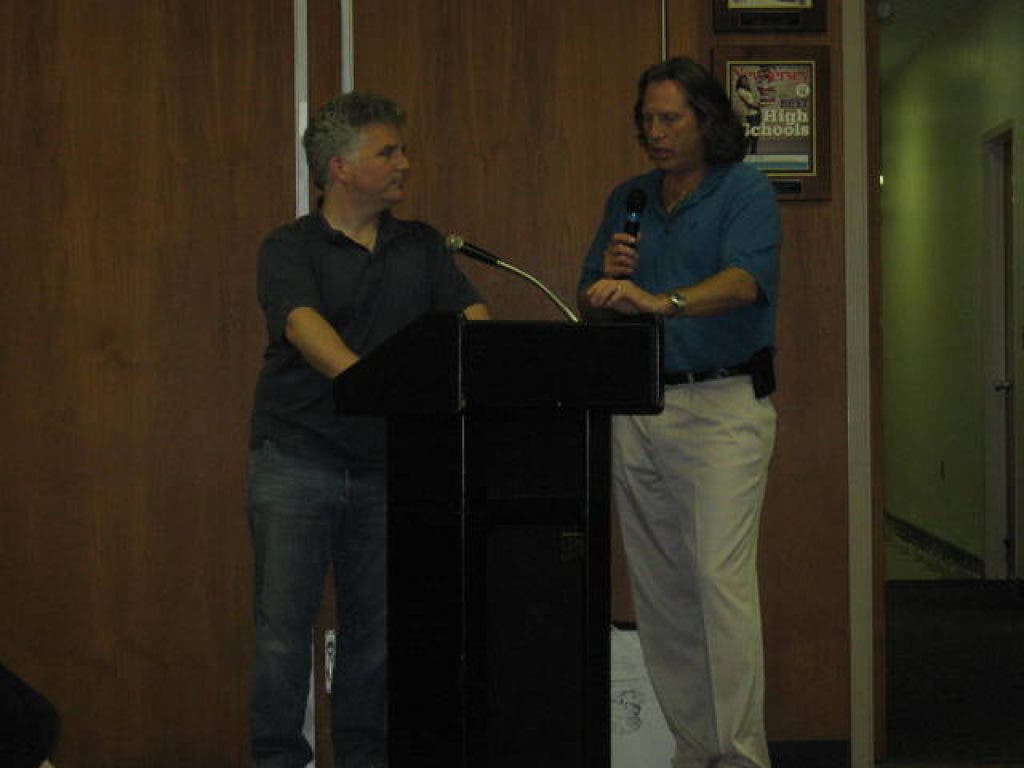


Millburn students and staff will face a new, stricter policy on harassment, intimidation and bullying when they return to school in September.
The board of education discussed the first reading of the Policy 5512, which every school district in New Jersey is required to adopt in accordance with the new state law on bullying.
The new policy, heralded as “historic” by members of the board, will replace the district’s current bullying policy. It will be up for second reading and vote at the next board meeting.
Find out what's happening in Millburn-Short Hillsfor free with the latest updates from Patch.
All districts across the state will be adopting the policy, although according to board member Sam Levy, who introduced the policy on behalf of the policy committee, said each district has some leeway to adjust the policy to fit their district’s needs.
Levy said the new policy provides a new, broader definition of harassment, intimidation and bullying.
Find out what's happening in Millburn-Short Hillsfor free with the latest updates from Patch.
“Harassment, intimidation or bullying means any gesture, any written, verbal or physical act, or any electronic communication, whether it be a single incident or a series of incidents,” Levy said.
The incident(s) must be “reasonably perceived” as being motivated by either any actual or perceived characteristic of a student or the student’s family, such as race, color, religion, ancestry, national origin, gender, sexual orientation, gender identity or expression, physical appearance, or a mental, physical or sensory disability, or by any other distinguishing characteristic.
The policy covers harassment, intimidation or bullying that takes place on school property, at any school-sponsored function, or a school bus, or off school grounds, that substantially, actually or may disrupt or interfere with the orderly operation of the school, or the performance or rights of other pupils, or tends to embarrass, insult, ridicule, or intimidate the target student.
The policy also includes electronic communication, which includes the telephone, cellular phone, computer or pager.
The policy spells out pupil expectations and states that the board believes the best discipline is self-imposed, and it is the responsibility of staff to use instances of violations of the Code of Pupil Conduct as opportunities to help pupils learn to assume and accept responsibility for their behavior and the consequences.
It also specifically states that the district prohibits active or passive support of acts of harassment, intimidation or bullying.
The consequences and remedial actions spelled out in the policy are broken down by consequences, personal remedial measures and environmental remedial measures.
Consequences include admonishment, temporary removal from the classroom, deprivation of privileges, classroom or administrative detention, in-school suspension, out-of-school suspension, reports to law enforcement or other legal action, expulsion, and the report of such bullying conduct to colleges or universities the offending student applies to.
Personal remedial measures include restitution and restoration, peer support group, recommendations of a pupil behavior or ethics council, corrective instruction, behavior management plans, assignment of leadership responsibilities; involvement of school disciplinarian, and alternative placements.
Environmental Remedial Measures include modification of schedules, adjustments in hallway traffic, supervision of the pupil before and after school (including school transportation), targeted use of monitors, professional development plans for involved staff, disciplinary action for school staff who contributed to the problem, school transfers, and law enforcement.
The policy also covers harassment, intimidation and bullying off school grounds, and outlines a detailed reporting procedure. Levy said complaints can be made anonymously, but although investigations will be made into anonymous complaints, no action will result from those investigations. He also cautioned that falsely reporting bullying will have consequences as severe as actual bullying.
In addition, the superintendent is required to appoint a district anti-bullying coordinator, ideally an employee of the district, and the principal of each school must appoint a school anti-bullying specialist. The specialist at each school must chair the School Safety Team and lead the investigation of incidents of harassment, intimidation or bullying in the school.
The policy details the district’s legal obligations and procedures after a report of harassment, intimidation or bullying. It also states that the district is required by state law to observe a “Week of Respect” beginning the first Monday in October, during which students will receive age-appropriate instruction focusing on the prevention of harassment, intimidation or bullying.
Levy said once it has been formally adopted, notice of the new policy will be in the student handbook and posted on district’s website.
The policy will go into effect on September 1.
In other business:
- Crisfield announced that Millburn High School student was named the U.S. winner of the 2011 Stockholm Junior Water Prize. Crisfield called it “the most impressive and meaningful science award to our high school in recent history.” The international Stockholm Junior Water Prize competition brings together the world’s brightest young scientists to encourage their continued interest in water and the environment. Each year, thousands of participants in over 30 countries join national competitions for the chance to represent their nation at the international final held during the World Water Week in Stockholm. Bick and her teacher will be representing the U.S. with her design, a low-cost and portable method for testing water potability.
- Board President Michael Birnberg made presentations to Debbie Fox and Scott Kamber, who recently left the board, to thank them for their service.
- In her report for the finance committee, board member Lise Chapman reported that as of June 22, the district had received 705 applications – representing close to 1,000 students – for subscription busing. Chapman said that means $299,860 in revenue for the first half of the coming school year, and nearly the same amount is projected for the second half. She said that if the actual numbers go higher than the projected amounts, it may require the addition of more routes. Board member Eric Siegel said there are still some spots on the buses available.
- In her report for the personnel committee, board member Jean Pasternak said the committee discussed possibly adding before-school care at the middle school to allow parents to drop students off early, also alleviating some traffic concerns.
- Pasternak said the committee also discussed possibly adding robotics as an after-school program. Crisfield and the program committee are looking into the possibility.
- In her report for the property committee, board member Regina Truitt said the committee has been discussing possible renovations to the middle school auditorium. The committee is researching funding options for the project, which would cost an estimated $1 to $1.2 million.
- Truitt also reported that if the townhomes that are being built on the Chanticler property do not end up being age restricted and include some school-age children, they will be attending Wyoming School.
- Levy also presented the first reading of a new policy on pupil suicide prevention, aimed at training school personnel to look for potential warning signs of suicide. That policy also will be up for second reading and vote at the next meeting.
- The board adopted the school calendar for the 2012-2013 school year, in which the last day of school is June 26. This option provides two breaks after January -- a week in February and another in April.
- Truitt read a “plea for civility” in which she urged the board and the public to be more respectful of each other during meetings.