Community Corner
Disabled People ‘Forgotten’ In Coronavirus, Montclair Woman Says
Want to know what it feels like to be forgotten? Try to buy groceries during a pandemic when you suffer from lupus, a Montclair woman says.


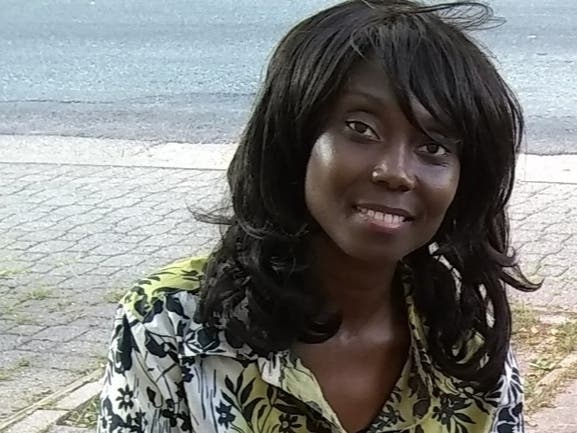

MONTCLAIR, NJ — Want to know what it feels like to be forgotten? Try to buy groceries during a viral pandemic when you suffer from lupus, a Montclair woman says.
Usually, Judith Mills, an adjunct professor at Essex County College, can find someone to help with her shopping. It’s a blessing the biomedical scientist is thankful for, especially when she thinks about all the other people who don’t have the same support system.
But every now and then, Mills needs to make a trip to the store for herself. And when she does, something as simple as picking up groceries has now become a Herculean task because of the new coronavirus, she told Patch.
Find out what's happening in Montclairfor free with the latest updates from Patch.
“I'm having a difficult time shopping because of the long lines,” Mills said, adding that her doctor has ordered her to stay away from large crowds during the COVID-19 crisis because of the immune suppressant drugs she takes.
“The disabled have been forgotten,” Mills charged. “All lives matter. We need to shop too … What about us?”
Find out what's happening in Montclairfor free with the latest updates from Patch.
- See related article: NJ Coronavirus Updates (Here's What You Need To Know)
- See related article: Coronavirus Hitting NJ Minority, Immigrant Communities Hard
‘NOT EVERY DISABLED PERSON USES A WHEELCHAIR’
As an example, Mills told Patch about a frustrating trip she made to a nearby supermarket on Sunday.
Trying to avoid a trip to the store herself, she asked staff members if they’d be willing to set aside a few items and allow her friend to come in and pay using Mills’ credit card. It was a request that a manager at the store allowed two weeks before.
But that day, staff told her that it “wasn’t fair,” Mills said.
When Mills asked if they have special hours for disabled people during the viral outbreak, she was told that the store has “senior hours,” and that it also accommodates people in wheelchairs.
“Not every disabled person uses a wheelchair or a cane,” Mills replied.
It’s not just people with disabilities who have been struggling to keep their pantries stocked, Mills pointed out.
While some supermarkets have been offering exclusive morning shopping hours for older residents, making them get their groceries at the crack of dawn – as early as 6 a.m. in some cases – isn’t accommodating, she said.
“During this pandemic, seniors and the disabled have been basically forgotten,” Mills said. “It’s sad.”
- See related article: Essex County Supermarkets With 'Senior Hours' In Coronavirus (MAP)
- See related article: How To Grocery Shop Safely In Coronavirus (VIDEO)
WHOLE FOODS IN MONTCLAIR
Not all of her shopping experiences during the outbreak have been negative, Mills said. In fact, a recent trip to the Whole Foods in Montclair gave her a bit of much-needed hope.
Like several other supermarket chains, Whole Foods stores across the nation have been opening an hour earlier to offer a special shopping time for customers 60-years-old and over during the coronavirus crisis. However, the company’s policy hasn’t explicitly included people with disabilities or other health conditions.
In Montclair, that officially changed last week thanks to Mills’ advocacy. Here’s how it went down, she told Patch:
“I called the Montclair Whole Foods and I spoke to the manager. [He] has always accommodated me whenever I'm at Whole Foods because they know me as ‘The Smoothie Girl.’ Before the pandemic, I would come weekly to get a smoothie, and while I'm there, I usually ask them to give me a chair to sit in while I wait, because if I stand for too long it triggers painful leg cramping, and they have been very caring about that.”
When Mills had a talk with the manager about having special shopping hours for the disabled, he mentioned the store’s senior hours, but acknowledged there wasn’t a special time set aside for people in her position.
Five minutes later, she got a call back from the manager: come in between 8 and 9 a.m. to get whatever she needs.
A spokesperson for Whole Foods confirmed the Montclair store is now “allowing customers with pre-existing health conditions to shop one hour before the store is open to the general public, as well as customers who are 60+ years old.”
It’s a show of corporate citizenship that Mills said she’s grateful for.
“I applaud them for making that decision,” she told Patch.
FIGHTING FOR AWARENESS
Facing down challenges like this isn’t a new experience for Mills, a staunch disability advocate who was born in Ghana and immigrated to the U.S. at the age of 10.
In 1999 – the same year she was a Miss Teen New Jersey finalist and an avid track and field athlete – Mills was diagnosed with systemic lupus erythematosus (SLE), a disease which sees the immune system become “hyperactive” and attack its own tissues.
As her condition worsened, the former dancer began to get severe joint pains, fatigue and other painful symptoms. But instead of letting the disease defeat her, Mills used it as a call to action.
After graduating in the top 10 of her high school class and earning a pair of scholarships, Mills earned a degree in biology from Montclair State University. While at college, she also launched her career as an activist, organizing a team of walkers to fundraise for the Lupus Foundation for America’s New Jersey chapter.
Mills has since parlayed that experience into an ongoing ambassadorship for others in her shoes. She’s a key committee member of the Lupus Research Alliance, and has launched her own nonprofit, Butterfly Walkers, a group dedicated to raising funds for lupus awareness.
While visiting Ghana in 2012, Mills said she became “heartbroken” by the growing number of people suffering from the disease. She later set up a non-governmental organization called Alliance of Hope for Lupus, which helps to educate Ghanaians and conduct important demographic research.
“In America, I’m privileged to be able to afford treatment, even though we have come a long way to go for a cure,” Mills said. “Those treatments and patient education weren’t available in Ghana, so I wanted to change that.”
The Montclair resident has continued her international advocacy efforts from the U.S. At one point, she was chosen as a TEDx speaker to push for lupus funding at the National Institutes of Health and the Department of Defense, and in 2019, the mayor of East Orange recognized Mills’ work with a proclamation.
Currently, Mills is working with Montclair Councilwoman Renee Baskerville and James Harris of the local NAACP to raise awareness in her hometown.
But the coronavirus – and the challenges it poses to people with disabilities of all kinds – is something new altogether, Mills said.
“I’m baffled that no one is speaking about this on the news,” she commented.
View this post on InstagramTrue #advocacy it's not just social media. There is real work to be done. I am packing my bags again. Few are called to stand on the frontline of #activism for #change and #policy making. It's been a a privilege once again to grace my fellow #senators, and #congressman as a #constituent. 20/20 it's a year like no other, I have seen growth, I have learned patience etc. I am a #warrior you never give up. I am #resilient. This is how you #thrive with #lupus #Advocacy #CapitolhillDC #purple #lupusawareness #BiomedicalScientist #pharmacology #professor #analyticalthinker #speaker
A post shared by Butterfly Walkers, Inc. (@butterflywalkersinc) on Feb 18, 2020 at 6:19am PST
Send local news tips and correction requests to eric.kiefer@patch.com
Don’t forget to visit the Patch Montclair Facebook page. Learn more about posting announcements or events to your local Patch site. Sign up for Patch email newsletters.
Get more local news delivered straight to your inbox. Sign up for free Patch newsletters and alerts.