Schools
Disney Princesses Have Become More Left-Handed Over Time, Montclair State Study Finds
Researchers at Montclair State University examined hand movement activities and more than a dozen classic Disney movies.


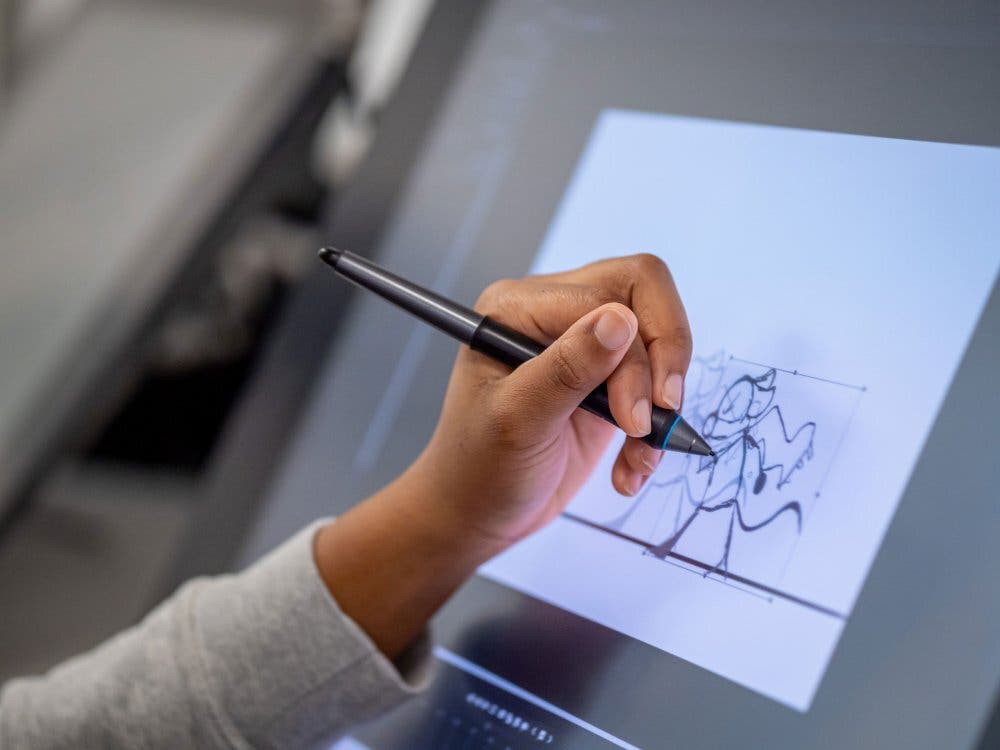
Disney princesses have become more left-handed over time, according to a new study by faculty and student researchers in Montclair’s Psychology department.
The change suggests a wider cultural acceptance of the “sinister” hand preference, and offers representation for lefty fans of the beloved animated films.
Find out what's happening in Montclairfor free with the latest updates from Patch.
The findings, “Princess hands: Handedness of protagonists versus antagonists in Disney’s ‘Princess’ animated movies,” were recently published in the academic journal Laterality: Asymmetries of Brain, Behavior, and Cognition.
Main findings
More about the study
The research team, which included two undergraduate students at Montclair, examined hand use of princesses and villains in 13 official Disney Princess movies. They counted how many times each princess or villain performed various activities with one hand or the other, using three different handedness questionnaires including the Edinburgh Handedness Inventory (EHI).
Find out what's happening in Montclairfor free with the latest updates from Patch.
“Our goal was to see if villains were more left-handed than princesses because culturally, evil is associated with the left-handed, and whether any left-evil associations had changed over time, given changes in culture,” says Ruth Propper, lead researcher and professor of Psychology.
Each Disney princess and villain was assigned a handedness score (-100 being perfectly lefty and +100 perfectly righty) and the results show that over time, princesses have become less right-handed, especially after about 1992, while villains have remained stable in their handedness.
Overall, the characters were much less right-handed than the human population.
What the researchers say
Prior to 1992, Propper explains, princesses were more right-handed than villains, while after 1992 princesses became more left-handed than villains.
So, what changed?
“We suspect that there are many factors at play here.” Propper says. “One possibility is that around the early 1990s the ‘Nine Old Men,’ the animators responsible for most Disney movies from the 1930s to the 1990s, retired.
“It’s possible that the new animators who were hired had less bias against left-handedness, as cultural views about lefties had changed. Certainly there are likely pragmatic reasons as well, and we don’t know the actual handedness of the animators, which could also have been a factor.”
Why it matters
The research and methodology were inspired by existing research Propper encountered analyzing early 1900s documentary footage to estimate rates of left-handedness at that time. Propper and her research team took the innovative approach a step further, utilizing Disney princess films that offer clear distinctions between protagonists and antagonists and allow for meaningful comparisons across character types.
Additionally, “because the characters are animated, handedness is a deliberate choice made by animators, which may reflect cultural assumptions or biases, rather than simply the natural handedness of an actor,” Propper says. Since the Disney princess films span roughly 80 years, this also gave researchers an opportunity to examine potential cultural shifts over time.
Propper says this study demonstrates that research does not always need to be complex or highly technical. And, it speaks to representation.
“Left-handed individuals have often been described as lacking a clear cultural identity and may feel overlooked or negatively stereotyped,” says Propper. “Seeing left-handed traits reflected in familiar and beloved figures, such as Disney princesses, can contribute to a sense of inclusion and reduce feelings of isolation.”
The findings also suggest a societal shift over the last 80 years: left-handedness appears to be more accepted today than in the past, and is no longer associated with the same negative or stigmatized beliefs as it once was.
“These films are culturally iconic, widely recognized, and meaningful to many audiences, which makes them a relevant context for this type of analysis,” Propper says.
This press release was produced by Montclair State University. The views expressed here are the author’s own.
Get more local news delivered straight to your inbox. Sign up for free Patch newsletters and alerts.