Crime & Safety
Here’s How You’re Most Likely To Die On The Job In New Jersey
What's the state's deadliest occupation? What types of injuries are you most likely to die from? Here's what federal statistics show.


NEW JERSEY — If you’re a construction worker in New Jersey, you’re employed in the state’s deadliest occupation when it comes to workplace injuries, according to new federal statistics.
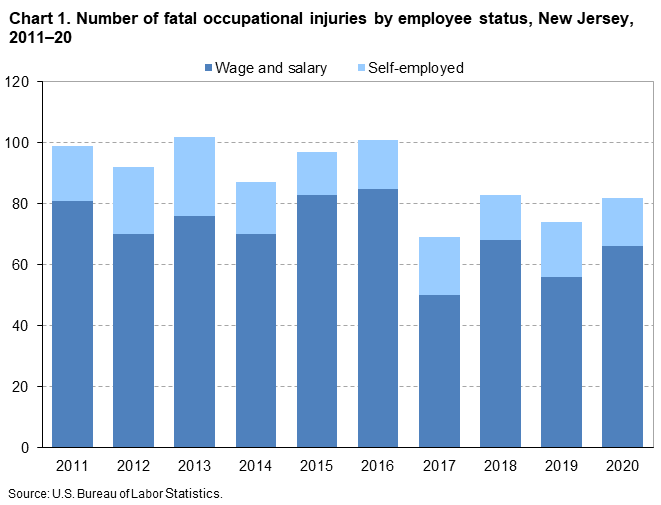
The U.S. Bureau of Labor Statistics has released its latest fatal work injury report for New Jersey, which covered 2020, the most recent data available. There were 82 fatal work injuries that year, up from 74 in 2019.
Fatal occupational injuries in New Jersey have ranged from a high of 145 in 1993, to a low of 69 in 2017, the bureau said (see chart below).
Find out what's happening in Montclairfor free with the latest updates from Patch.
Nationwide, there were 4,764 fatal occupational injuries in 2020, which was the lowest annual number since 2013.
Only fatal occupational injuries are covered in the report, so fatal illnesses such as COVID-19 are not reflected in the census data, a bureau spokesperson told Patch.
Find out what's happening in Montclairfor free with the latest updates from Patch.
TYPE OF INJURY
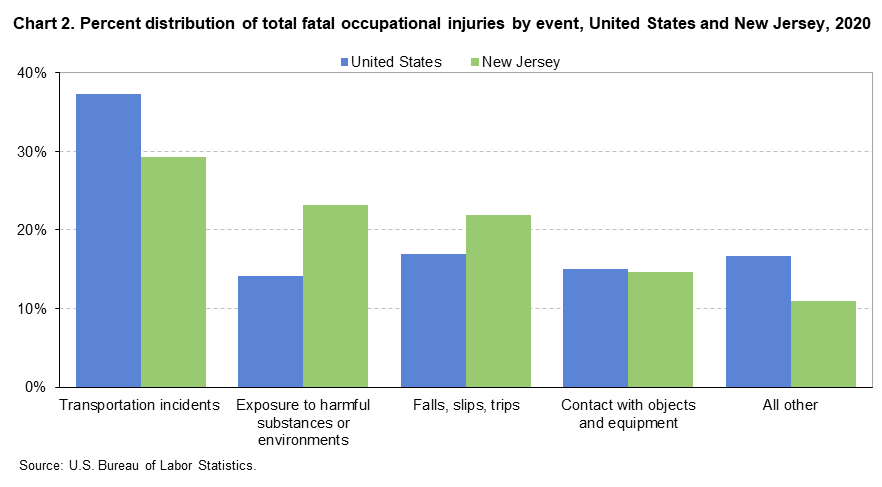
In New Jersey, just three major categories accounted for 74 percent of all fatal workplace injuries: “transportation incidents” (24), “exposure to harmful substances or environments” (19), and “falls/slips/trips” (18).
DEATHS BY INDUSTRY
The highest number of fatalities in New Jersey came from the private construction industry, which saw 16 deaths in 2020, the data showed. Falls, slips, and trips proved particularly deadly, accounting for seven of those 16 fatalities. Read More: Construction Worker Falls In Essex County Pose Deadly Risk, OSHA Says
The next highest worker fatality totals were in “administrative and support and waste remediation services” (14), and “transportation and warehousing” (13). Read More: NJ Workers Say Warehouse Jobs Are 'Unsafe, Grueling'
DEATHS BY OCCUPATION
When broken down by job type, construction again proved to be a dangerous career in New Jersey, the data showed.
The “construction and extraction” occupational group had the highest number of fatal workplace injuries with 22, unchanged from the previous year.
The “transportation and material moving” group – which includes ambulance drivers, driver/sales workers and truck drivers – had the second highest number of fatal workplace injuries with 18.
Police and firefighters are in the “protective service occupations” group, and EMTs are in the "healthcare practitioner and technical occupations" category. Neither saw any fatal work injuries in 2020, according to the data.
ADDITIONAL INFORMATION
Other highlights from the bureau's report included:
- Men accounted for 93 percent of the work-related fatalities in New Jersey, similar to their national share.
- White, non-Hispanic workers accounted for 52 percent of New Jersey’s fatal injuries. Nationwide, this group accounted for 61 percent of work-related deaths.
- Workers 55 to 64-years-old accounted for 27 percent of the state’s work-related fatalities in 2020, compared to 22 percent of on-the-job fatalities nationally.
- Of the 82 worker deaths in New Jersey, 80 percent worked for wages and salaries; the remainder were self-employed.
Send news tips and correction requests to eric.kiefer@patch.com
Sign up for Patch email newsletters. Learn more about posting announcements or events to your local Patch site.
Get more local news delivered straight to your inbox. Sign up for free Patch newsletters and alerts.