Jobs
Higher Minimum Wage In NJ Would Help Economy, Not Hurt It: Study
When the topic of raising the minimum wage in New Jersey comes up, you may hear the following argument: "the rest of us can't afford it."


When the topic of raising the minimum wage in New Jersey comes up, it’s common to hear the following argument: "the rest of us can’t afford it." But that’s a line of logic that nonprofit New Jersey Policy Perspective (NJPP) challenged on Thursday with a study dubbed “A $15 Minimum Wage Would Help Over 1 Million Workers and Boost New Jersey’s Economy.”
According to the NJPP study, raising New Jersey’s minimum wage to $15 an hour would reduce poverty while actually boosting the state’s economy. How? By ensuring that more working people have more dollars to spend on essential goods and services.
“Gradually increasing the minimum wage to $15 by 2023 would boost wages for 1.2 million of the state’s 4.2 million workers (or 28% of the workforce) and pump $4.5 billion in increased wages directly into the state’s economy,” the NJPP stated.
Find out what's happening in Montclairfor free with the latest updates from Patch.
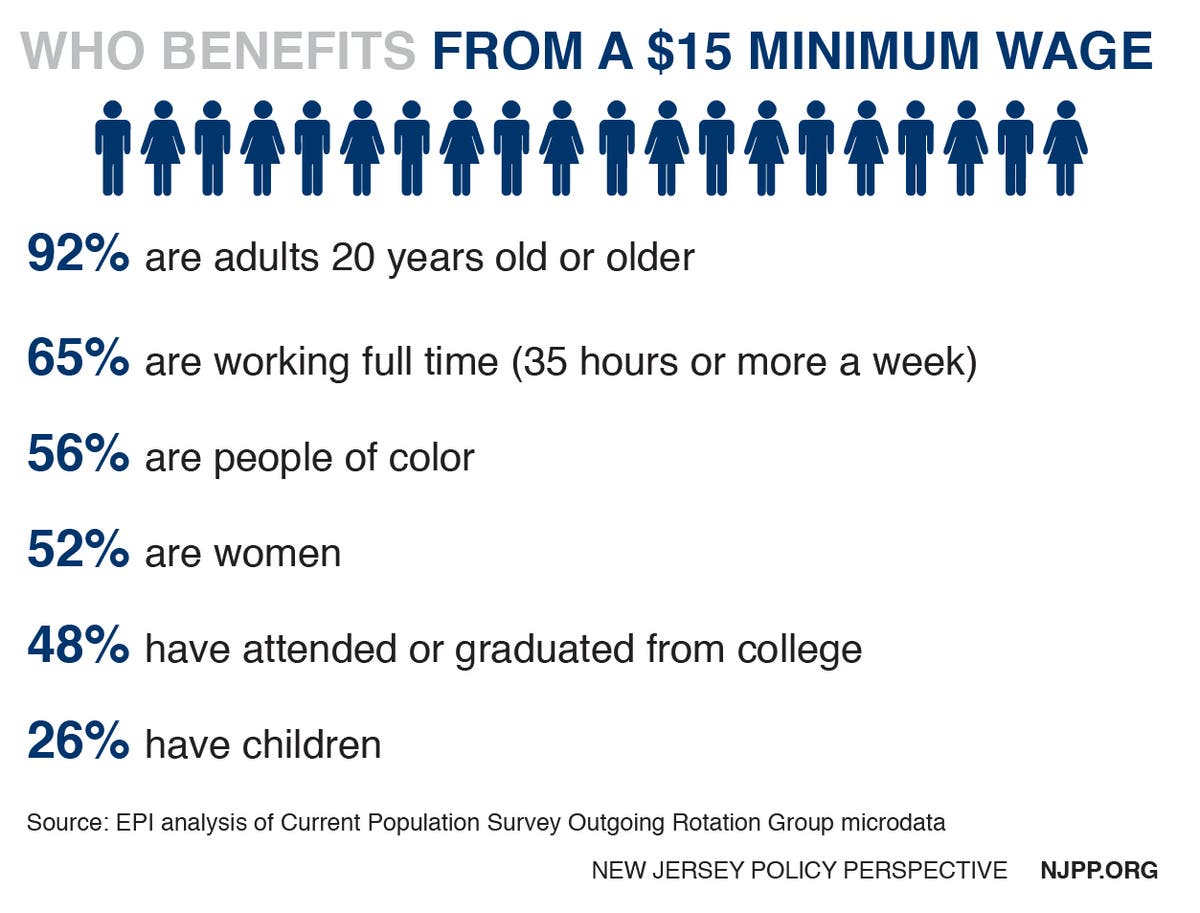
The workers who would benefit from a $15 minimum wage are nearly all adults, most are working full-time, many have pursued a higher education and they are raising an estimated 458,000 children, the report claims.
- See related article: Murphy Still Wants To Raise New Jersey Minimum Wage (But When?)
According the NJPP, although unemployment has decreased significantly as New Jersey slowly emerges from the Great Recession, wages have stagnated and hardship and economic insecurity have increased.
Find out what's happening in Montclairfor free with the latest updates from Patch.
“In other words, more people are working now but they aren’t earning enough to make ends meet for themselves or their families,” the group stated.
But how would raising the wages for some workers help other community members who may be earning well-above $8.60 per hour? According to the NJPP:
“Raising the minimum wage directly puts more money in the pockets of low-income workers who cannot meet their basic, everyday needs. With more take-home pay, these workers will spend that money immediately and locally on goods and services they were previously unable to afford. Essentially, their increased income is liquid, meaning that it is revolving through the economy instead of sitting stagnant in an investment account or stashed offshore, which is what typically happens when tax breaks are given to the wealthy.”
- See related article: New Jersey Keeps Doling Out Huge Tax Breaks To Corporations
- See related article: Race To The Bottom: NJ's Quest For Amazon HQ Is 'Insane,' Critics Say
“When lawmakers work to increase the minimum wage, opponents line up to say doing so would hurt the economy and lead to a significant loss of jobs,” the NJPP stated. “These claims are as old as wage increases themselves, but decades of real-world experience show that they are false.”
Learn more about posting announcements or events to your local Patch site here. Send local news tips and correction requests to eric.kiefer@patch.com
Photo: Justin Sullivan / GettyImages
Get more local news delivered straight to your inbox. Sign up for free Patch newsletters and alerts.